Results (598)


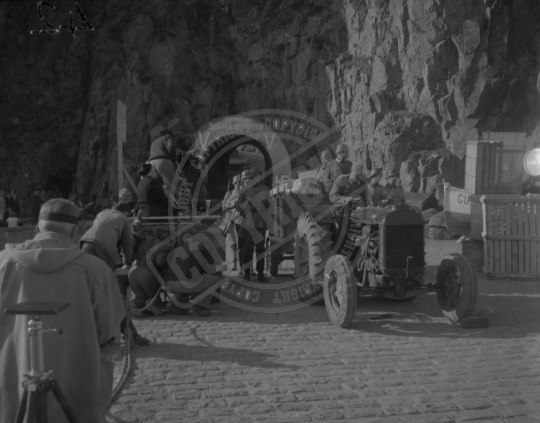
TPL_00069
Filming of 'Appointment with Venus’ on the Channel Island of Sark. The plot is set during the outbreak of WWII when the Ministry of Agriculture and the War Office join forces to launch a daring mission to rescue a highly lucrative pedigree cow, Venus, from the German-occupied Channel Island of Armorel. English Army Major Valentine Moreland (David Niven), his A.T.S. assistant Nicola Fallaize (Glynis Johns), radio operator Forbes (Patric Doonan) and ship’s pilot Trawler Langley (Noel Purcell) are dispatched to the small island to rescue Venus. Problems arise when the German commander on Armorel, Weiss (George Coulouris), also discovers the cow’s value and intends to evacuate Venus back to Germany. The film went on general release in 1951.
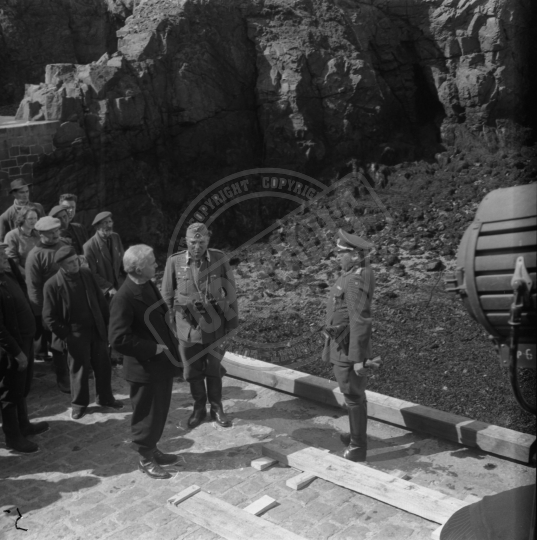
TPL_00035
Filming of 'Appointment with Venus’ on the Channel Island of Sark. The plot is set during the outbreak of WWII when the Ministry of Agriculture and the War Office join forces to launch a daring mission to rescue a highly lucrative pedigree cow, Venus, from the German-occupied Channel Island of Armorel. English Army Major Valentine Moreland (David Niven), his A.T.S. assistant Nicola Fallaize (Glynis Johns), radio operator Forbes (Patric Doonan) and ship’s pilot Trawler Langley (Noel Purcell) are dispatched to the small island to rescue Venus. Problems arise when the German commander on Armorel, Weiss (George Coulouris), also discovers the cow’s value and intends to evacuate Venus back to Germany. The film went on general release in 1951.
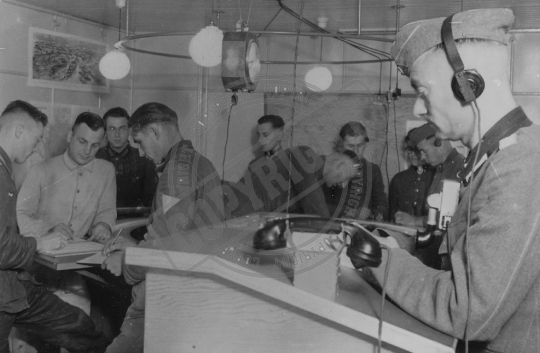
SP_0027
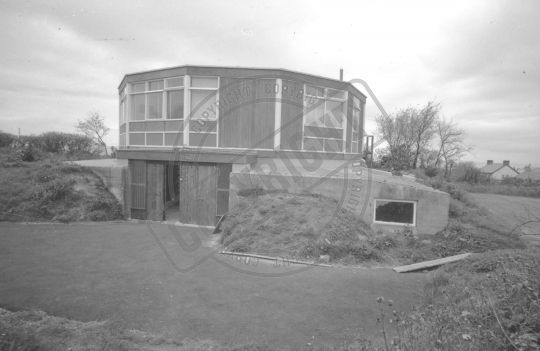
Inside the command post of Batterie Elefant, Bailiffs Cross Road, St Andrew, Guernsey where plotting information is collated then communicated to the gun positions for aiming and firing. This was situated in close proximity to the 'Paper House’ and the observation tower.
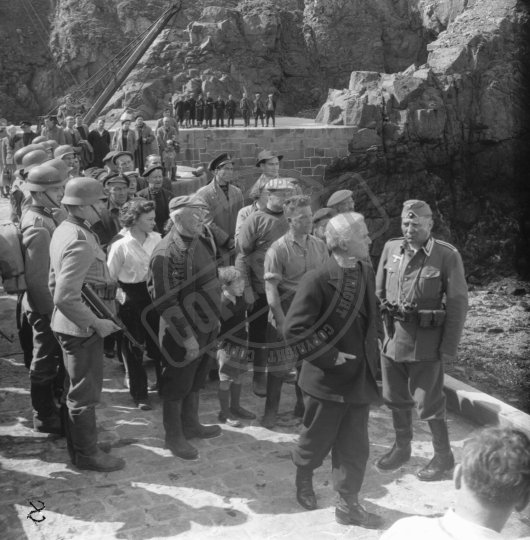
TPL_00031
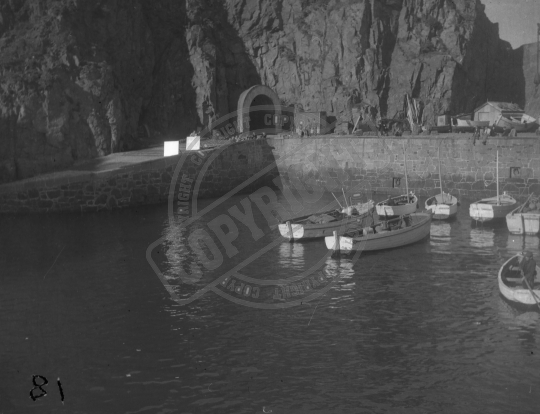
Filming of 'Appointment with Venus’ on the Channel Island of Sark. The plot is set during the outbreak of WWII when the Ministry of Agriculture and the War Office join forces to launch a daring mission to rescue a highly lucrative pedigree cow, Venus, from the German-occupied Channel Island of Armorel. English Army Major Valentine Moreland (David Niven), his A.T.S. assistant Nicola Fallaize (Glynis Johns), radio operator Forbes (Patric Doonan) and ship’s pilot Trawler Langley (Noel Purcell) are dispatched to the small island to rescue Venus. Problems arise when the German commander on Armorel, Weiss (George Coulouris), also discovers the cow’s value and intends to evacuate Venus back to Germany. The film went on general release in 1951.
TPL_00053
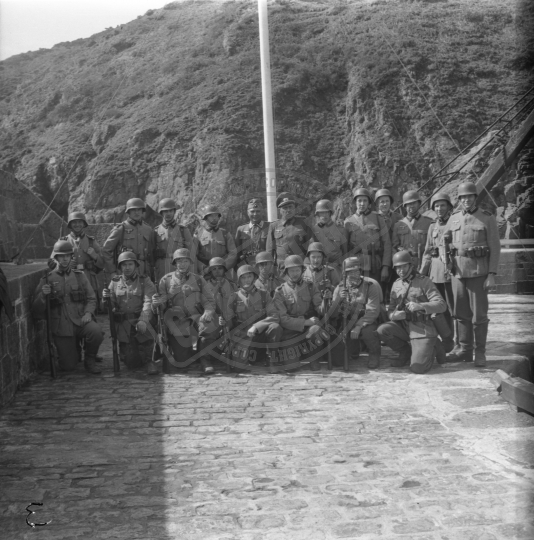
Filming of 'Appointment with Venus’ on the Channel Island of Sark. The plot is set during the outbreak of WWII when the Ministry of Agriculture and the War Office join forces to launch a daring mission to rescue a highly lucrative pedigree cow, Venus, from the German-occupied Channel Island of Armorel. English Army Major Valentine Moreland (David Niven), his A.T.S. assistant Nicola Fallaize (Glynis Johns), radio operator Forbes (Patric Doonan) and ship’s pilot Trawler Langley (Noel Purcell) are dispatched to the small island to rescue Venus. Problems arise when the German commander on Armorel, Weiss (George Coulouris), also discovers the cow’s value and intends to evacuate Venus back to Germany. The film went on general release in 1951.
TPL_00052
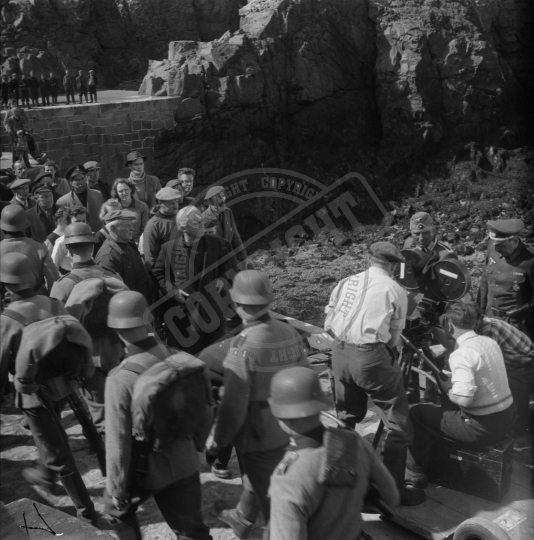
Filming of 'Appointment with Venus’ on the Channel Island of Sark. The plot is set during the outbreak of WWII when the Ministry of Agriculture and the War Office join forces to launch a daring mission to rescue a highly lucrative pedigree cow, Venus, from the German-occupied Channel Island of Armorel. English Army Major Valentine Moreland (David Niven), his A.T.S. assistant Nicola Fallaize (Glynis Johns), radio operator Forbes (Patric Doonan) and ship’s pilot Trawler Langley (Noel Purcell) are dispatched to the small island to rescue Venus. Problems arise when the German commander on Armorel, Weiss (George Coulouris), also discovers the cow’s value and intends to evacuate Venus back to Germany. The film went on general release in 1951.
TPL_00051
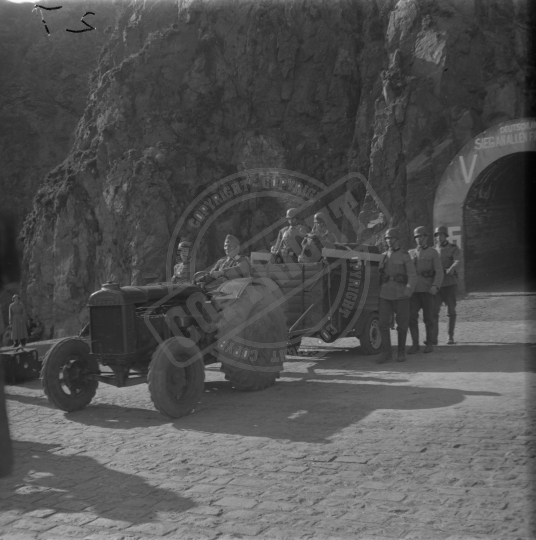
Filming of 'Appointment with Venus’ on the Channel Island of Sark. The plot is set during the outbreak of WWII when the Ministry of Agriculture and the War Office join forces to launch a daring mission to rescue a highly lucrative pedigree cow, Venus, from the German-occupied Channel Island of Armorel. English Army Major Valentine Moreland (David Niven), his A.T.S. assistant Nicola Fallaize (Glynis Johns), radio operator Forbes (Patric Doonan) and ship’s pilot Trawler Langley (Noel Purcell) are dispatched to the small island to rescue Venus. Problems arise when the German commander on Armorel, Weiss (George Coulouris), also discovers the cow’s value and intends to evacuate Venus back to Germany. The film went on general release in 1951.
TPL_00048
Filming of 'Appointment with Venus’ on the Channel Island of Sark. The plot is set during the outbreak of WWII when the Ministry of Agriculture and the War Office join forces to launch a daring mission to rescue a highly lucrative pedigree cow, Venus, from the German-occupied Channel Island of Armorel. English Army Major Valentine Moreland (David Niven), his A.T.S. assistant Nicola Fallaize (Glynis Johns), radio operator Forbes (Patric Doonan) and ship’s pilot Trawler Langley (Noel Purcell) are dispatched to the small island to rescue Venus. Problems arise when the German commander on Armorel, Weiss (George Coulouris), also discovers the cow’s value and intends to evacuate Venus back to Germany. The film went on general release in 1951.
TPL_00164
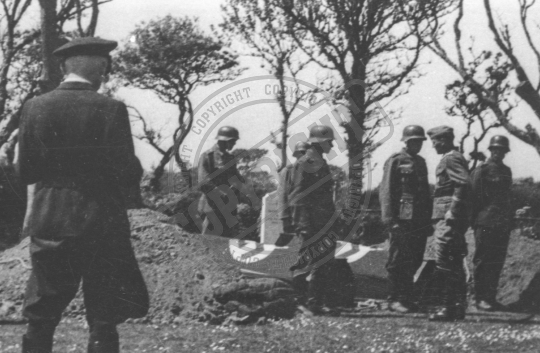
Two soldiers who were killed when clearing their own mines immediately after the occupation are buried in the cemetery near St Peters church in Sark.
TPL_00077
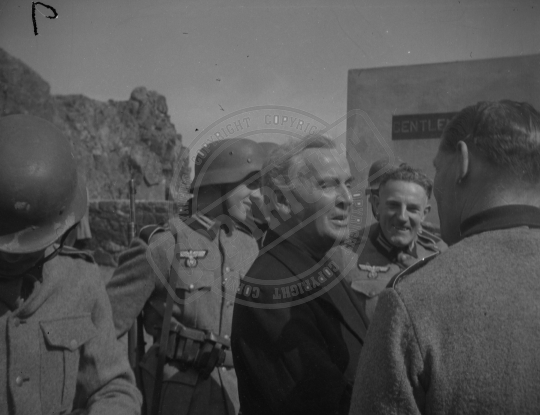
Filming of 'Appointment with Venus’ on the Channel Island of Sark. The plot is set during the outbreak of WWII when the Ministry of Agriculture and the War Office join forces to launch a daring mission to rescue a highly lucrative pedigree cow, Venus, from the German-occupied Channel Island of Armorel. English Army Major Valentine Moreland (David Niven), his A.T.S. assistant Nicola Fallaize (Glynis Johns), radio operator Forbes (Patric Doonan) and ship’s pilot Trawler Langley (Noel Purcell) are dispatched to the small island to rescue Venus. Problems arise when the German commander on Armorel, Weiss (George Coulouris), also discovers the cow’s value and intends to evacuate Venus back to Germany. The film went on general release in 1951.
TPL_00017
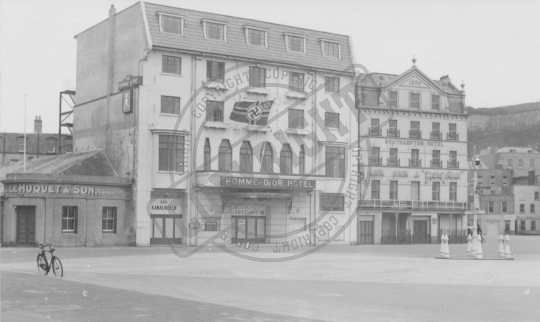
The Pomme d’Or Hotel at the Weighbridge, St Helier, Jersey was the Headquarters of the Hafenkommandant (Senior German Naval Officer). This is where the Bailiff Alexander Coutanche met Generalmajor Wulf the Island Commander at 12 o’clock on 9th May 1945 and escorted him to an awaiting German pinnace at the harbour and out to HMS Beagle anchored in St Aubin’s Bay to meet with Brigadier Snow and the other British representatives.
TPL_00020
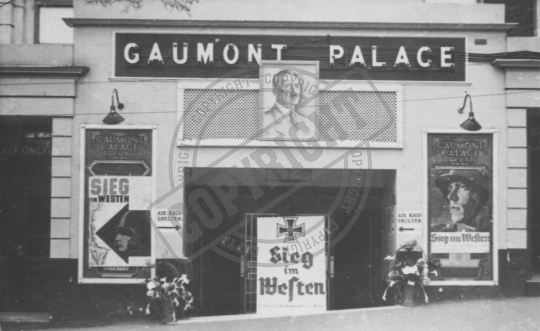
Gaumont cinema in St. Julian's Avenue showing 'Victory in the West' in 1941. Civilians could go to the cinema but the films were mostly shown in German.
TPL_00019
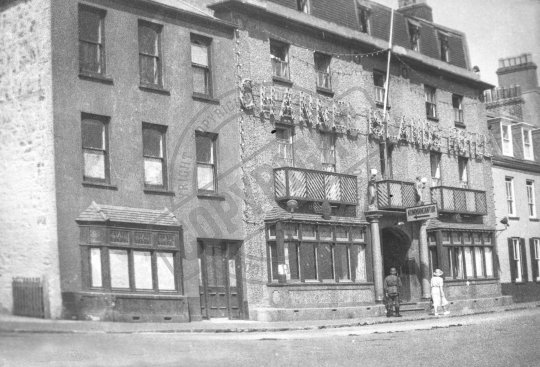
Channel Islands Hotel Glategny Esplanade St Peter Port. Headquarters of the German Commandant 1940. The hotel was renamed the Savoy and later demolished.
TPL_00018
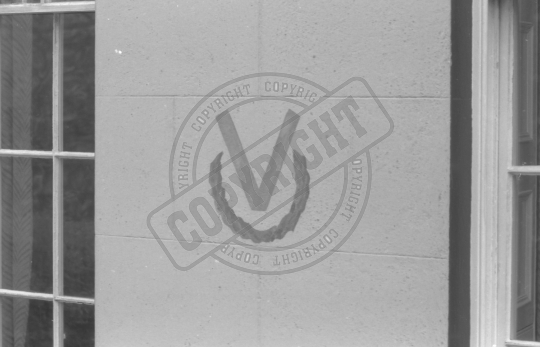
The German version of the V sign which appeared on most premises occupied by German troops.
SP_0018
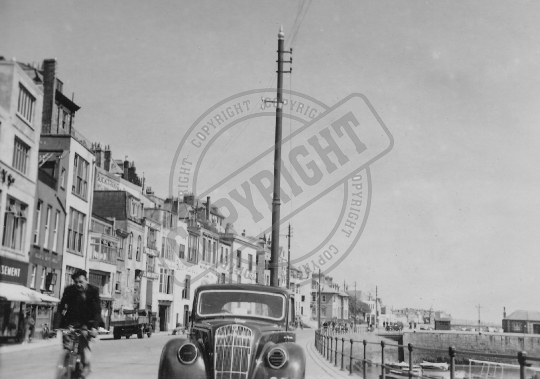
This photograph was taken on 18th June 1941. Looking north from alongside the slip way opposite Town Church, this view of the town front St Peter Port shows the absence of motor vehicles. With most locals restricted to horse drawn transport or bicycles, the only vehicle evident is marked with a WH indicating its use by the German Wehrmacht (Armed Forces). This Photograph is from a small collection of six taken by an unknown German soldier posted to Guernsey in 1941 with 319 Infantry Division.
SP_0017
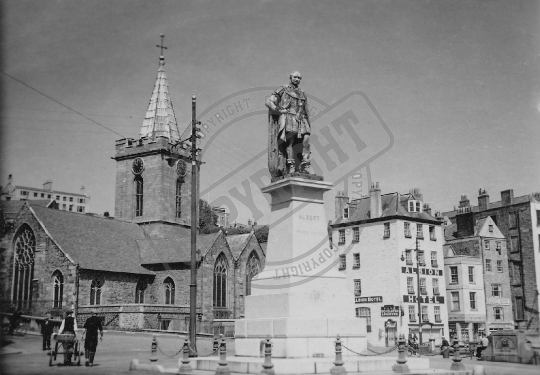
This view of the St Peter Port Town church and Prince Albert statue was photographed on 18th June 1941. Not yet evident are the German road signs painted on the wall of the church and the extensive barbed wire entanglements that were placed around the harbour. This Photograph is from a small collection of six taken by an unknown German soldier posted to Guernsey in 1941 with 319 Infantry Division.
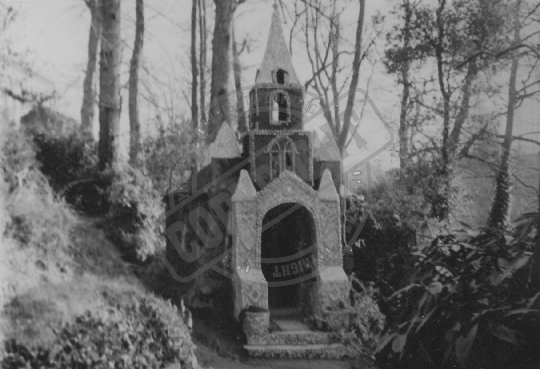
SP_0003
Wartime view of the Little Chapel. The miniature chapel was built by Brother Déodat who started work in March 1914. His plan was to create a miniature version of the famous grotto and basilica at Lourdes in France.
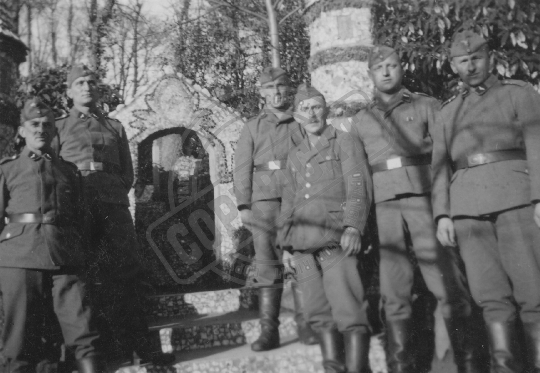
SP_0002
Germans take time to visit the Little Chapel. The miniature chapel was built by Brother Déodat who started work in March 1914. His plan was to create a miniature version of the famous grotto and basilica at Lourdes in France.
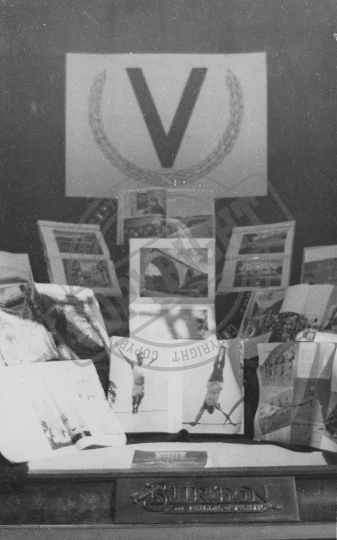
OA_065
The corner of King Street and Halkett Place, St Helier, Jersey. Burton’s shop was taken over by the German’s and became the Frontbuchhandlung Soldaten Kaufhaus (Front Bookshop and Soldier’s Shop). Widow display using the German adopted 'V’ sign and laurel.
TPL_00001
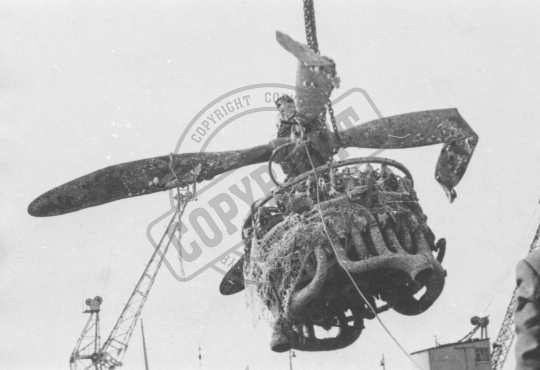
The Pratt and Whitney R-2800-5 double Wasp engine from a B26 Marauder found south of Guernsey, 15 March 1962.
TPL_00011
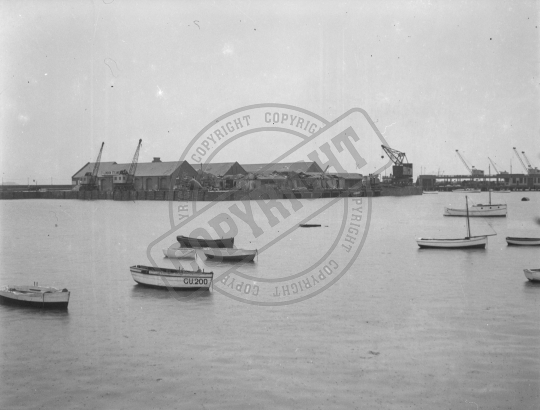
Severe damage to the Cambridge Berth sheds following a bombing raid on the 28th June 1940.
TPL_00131
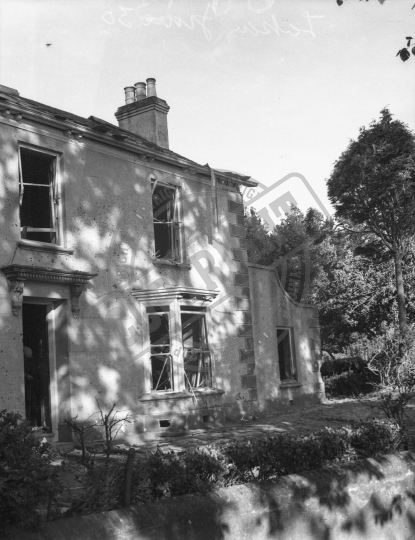
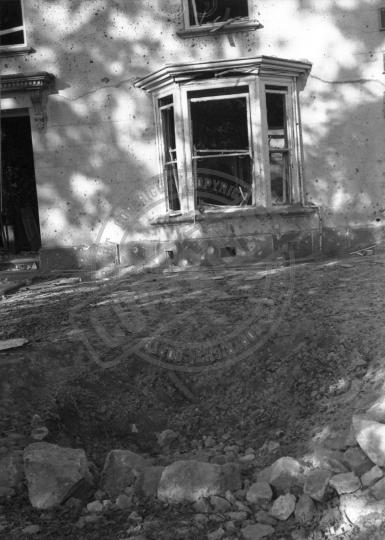
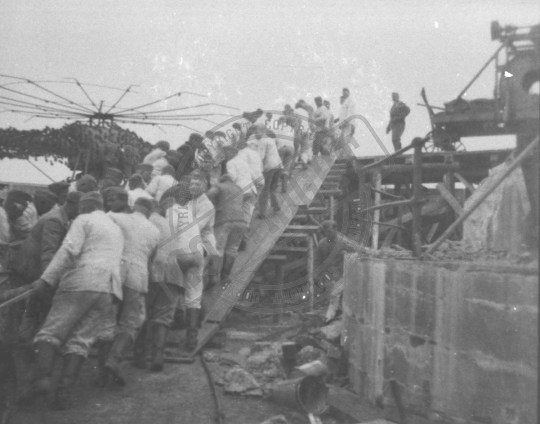
German naval personnel man-handling a 17cm artillery piece into position at Fort Albert, Alderney.
CIMM_0071
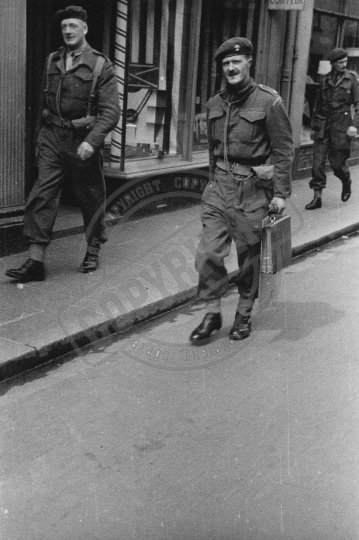
Jersey Friday 11th May 1945. The Royal Court’s first sitting since the Liberation of Jersey assembled at 11 a.m. on Friday morning, 12 May 1945. In attendance were Force 135 officers including L to R; Captain C. Hargreaves, Major Anderson, making their way through the streets of St Helier to the Court.
CIMM_0069
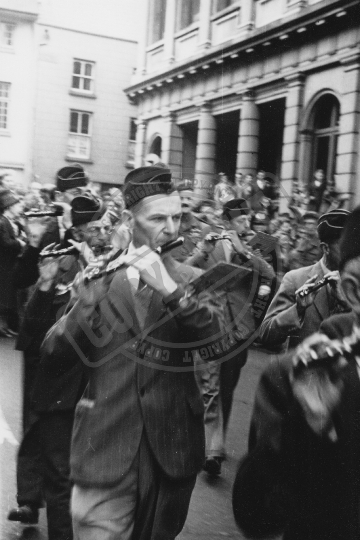
Jersey Thursday 10th May 1945. After the speeches the St James Boys Brigade Band, headed by Dae Donavan their drum-major, struck up a rousing march and marched out of the Royal Square followed by Lt-Col Robinson and the troops that had formed the Guard of Honour.
CIMM_0068
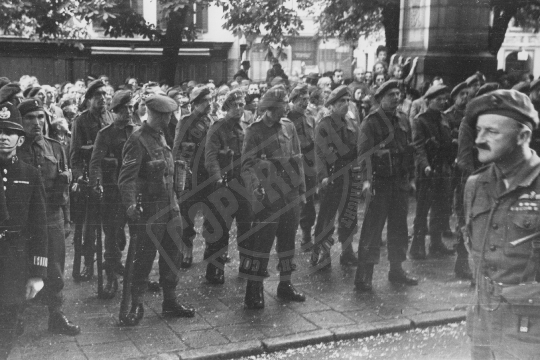
Jersey Thursday 10th May 1945. The Guard of Honour and the Islanders wait patiently in the Royal Square for the States Members to arrive for the Hoisting the Flag Ceremony. Lt-Col. Robinson, deep in thought, paces the pavement outside the States Buildings.
CIMM_0067
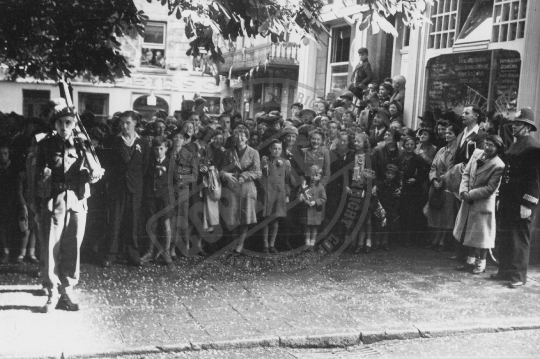
Jersey Thursday 10th May 1945. The section of crowd at the Pierson Hotel end of the Royal Square wait eagerly for the ceremony to begin.
CIMM_0066
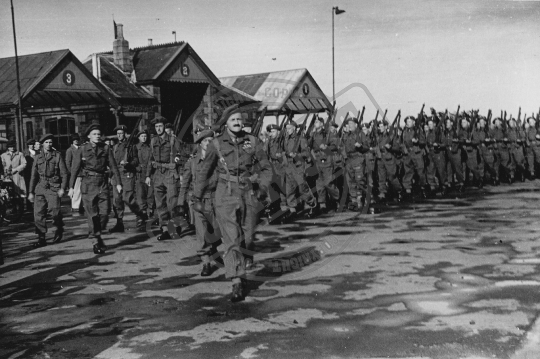
Jersey Thursday 10th May 1945. The Guard of Honour is marched off the Weighbridge led by Lt-Col Robinson and followed closely by Captain Le Brocq.
CIMM_0062
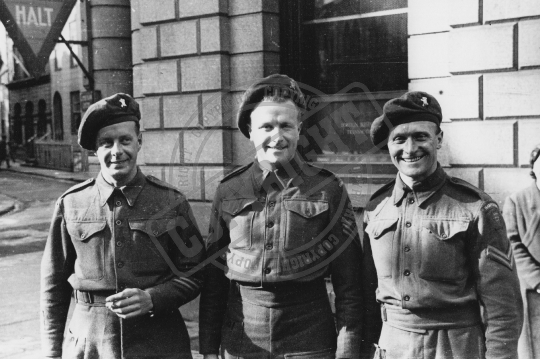
Jersey Thursday 10th May 1945. Three Jersey lads, Private Raymond Ahier, Sergeant Winter de Gruchy, and Corporal Alex Mangan, serving with the 11th (RMIJ) Battalion, the Hampshire Regiment, in Broad Street, Jersey.
CIMM_0061
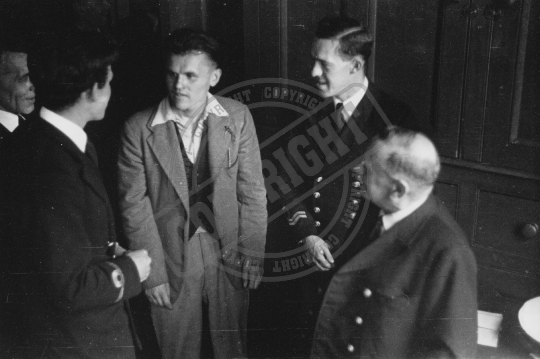
Jersey Liberation Wednesday 9th May 1945. After unfurling the Union Jack the two RN officers chat with a Russian worker (centre), Deputy Harbourmaster Bill Furzer (left) and Harbourmaster Captain Harry Richmond (right).
CIMM_0060
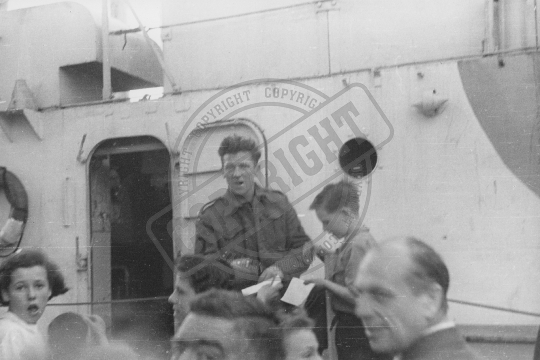
Jersey Liberation Wednesday 9th May 1945. Islanders crowded onto the LCI(L) 130 and asked the crew for autographs.
CIMM_0059
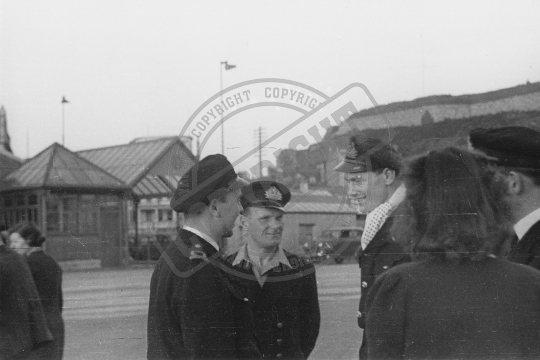
Jersey Liberation Wednesday 9th May 1945. Royal Navy officers from the LCI(L) 130 and minesweepers exchange details at the top of the New North Quay, St Helier Harbour, whilst a Jersey girl listens eagerly to their conversation.
CIMM_0058
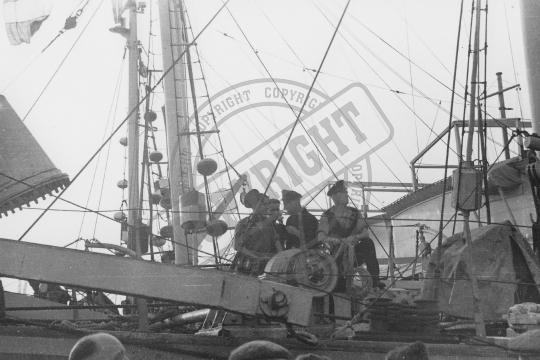
Jersey Liberation Wednesday 9th May 1945. Once moored alongside the New North Quay crew members of one of the HM Motor minesweepers relax after clearing the approaches to St Helier Harbour. This minesweeper is most probably the FY PT 542 commanded by Lieutenant Idris Edwards, RNVR.
CIMM_0055
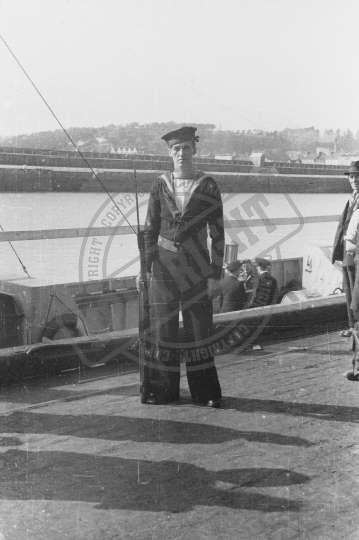
Jersey Liberation Wednesday 9th May 1945. One of two sentries that were posted to guard the mooring ropes, maintain discipline and ensure security of the vessel to prevent over enthusiastic islanders boarding the LCI(L) 130 and removing items as souvenirs.
CIMM_0052
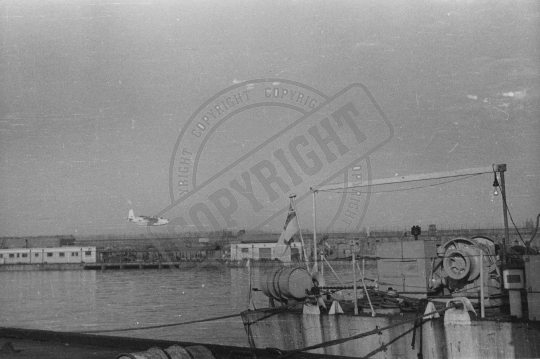
The RAAF Sunderland aircraft, which provided air cover for HMS Cosby and LCI(L) 130, flew at low level over the Albert Pier, Jersey to show the flag
SP_0045.jpg
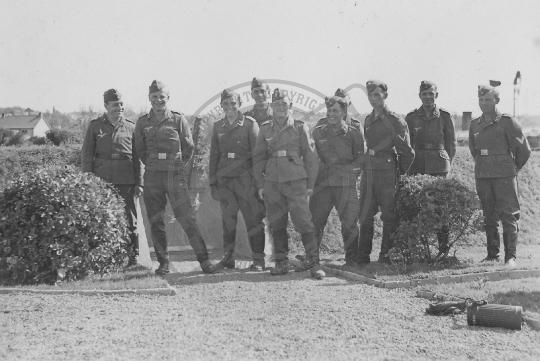
The gun crew of Flak Batterie Kapellendorf located off Les Grandes Capelles in St Sampson. This battery of four 8.8cm Flak 18 guns which were used in an anti-aircraft role. This sequence of photographs were taken in December 1941.
SP_0042.jpg
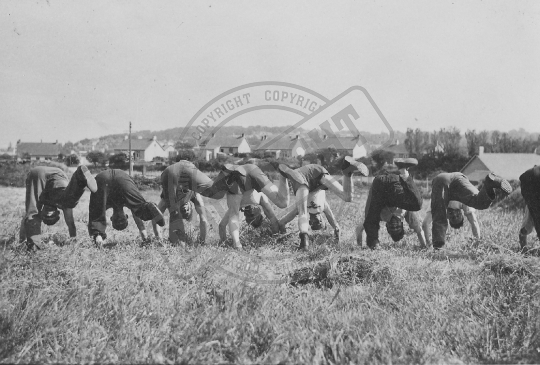
The gun crew of Flak Batterie Kapellendorf located off Les Grandes Capelles in St Sampson. This battery of four 8.8cm Flak 18 guns which were used in an anti-aircraft role. This sequence of photographs were taken in December 1941.
SP_0041.jpg
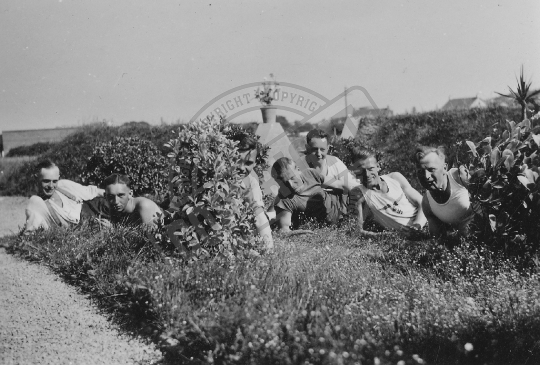
The gun crew of Flak Batterie Kapellendorf located off Les Grandes Capelles in St Sampson. This battery of four 8.8cm Flak 18 guns which were used in an anti-aircraft role. This sequence of photographs were taken in December 1941.
SP_0040.jpg
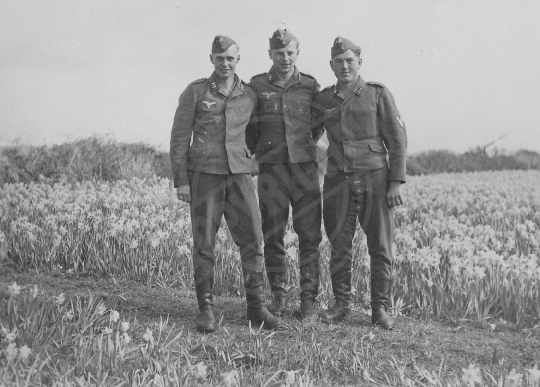
The gun crew of Flak Batterie Kapellendorf located off Les Grandes Capelles in St Sampson. This battery of four 8.8cm Flak 18 guns which were used in an anti-aircraft role. This sequence of photographs were taken in December 1941.
SP_0038.jpg
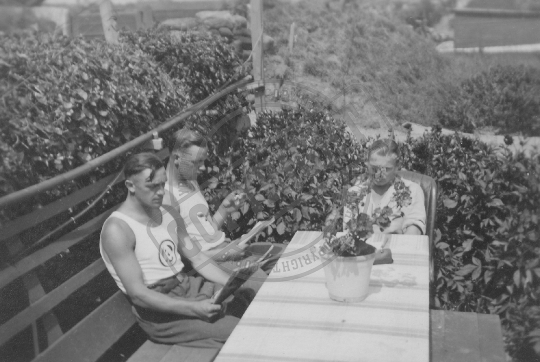
The gun crew of Flak Batterie Kapellendorf located off Les Grandes Capelles in St Sampson. This battery of four 8.8cm Flak 18 guns which were used in an anti-aircraft role. This sequence of photographs were taken in December 1941. Note the Luftwaffe insignia on the PT shirts.
SP_0036.jpg
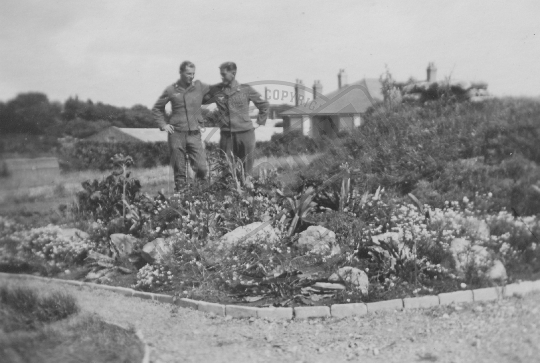
Flak Batterie Kapellendorf located off Les Grandes Capelles in St Sampson. This battery of four 8.8cm Flak 18 guns which were used in an anti-aircraft role. This sequence of photographs were taken in December 1941.
SP_0034.jpg
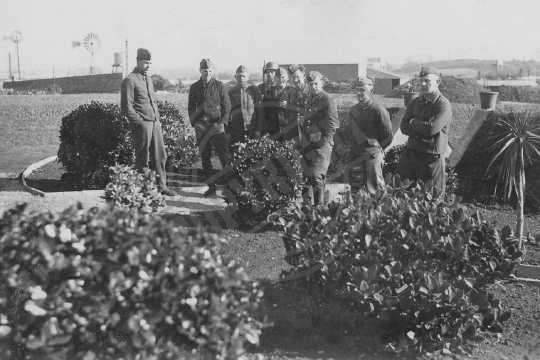
The gun crew of Flak Batterie Kapellendorf located off Les Grandes Capelles in St Sampson. This battery of four 8.8cm Flak 18 guns which were used in an anti-aircraft role. This sequence of photographs were taken in December 1941.
SP_0033.jpg
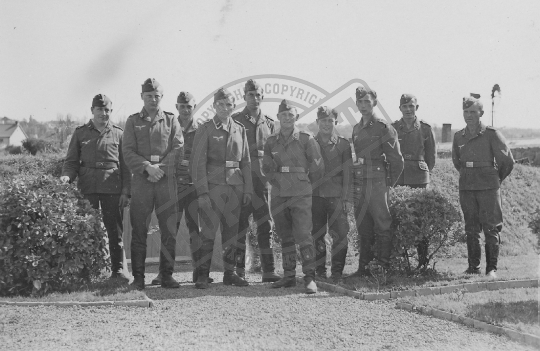
The gun crew of Flak Batterie Kapellendorf located off Les Grandes Capelles in St Sampson. This battery of four 8.8cm Flak 18 guns which were used in an anti-aircraft role. This sequence of photographs were taken in December 1941.
SP_0032.jpg
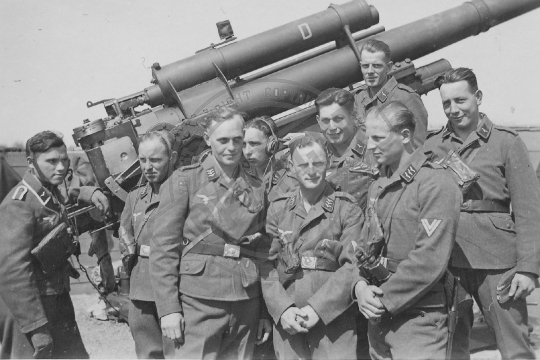
The gun crew of Flak Batterie Kapellendorf located off Les Grandes Capelles in St Sampson. This battery of four 8.8cm Flak 18 guns which were used in an anti-aircraft role. This sequence of photographs were taken in December 1941.
SP_0031.jpg
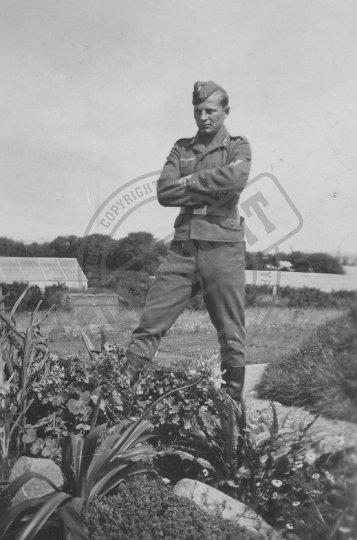
Flak Batterie Kapellendorf located off Les Grandes Capelles in St Sampson. This battery of four 8.8cm Flak 18 guns which were used in an anti-aircraft role. This sequence of photographs were taken in December 1941.
SP_0030.jpg
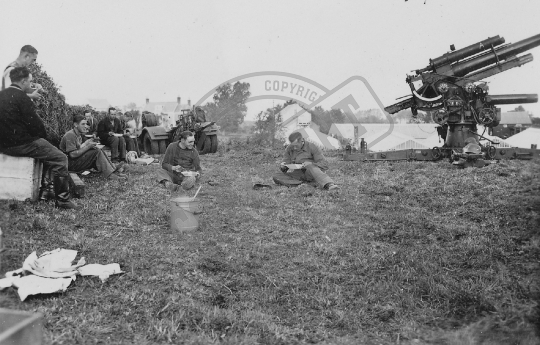
Flak Batterie Kapellendorf located off Les Grandes Capelles in St Sampson. This battery of four 8.8cm Flak 18 guns which were used in an anti-aircraft role. This sequence of photographs were taken in December 1941. Note the trailer for moving the gun in the background.