Results (598)


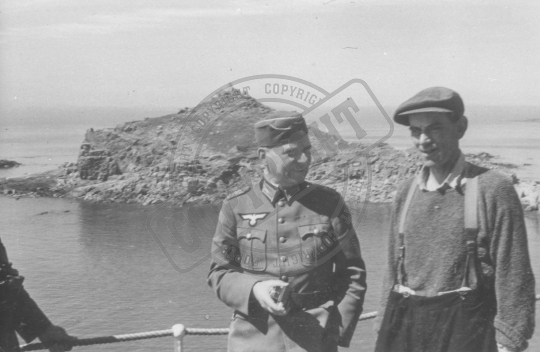
TPL_00288
Oberst (Colonel) Knackfuss, Guernsey Feldkommandantur, with Mr. G.MacDonald, caretaker of Jethou.
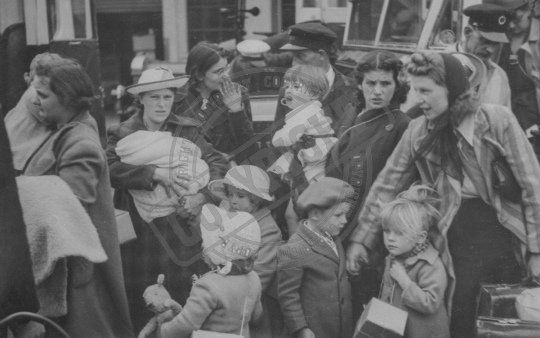
TPL_00026
June 1940 saw the evacuation of many civilians, note the gas masks being carried as part of the preparations for attack. The Guernsey population was about 42,000 in 1940, some 17,000 left before the German occupation. During the war they were re-housed throughout the United Kingdom.
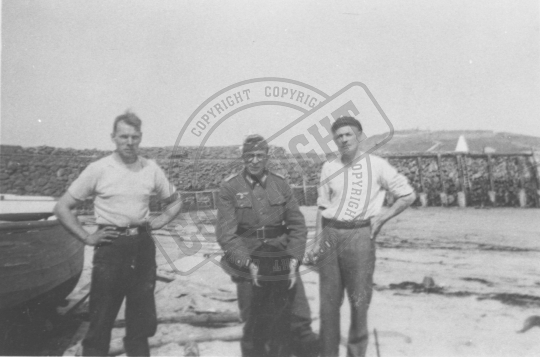
TPL_00280
Peter Doyle, Sonderfuehrer Herzog and George Pope a fisherman and pilot, photographed in Alderney.
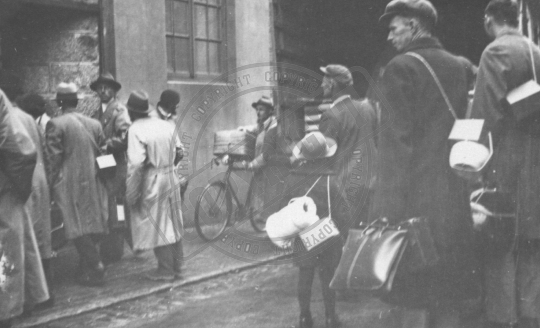
TPL_00024
June 1940 saw the evacuation of many civilians, note the gas masks being carried as part of the preparations for attack.
TPL_00013
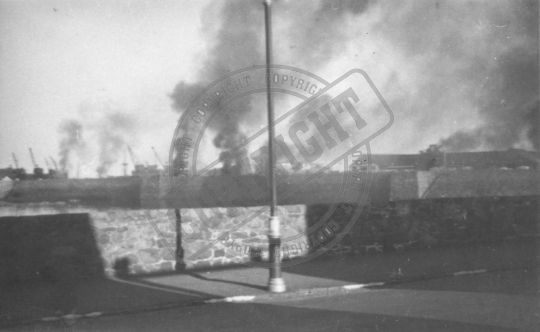
Smoke rises from burning vehicles shortly after a bombing raid on the White Rock in St Peter Port. The raid on the evening of 28th June 1940 resulted in 33 civilian dead. The parked tomato trucks were mistaken for military vehicles.
TPL_00376
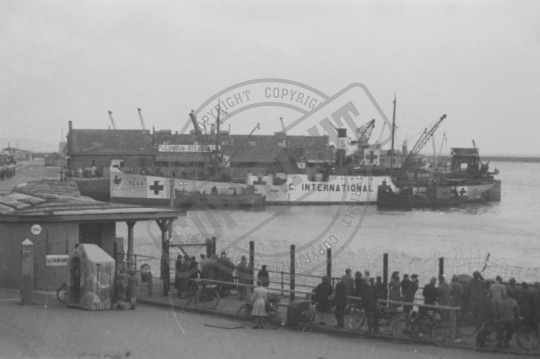
A crowd has gathered at the Weighbridge, Guernsey to see the Red Cross ship SS Vega which has docked at the Cambridge Berth, St Peter Port with much needed supplies for the islands population. Note the German century box and the heavily protected fencing around the harbour.
TPL_00193
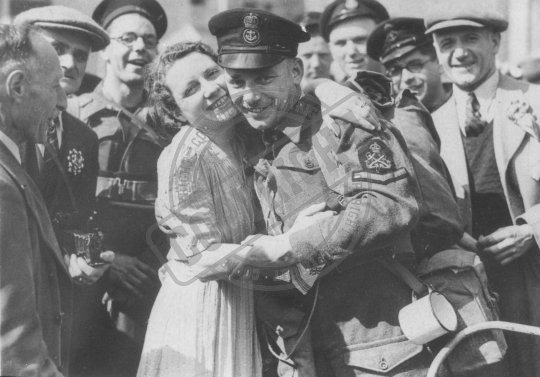
Petty Officer John Langlois, son of Mrs. and the late Mr. Langlois, of the Green lanes, arrived in Guernsey on Saturday 12th May and before he had marched more than a few yards was greeted unexpectedly by his sister. PO Langlois, who was educated at Amherst School, joined HM forces in 1936, landed in France on D-Day and was last in the island on leave in 1939.
TPL_00260
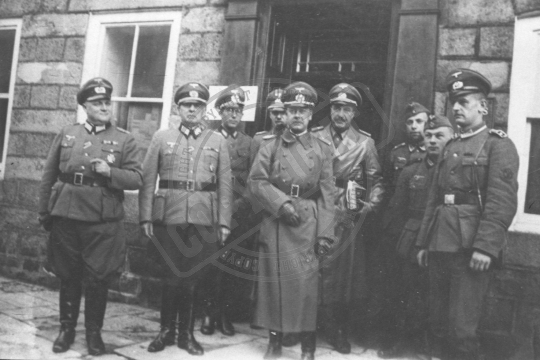
Outside the Alderney headquarters for the Feldkommondantur 515, the German Civilian administration on 1st May 1941. Hans Herzog the Sonderfuehrer for Alderney is seen with members from the Feldkommondantur 515 Guernsey and Jersey, which were based at the Grange Lodge and Victoria College respectively. Also there was second from the left, Oberst Schumacher and fourth from the left peeping through the gap is Dr. Kratzer.
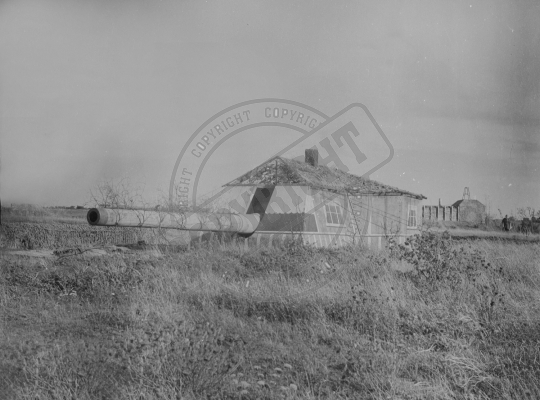
TPL_00104
Batterie Mirus, the largest installation in the Channel Islands housed four 30.5cm naval guns, this example shows that the Germans camouflaged the structure to look like a cottage.
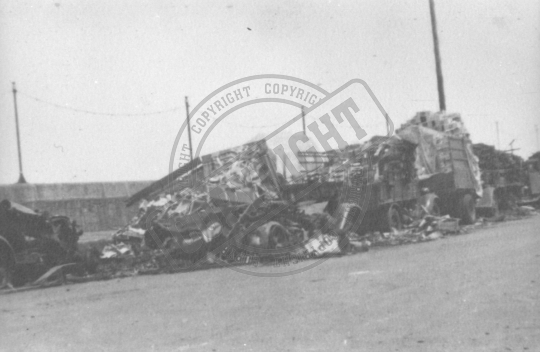
TPL_00014
The aftermath of the bombing raid on 28th June 1940 with the burnt out tomato trucks littering the White Rock pier.
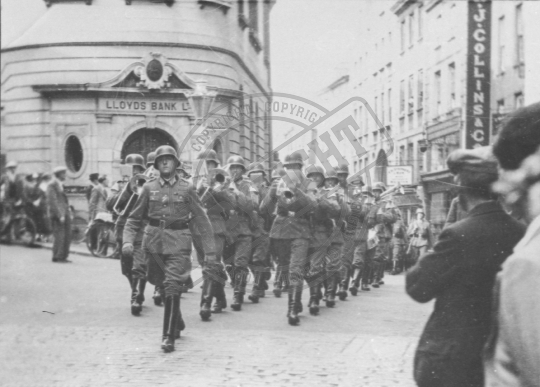
TPL_00384
This well-known photograph used for propaganda shows a German military band marching past Lloyds Bank at the foot of Smith Street in St Peter Port, Guernsey. This image shows the head of a column of troops approaching the High Street.
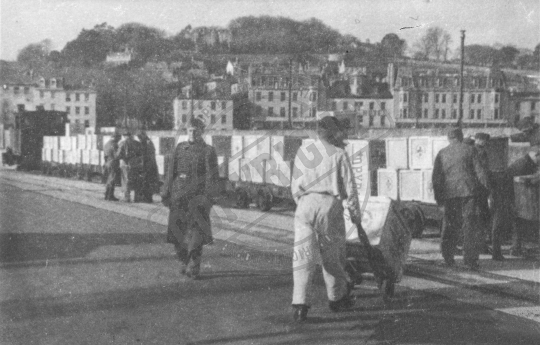
TPL_00314
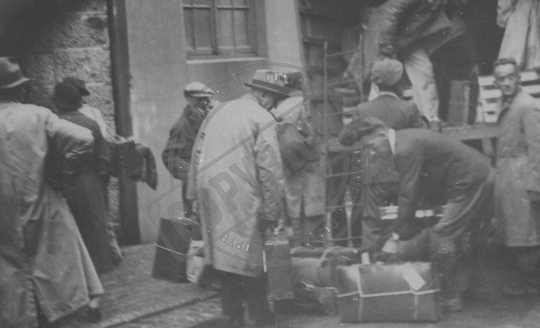
Crates of Red Cross parcels arrive at the docks in Guernsey before being transported by train to a secure store.
TPL_00350
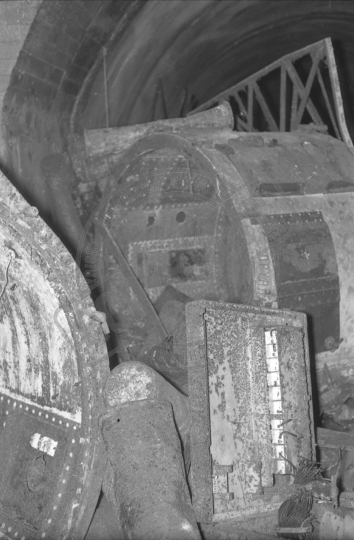
St Saviour`s tunnel which is featured in many publications as 'The tunnel under the church’ is one of the largest German tunnel complexes in Guernsey. This tunnel was originally constructed as a ration store and in 1944 it was converted into a munitions store. On 9th May 1969 Richard Heaume and John Hayes explored the remains of the tunnel and its contents which had captured the interest of many collectors ever since the scrap men had left in the 1950’s.
TPL_00266
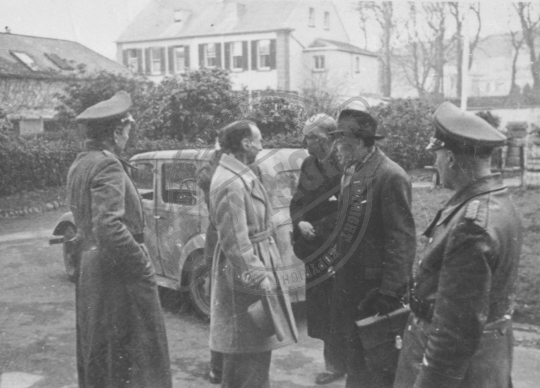
At the Hotel Metropole, site of the military headquarters in Jersey, a meeting took place before the Red Cross cargo was unloaded. Baron von Aufsess, Colonel Iselin, Duret Aubin and the Bailiff Coutanche were all present.
OA_008
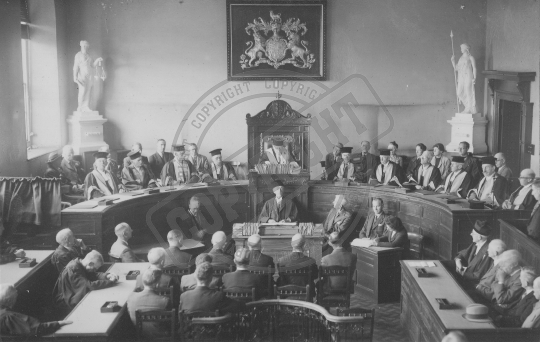
The Bailiff of Guernsey, Jurats and members of the States Controlling Committee seated in the Royal Court.
TPL_00012
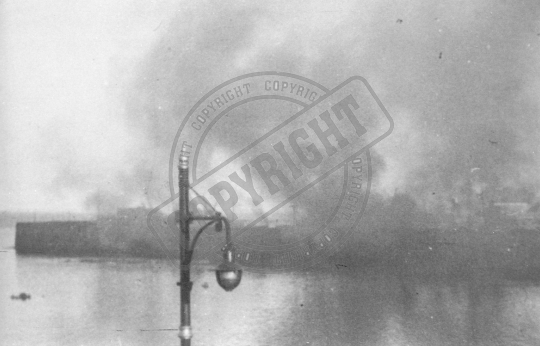
Smoke drifts from burning vehicles shortly after a bombing raid on the White Rock in St Peter Port. The raid on the evening of 28th June 1940 resulted in 33 civilian dead. The parked tomato trucks were mistaken for military vehicles.
TPL_00009
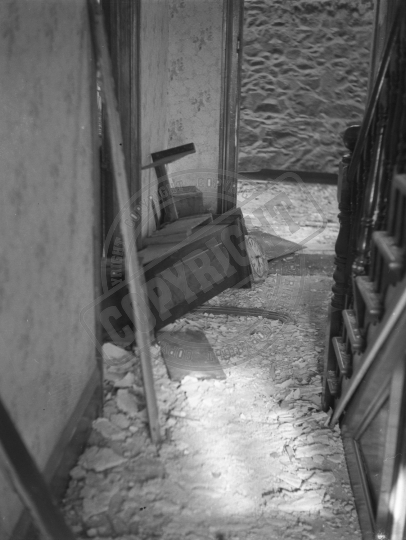
Bomb damage to a property in the Strand St Peter Port following an air raid on 28th June 1940.
TPL_00005
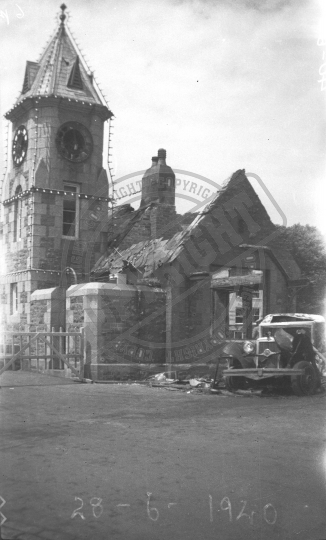
The burnt out weighbridge in St Peter Port following the bombing of the harbour on the evening of 28th June 1940.
TPL_00002
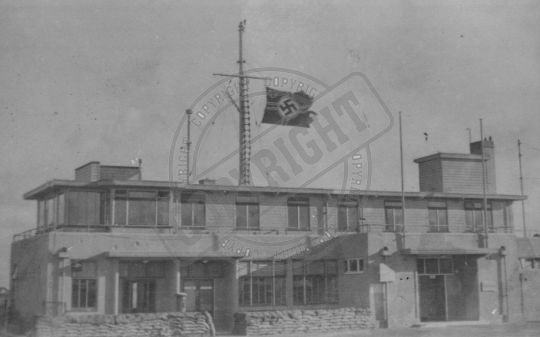
The Guernsey airport building pock-marked by raiding RAF aircraft in August 1940. Sandbagged and flying the Nazi flag it was the first building entered by the Germans when they landed in the Channel Islands on 30 June 1940.
CIMM_0057
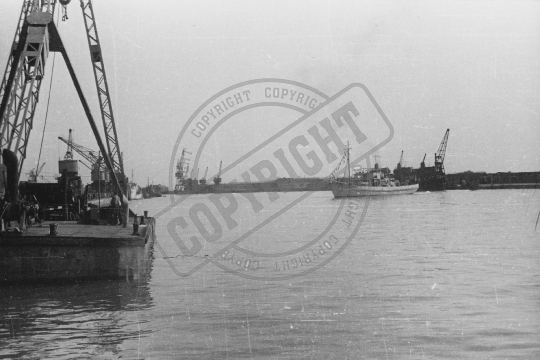
Jersey Liberation Wednesday 9th May 1945. The HM Motor Minesweeper FY PT 250, commanded by Lt. Leslie Jackson, RNVR, of the 142nd Minesweeping Flotilla manoeuvring in St Helier Harbour.
MT_0003
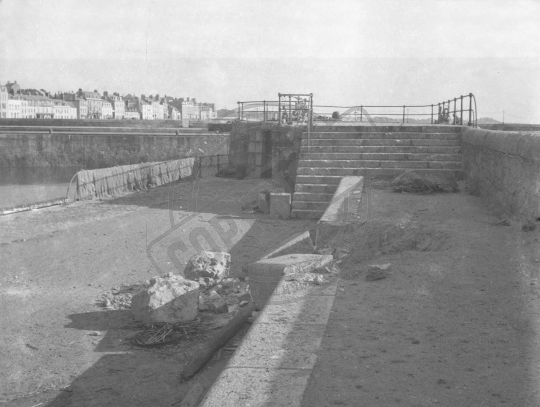
A view of the Careening Hard at half tide, note the bomb and shrapnel damage on the raised walkway just before the end of the pier resulting from the air raid on the evening of 28 June 1940.
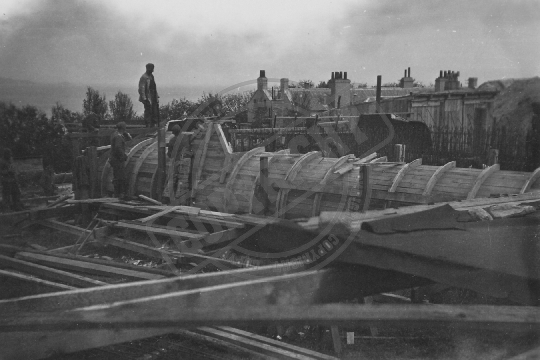
OA_106
Shuttering and huge quantities of steel reinforcing surround construction workers as they prepare one of the many fortifications prior to concrete being poured in the grounds of Fort George.
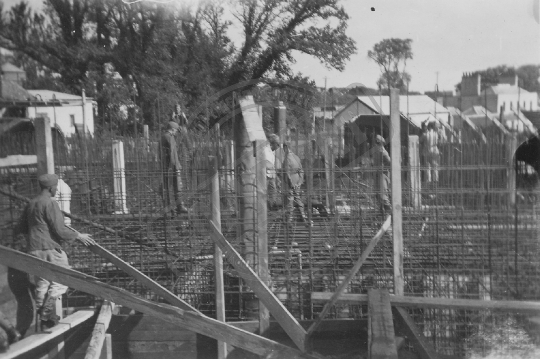
OA_105
Shuttering and huge quantities of steel reinforcing surround construction workers as they prepare one of the many fortifications prior to concrete being poured in the grounds of Fort George.
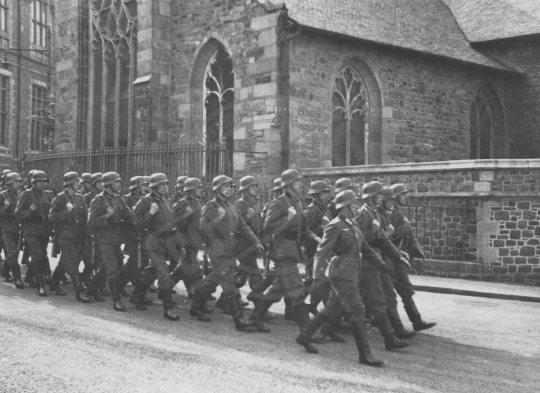
TPL_00385
A German column marches past the town church in St Peter Port, Guernsey. The former vegetable markets building is just visible on the left of the photograph.
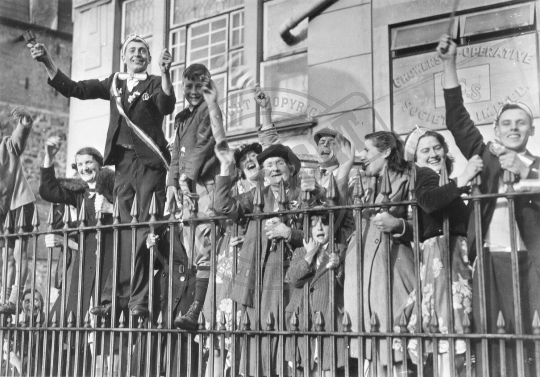
TPL_00386
A crowd of joyous Guernsey islanders in front of the Growers Co-Operative Society building in St Peter Port on May 9th 1945.
TPL_00316
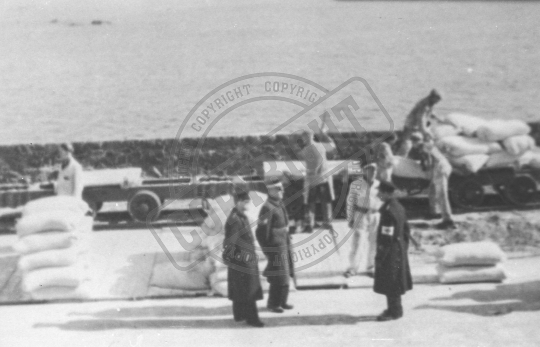
Food from the SS Vega being unloaded by Germans from railway wagons whilst supervised by the St John's Ambulance in St Peter Port.
OA_074
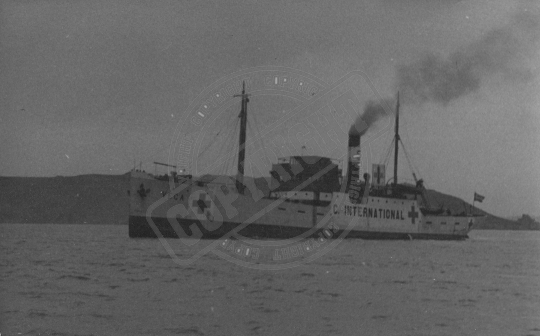
The Swedish ship SS Vega, chartered by the International Red Cross to take Red Cross Supplies to the Channel Islands. She is seen here off St Aubin’s Bay after leaving St Helier Harbour on Friday, 11th May, 1945.
TPL_00259
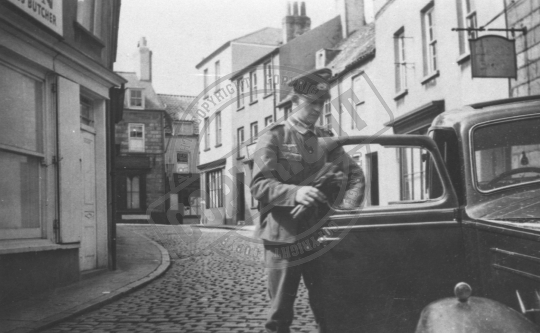
Sergeant Oeser outside Feldkommondantur 515 headquarters at Lloyds Bank, Alderney in June 1941.
TPL_00082
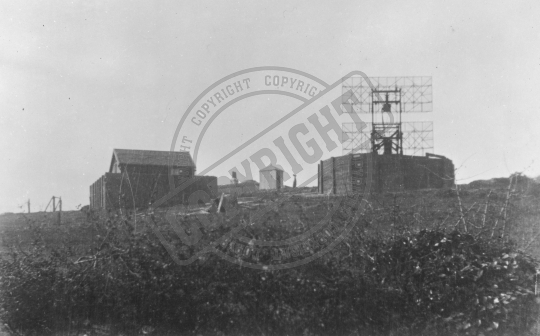
German Freya radar installation near the entrance to Fort George, St Peter Port manned by the Luftwaffe.
TPL_00285
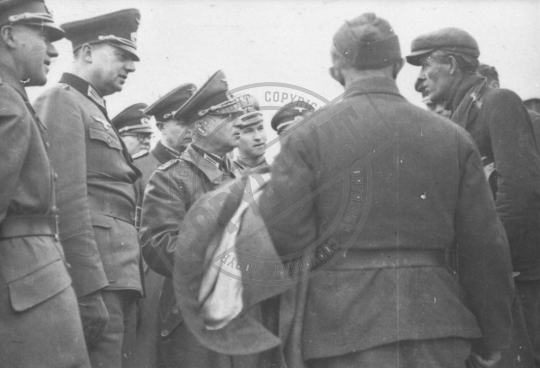
German Officers in Alderney. Oberst Knackfuss (with monocle) with other officers and what appears to be a forced labourer.
TPL_00115
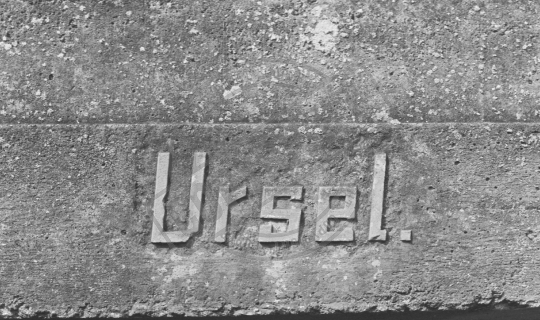
German fortification with the name Ursel above the entrance of a bunker located at Castle Cornet.
TPL_00124
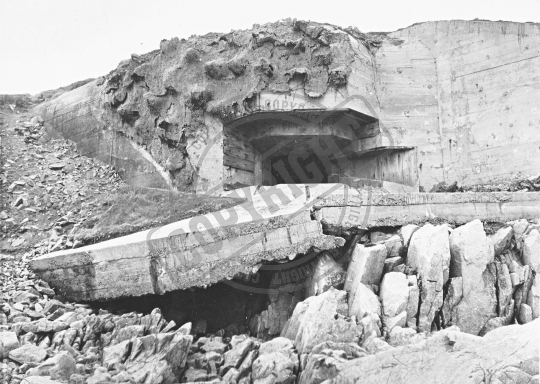
The remains of the original camouflage were still visible here on a post war photograph of the 10.5cm K331(f) bunker at Fort Hommet.
CIMM_0023
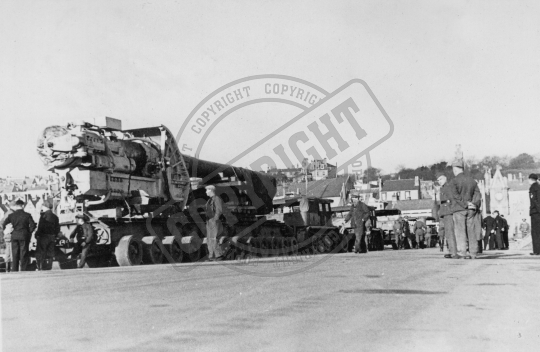
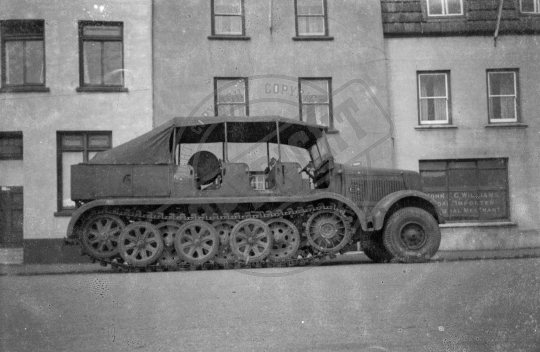
With the Mirus barrel loaded on to a 48-wheel trailer the convoy of halftracks is preparing to leave the Cambridge berth and head across the island to the construction site. Batterie Mirus was the largest German installation in the Channel Islands and housed four 30.5cm naval guns.
TPL_00027
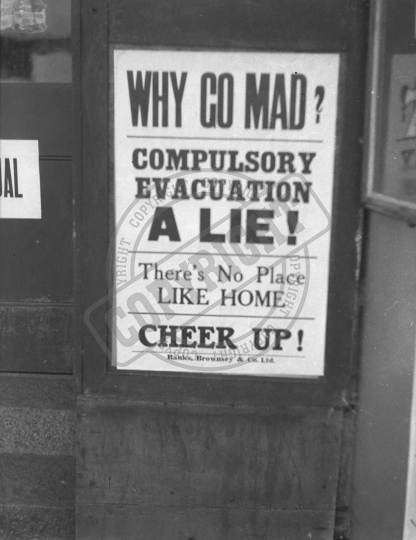
An unauthorised poster which had a certain calming effect on the population of Guernsey during the height of the evacuation crisis period.
SP_0019
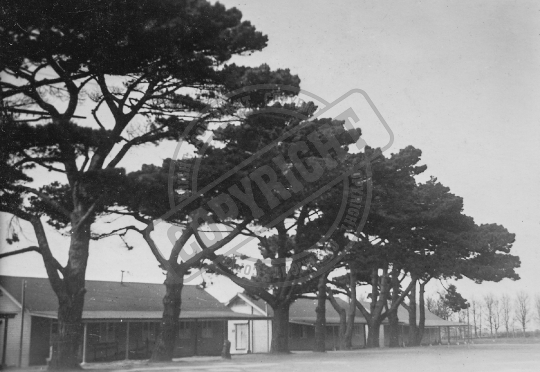
Photographed on 9th April 1941 and described as Lager Beaucamps, this is the camp used by the Guernsey Militia for many years as a training area. The site is now home to the playing fields of Beaucamps School, though seen here on the northern side of the facility would have been used by the Germans as a similar facility but under 'new management’. This Photograph is from a small collection of six taken by an unknown German soldier posted to Guernsey in 1941 with 319 Infantry Division.
TPL_00006
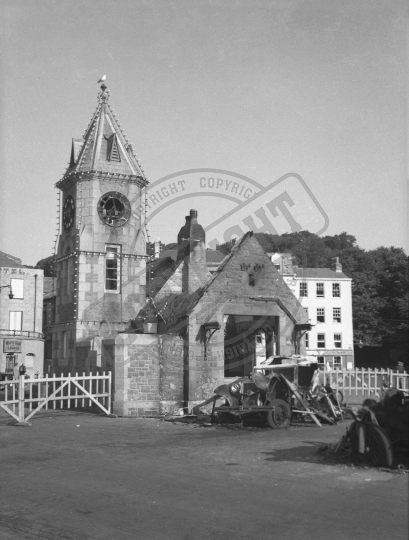
The burnt out weighbridge in St Peter Port following the bombing of the harbour on the evening of 28th June 1940.
TPL_00010
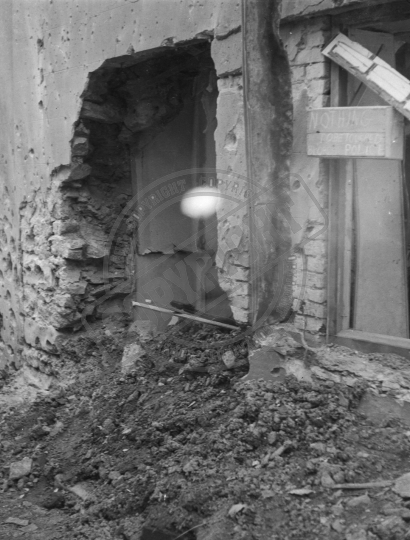
Bomb damage to a property in the Strand St Peter Port following an air raid on 28th June 1940.
CIMM_0064
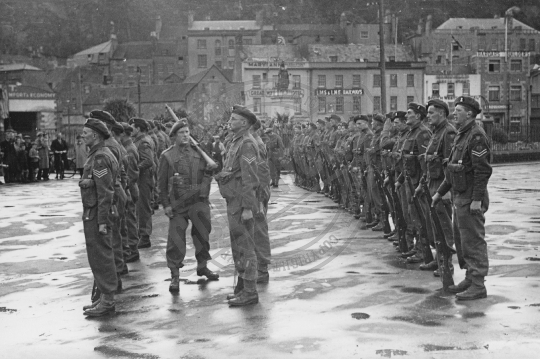
The Guard of honour for Hoisting the Flag Ceremony on the morning of Thursday 10th May 1945 are inspected by the CSM on the Weighbridge in front of the Pomme d’Or Hotel, which will become Force 135 Tactical Headquarters.
CIMM_0063
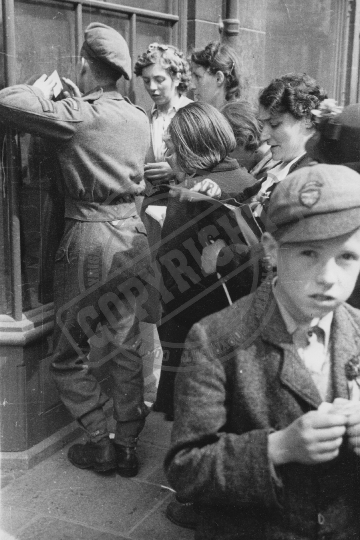
Jersey Thursday 10th May 1945. Jerseyman Corporal Alex Mangan was kept busy signing autographs for islanders in Conway Street, St Helier.
CIMM_0056
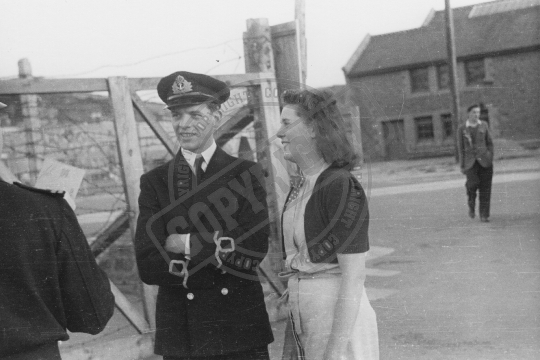
Jersey Liberation Wednesday 9th May 1945. Local girls were eager to speak to the crew of the recently arrived Royal Navy vessels, as Sub-Lt Jimmy Cooper from the LCI(L) 130 soon found out.
CIMM_0054
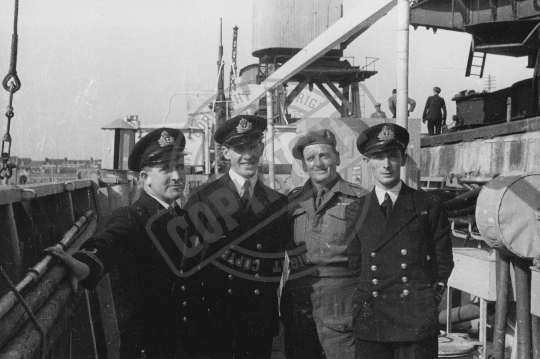
Jersey Liberation Wednesday 9th May 1945. Officers of LCI(L) 130 with a Royal Engineer Major (third left) from the 'Omelette’ Advance Party. L to R; First Lieutenant (name unknown), RNVR; Sub.Lt. Jimmy Cooper, RNVR; and Commanding Officer, Lt Charles Sanders, RNVR.
SP_0048.jpg
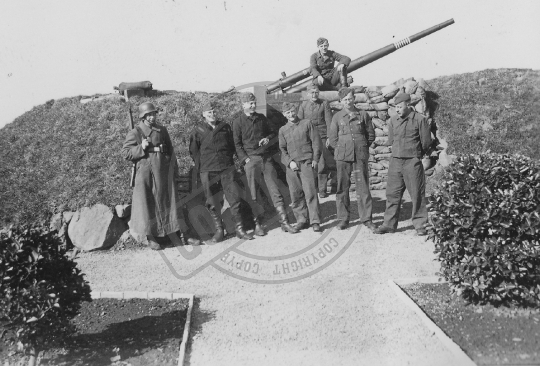
The gun crew of Flak Batterie Kapellendorf located off Les Grandes Capelles in St Sampson. This battery of four 8.8cm Flak 18 guns which were used in an anti-aircraft role. This sequence of photographs were taken in December 1941. Note the kill markings on the gun barrel.
SP_0043.jpg
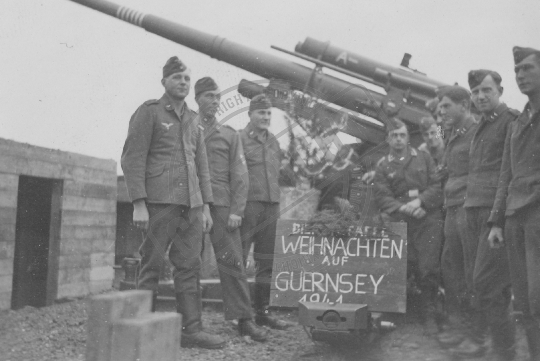
The gun crew of Flak Batterie Kapellendorf located off Les Grandes Capelles in St Sampson. This battery of four 8.8cm Flak 18 guns which were used in an anti-aircraft role. This sequence of photographs were taken at Christmas 1941.
OA_104
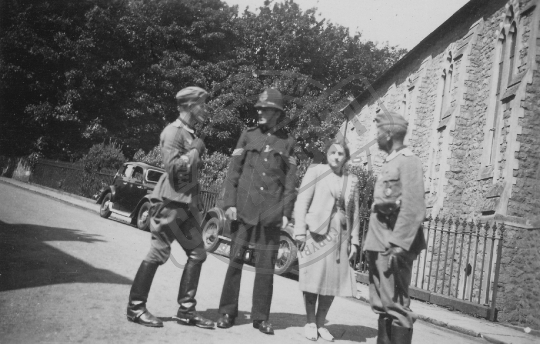
A local police sergeant and civilian photographed with German soldiers outside the old Police Station located opposite St Pauls Church. The church was subsequently demolished and is now the site of the Sunken Garden.
OA_098
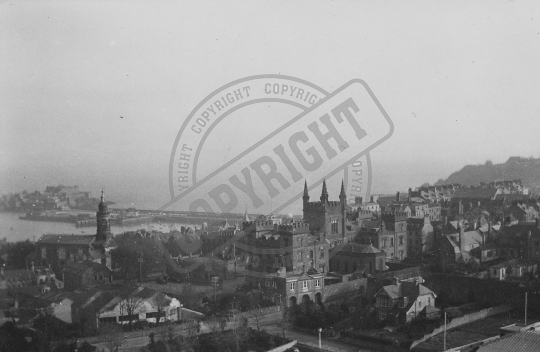
A view across the roof tops of St Peter Port from Victoria Tower, with the spire of St James seen left, the square towers of Elizabeth College on the right and Castle Cornet in the far distance.
TPL_00380
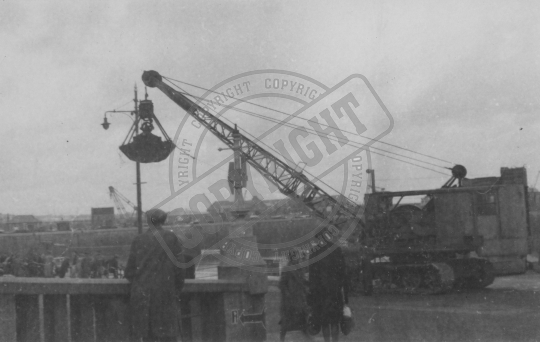
Heavy construction equipment was used during the building of the fortifications, this crane with fitted with a grab was used during the excavation process. Photographed at the top of the slipway next to the Albert statue, note the road sign painted at the foot of the wall and the 'Antee’ floating crane seen in the background.