Results (598)


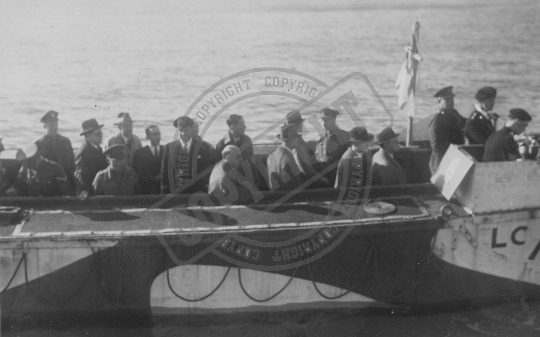
OA_012
After his brief visit to Guernsey the Home Secretary and his party were ferried out to the destroyer, Impulsive. Their next destination was Jersey. On board the landing Craft Assault (LCA) can be seen Captain Colvin, Brigadier Snow, Major Le Patourel, Mr. Herbert Morrison, Lord Munster and other British Government Officials.
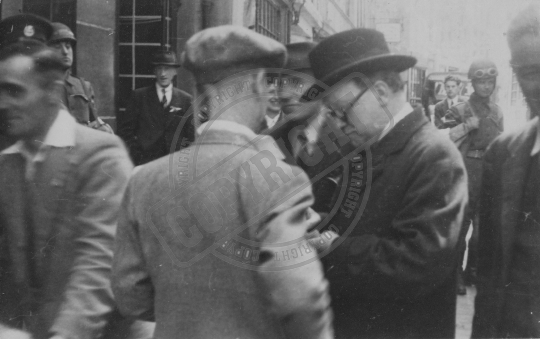
OA_010
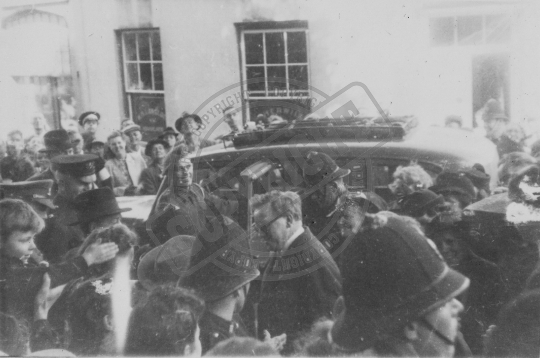
The Home Secretary, the Right Honourable Herbert Stanley Morrison, signing autographs in St Peter Port during his visit to Guernsey on Monday, 14th May, 1945.
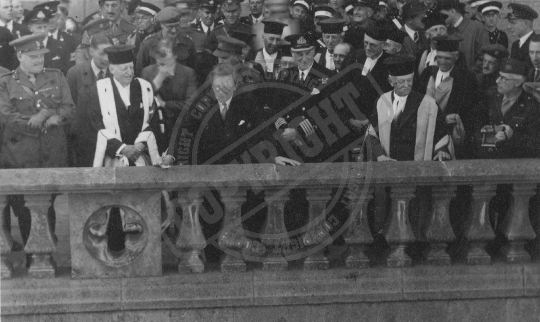
OA_009
The Home Secretary, the Right Honourable Herbert Morrison, in front of the Royal Court, Guernsey with Brigadier Snow, the Bailiff of Guernsey, Lt-Col Stoneman, Major Le Patourel, Rear Admiral Stuart and many others on 14th May, 1945.
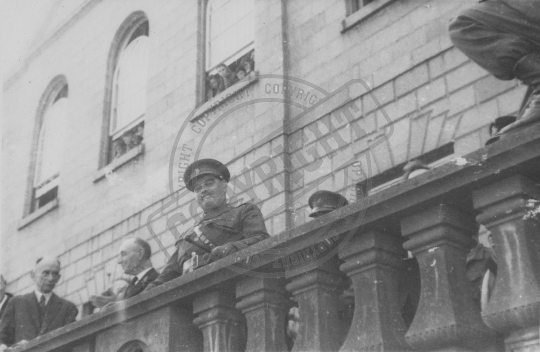
OA_007
Brigadier A. E. Snow, OBE, officer commanding Force 135 and Military Governor of the Channel Islands, smiles for the Press prior to the Home Secretary’s speech on 14th May, 1945.
OA_005
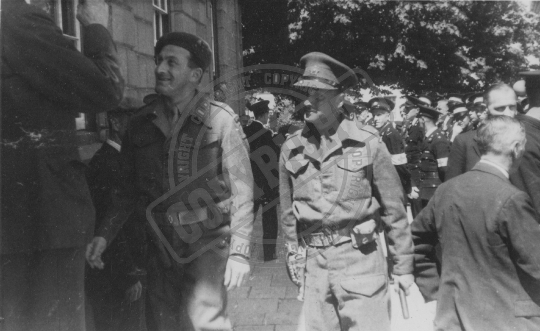
Lieutenant-Colonel William Arnold, the senior legal adviser with no. 20 Civil Affairs Unit, Force 135, and Guernseyman Major Wallace Le Patourel, VC, arrive at the Court Buildings, St Peter Port, to hear the Home Secretary’s speech, on 14th May, 1945.
OA_004
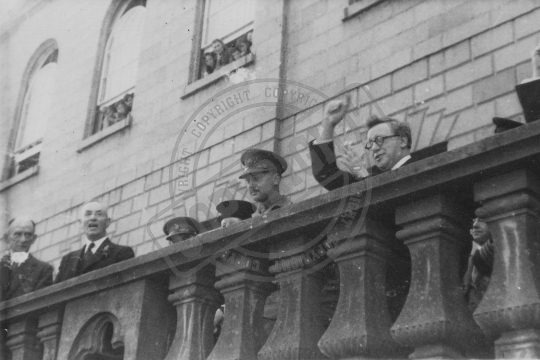
The Home Secretary, The Right Honourable Herbert Morrison addresses the crowds of people gathered outside the Royal Court on Monday, 14th May, 1945.
OA_003
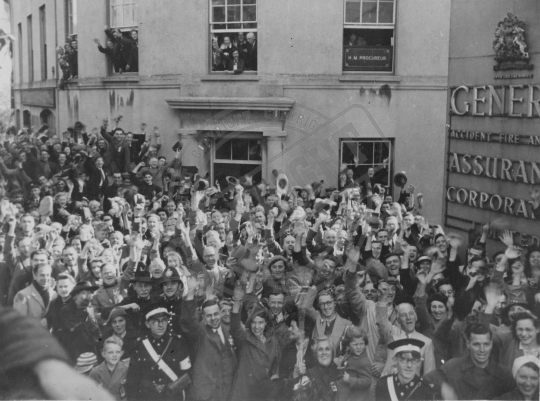
The crowds in front of the Court House burst into singing the National Anthem as they witnessed the Hoisting of the Union Flag, on the 9th May, 1945. God save the King rang out over St Peter Port, followed by a thunderous outburst of sustained cheering.
OA_002
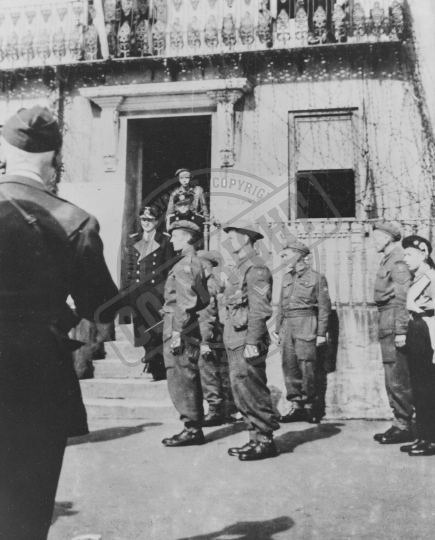
Brigadier Snow accepted the formal surrender of the German Garrison from Vizeadmiral Hüffmeier at 11.00 hours on Saturday, 12th May, at the former German Naval Headquarters, the Crown Hotel, St Peter Port. He is seen here leaving the Hotel with his ADC, Oberleutnant Edwald Severing. Hüffmeier was escorted to the harbour for evacuation to England. On the left of the photograph, with his back to the camera, is a War Correspondent from the PR Section of Force 135. Note the barbed wire that has been draped from the balcony to the railings.
CIMM_0030
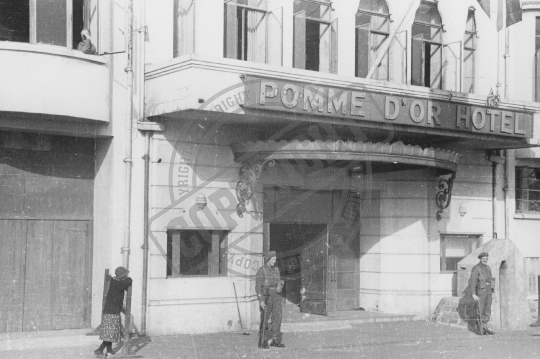
British troops stand guard outside the Pomme d`Or Hotel in the days following Liberation. The hotel was the Naval headquarters for the German Kriegsmarine. Note the sentry box to the right of the main entrance.
CIMM_0028
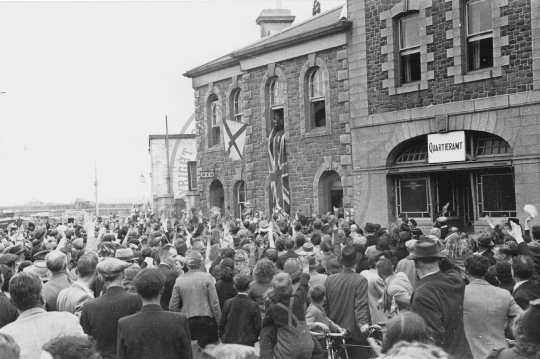
Crowds gather outside the harbour office in St Helier, Jersey on 9th May 1945 to witness a large Union Flag being draped from the first floor by Surgeon-Lieutenant McDonald with the assistance of Sub-Lieutenant David Milne.
CIMM_0027
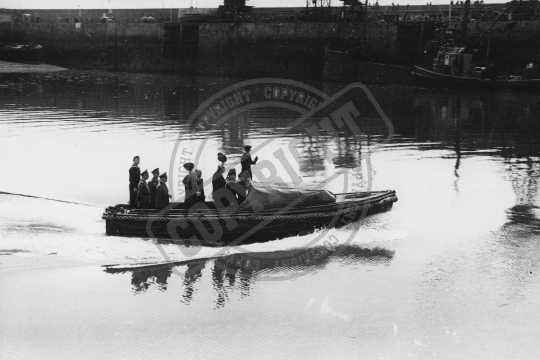
Accompanied by Generalmajor Wulf and two staff officers standing at the rear of the Royal Navy pinnace the Bailiff and solicitor general wave their hats as they head out to HMS Beagle where the surrender will be signed.
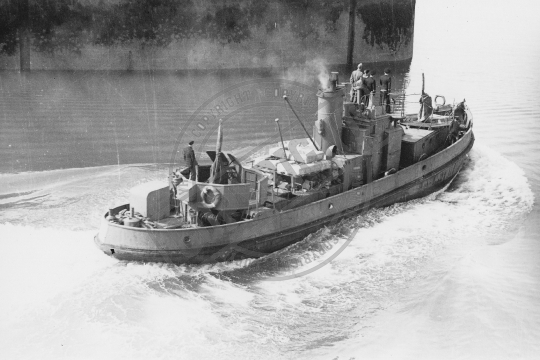
CIMM_0026
German officers from the Kriegsmarine and Wehrmacht aboard the FK01 leave St Helier harbour to rendezvous with HMS Beagle on 9th May 1945.
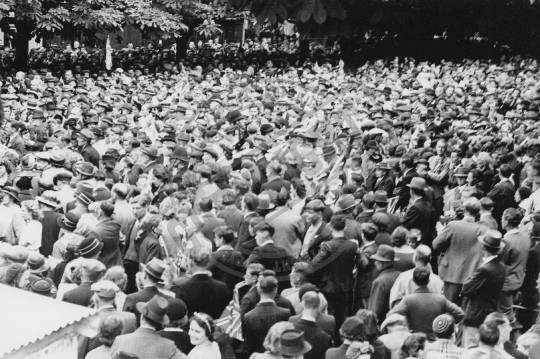
CIMM_0024
This was the scene in the Royal Square, St Helier, Jersey on Tuesday the 8th May 1945 as a huge crowd gathered to hear Winston Churchill’s speech to mark the end of the war and a historical moment for the occupied Channel Islands.
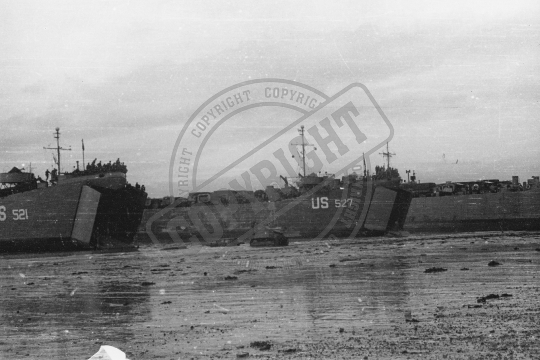
CIMM_0018
Two of the four Landing Ship Tank, the US LST 521 and 527, that beached in St Aubin’s Bay, Jersey, on Sunday 13th May, 1945.
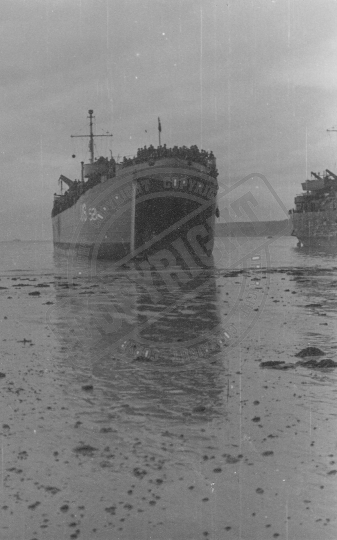
CIMM_0016
The bow doors of the beached American US LST 521 are open and the crew and British troops wait patiently onboard for the tide to recede sufficiently for the ramp to be lowered so that disembarkation can commence. St Aubin’s Bay, Jersey on Sunday 13th May, 1945.
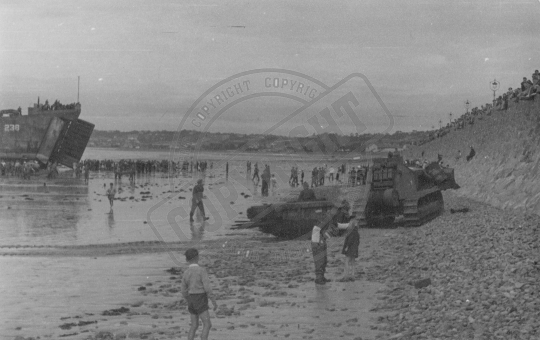
CIMM_0015
The British troops received a warm welcome from the crowds lining the top of the sea wall as they disembarked from the Landing ship tank. Through the open bow doors of the HM LST 238 the troops step ashore. In the foreground a Military Policeman gives a child some friendly advice about the dangers of being on the beach as the vehicles drive off.
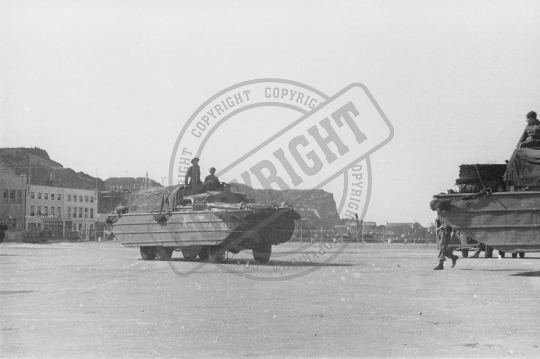
CIMM_0014
DUKWs from 1758 Independent Platoon, Royal Army Service Corps, came ashore at the Old Lifeboat Station Slip on Saturday 12th May, 1945. They drove along Commercial Buildings and initially parked in the Transit Area at the Weighbridge.
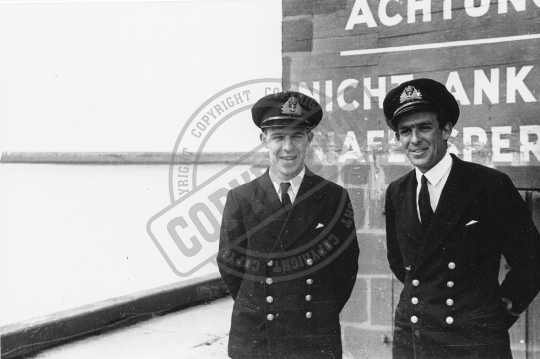
CIMM_0013
Surgeon-Lieutenant Ronald McDonald, RNVR, and Sub-Lieutenant David Milln, RN, shortly after landing at the end of the Albert Pier, St Helier, Harbour, Jersey, on Wednesday morning 9th May, 1945. The German sign behind them advises Achtung Nicht Ankern Hafenspere (Attention No Anchoring Harbour Boom).
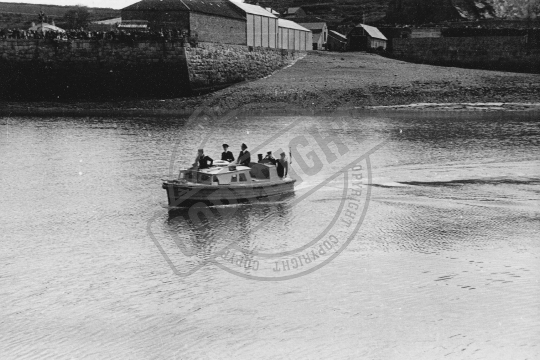
CIMM_0011
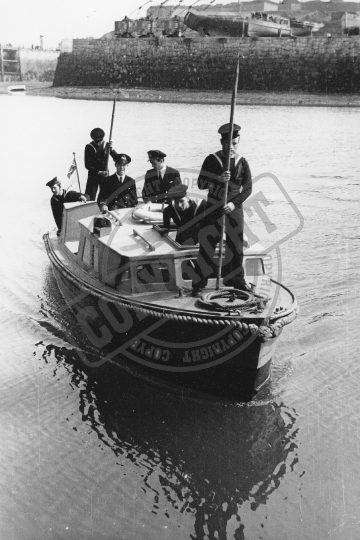
The crew of HMS Beagle’s launch make ready to land, and the first Liberators stepped ashore at the end of the Albert Pier, St Helier Harbour, Jersey, on Wednesday morning, 9th May, 1945. The two officers on board were Surgeon-Lieutenant Ronald McDonald, RNVR, and Sub-Lieutenant David Milln, RN.
CIMM_0010
The crew of HMS Beagle’s launch make ready to land, and the first Liberators stepped ashore at the end of the Albert Pier, St Helier Harbour, Jersey, on Wednesday morning, 9th May, 1945. The two officers on board were Surgeon-Lieutenant Ronald McDonald, RNVR, and Sub-Lieutenant David Milln, RN.
CIMM_0009
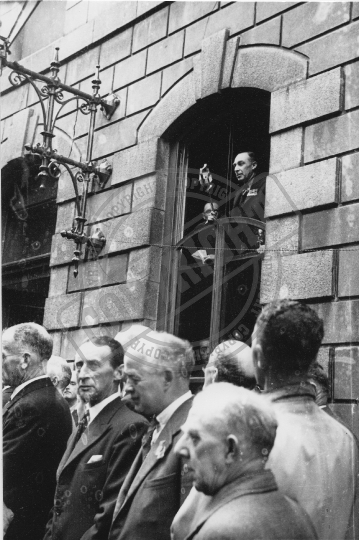
Addresses to the crowd, from a window of the States Buildings. Many people had gathered in the Royal Square, St Helier, Jersey, for the Hoisting of the Flag Ceremony, on Thursday 10th May, 1945.
CIMM_0007
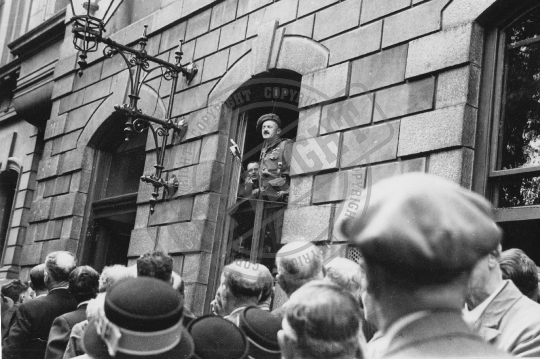
Lieutenant-Colonel William Robinson, MC, RA, Island commander Jersey, addresses the crowd, from a window of the States Buildings, who had gathered in the Royal Square, St Helier, Jersey, for the Hoisting of the Flag Ceremony, on Thursday 10th May, 1945.
CIMM_0006
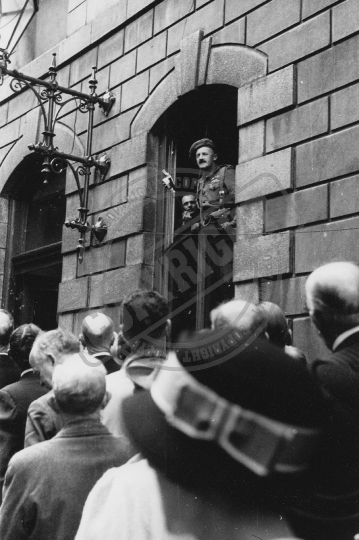
Lieutenant-Colonel William Robinson, MC, RA, Island commander Jersey, addresses the crowd, from a window of the States Buildings, who had gathered in the Royal Square, St Helier, Jersey, for the Hoisting of the Flag Ceremony, on Thursday 10th May, 1945.
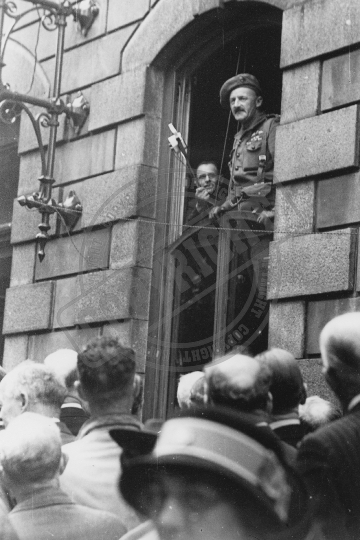
CIMM_0005
Lieutenant-Colonel William Robinson, MC, RA, Island commander Jersey, addresses the crowd, from a window of the States Buildings, who had gathered in the Royal Square, St Helier, Jersey, for the Hoisting of the Flag Ceremony, on Thursday 10th May, 1945.
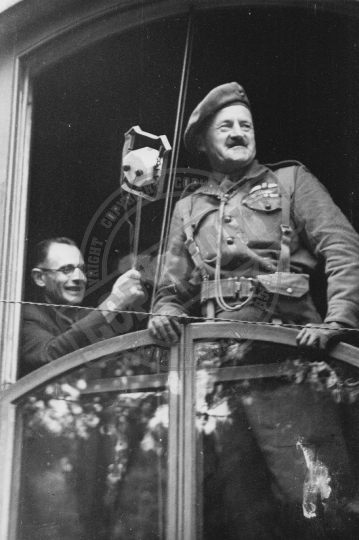
CIMM_0004
Lieutenant-Colonel William Robinson, MC, RA, Island commander Jersey, addresses the crowd from a window of the States Buildings, who had gathered in the Royal Square, St Helier, Jersey, for the Hoisting of the Flag Ceremony, on Thursday 10th May, 1945.
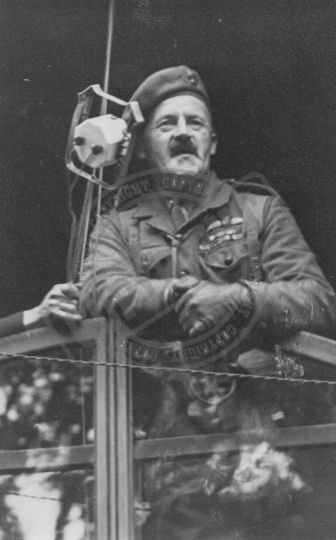
CIMM_0003
Lieutenant-Colonel William Robinson, MC, RA, Island commander Jersey, addresses the crowd, from a window of the States Buildings, who had gathered in the Royal Square, St Helier, Jersey, for the Hoisting of the Flag Ceremony, on Thursday, 10th May, 1945.
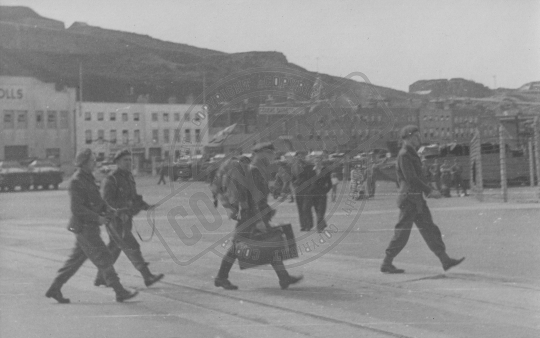
CIMM_0002
A German Oberleutnant, possibly Richard Bode of the German Secret Field Police (Geheime Feldpolizie or GFP), being escorted across the Weighbridge, St Helier, Jersey, from Force 135 Tactical HQ at the Pomme d’Or Hotel by armed British troops led by Major Margesson, GSOII, towards the New North Quay, on Sunday, 13th May, 1945. Note the DUKWs in the background.
OA_024
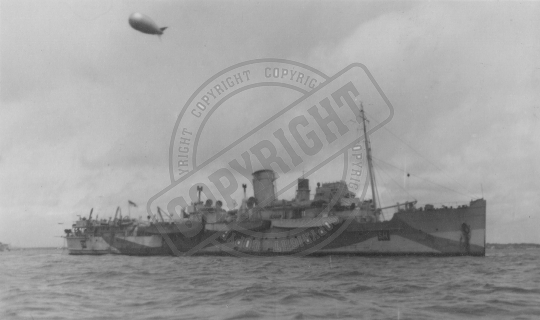
Photograph of LSI (H) St Helier in 'D-Day’ camouflage carrying Landing Craft Assault and flying her Anti-Aircraft balloon. The reverse has been endorsed, “Passed for transmission through the post but not good for publication.” There are also two signatures, T. McBryde and P. J. Hickson, Surg. Lieut., RNVR, and an oval cachet in red, “Commanding Officer H.M.S. “St Helier” – 8 Feb 1945.” St Helier downed a German Stuka and rescued 10,200 troops at Dunkirk.
OA_001
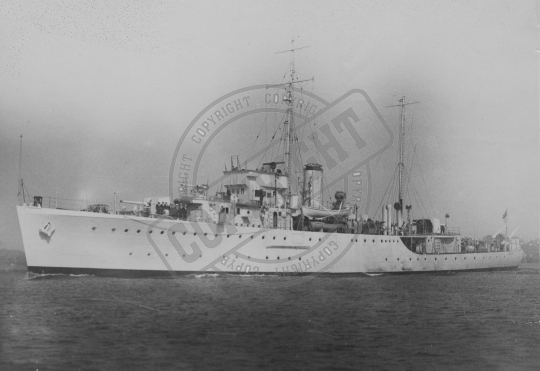
Captain Glasson, Elder Brother of Trinity House, and two other officials arrived at Guernsey in HMS Leith on 17th May, 1945. They visited Les Hanois Lighthouse off the west coast of Guernsey and the lighthouses on Sark and Alderney.
TPL_00253
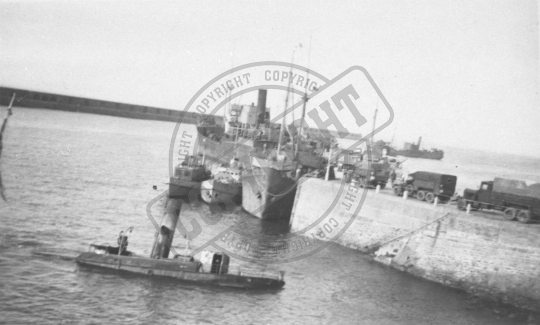
The sunken ship Staffa in Braye harbour, Alderney. The ship was loaded with parsnips and due to leave for Guernsey before breaking away from here mooring.
TPL_00252
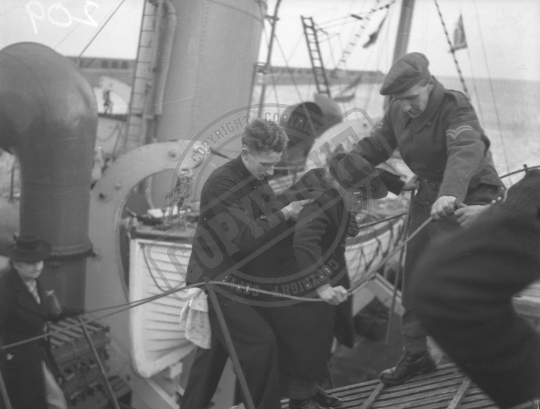
Mrs Bessie Duplain disembarking from SS Autocarrier on her return to Alderney in December 1945.
TPL_00251
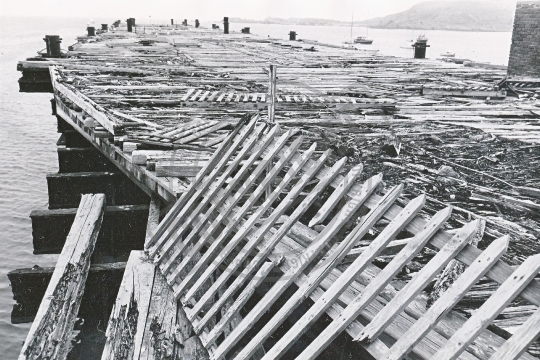
The German jetty at Braye Harbour, Alderney in advanced stages of decay. The jetty comprised of two Krupp sections linked to a Dortmunder Union section which in turn was connected to the existing harbour. The jetty was designed for use as an improvised harbour during Operation Sealion. It was finally demolished in 1979.
TPL_00241
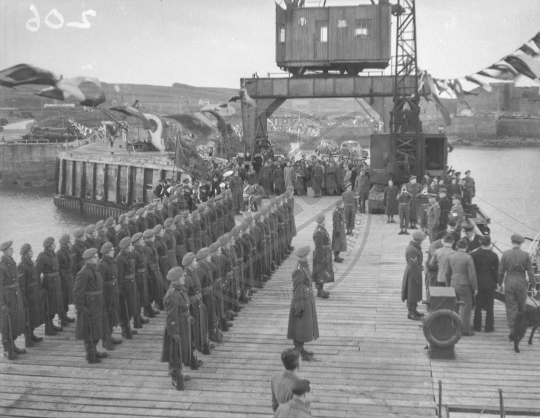
Alderney’s greeting to repatriated islanders who returned in December 1945 after an absence of over five years. This marked one of the happiest days in islander’s history. Homecomers who had not seen their island since June 1940 stepped ashore to a warm welcome.
TPL_00250
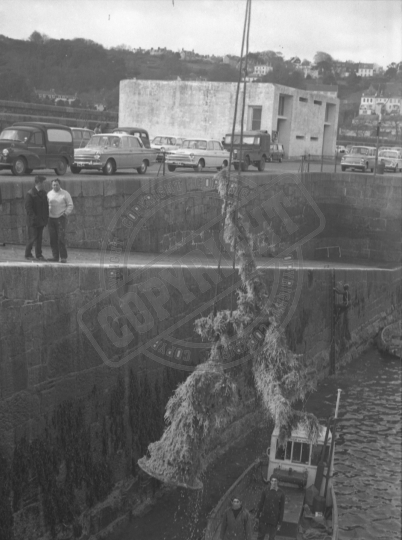
20mm anti-aircraft gun salvaged in April 1969 by Mr Len Mecham and his crew of divers from the wreck of the VP209 'Dr. Rudolph Wahrenorff'. On cleaning the barnacles from the remains of the magazine five 20mm rounds were revealed.
TPL_00249
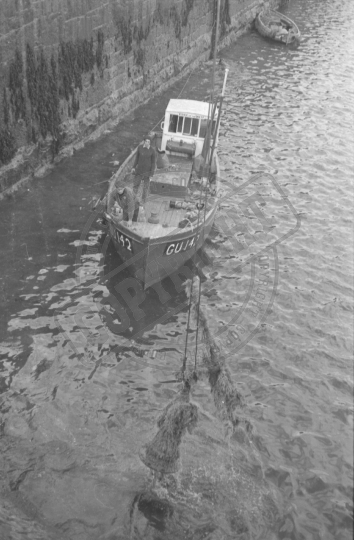
20mm anti-aircraft gun salvaged in April 1969 by Mr Len Mecham and his crew of divers from the wreck of the VP209 'Dr. Rudolph Wahrenorff'. On cleaning the barnacles from the remains of the magazine five 20mm rounds were revealed.
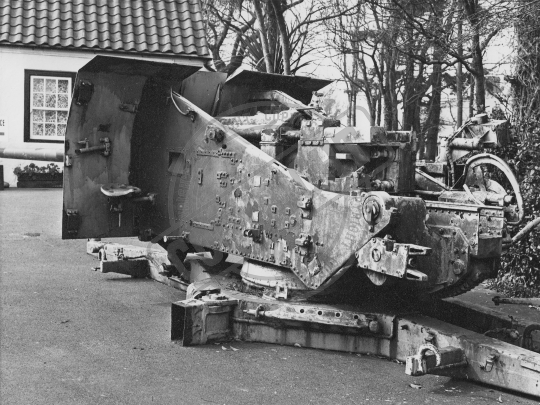
TPL_00304
8.8cm Flak 41 anti-aircraft gun on display at the German Occupation Museum in the 1980`s. Weapons of this model were never installed in the Channel Islands.
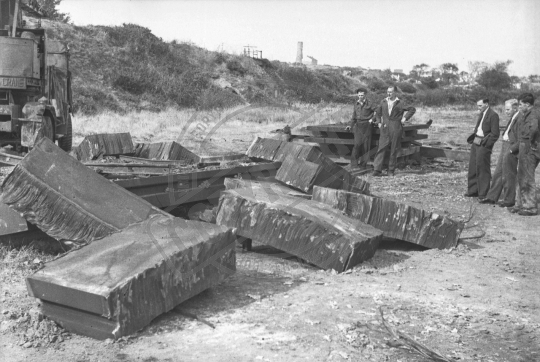
TPL_00309
Armour from German fortifications being cut up at Les Monmains for transportation to the United Kingdom as scrap metal. Note the Vale Mill and the railway embankment in the background.
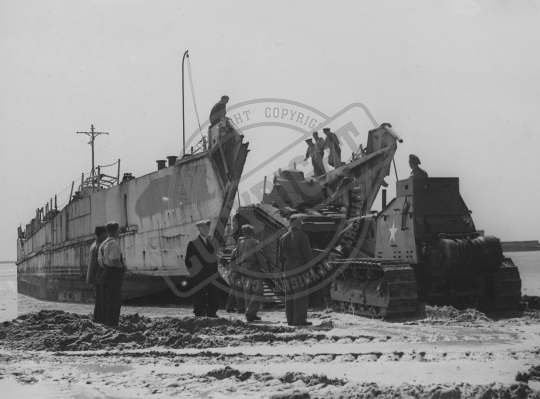
OA_069
The last of the French Char B1 tanks is loaded onto a Landing Craft Tank (LCT), at La Haul Slip, St Aubin’s Bay, Jersey on the 17th May, 1946. These tanks had been captured by the Germans and formed Panzer Abteilung 213 that was stationed in the island. They were returned to France and the French Army.
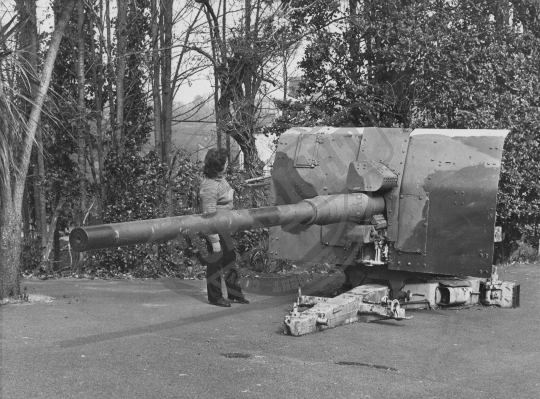
TPL_00305
8.8cm Flak 41 anti-aircraft gun on display at the German Occupation Museum in the 1980`s. Weapons of this model were never installed in the Channel Islands.
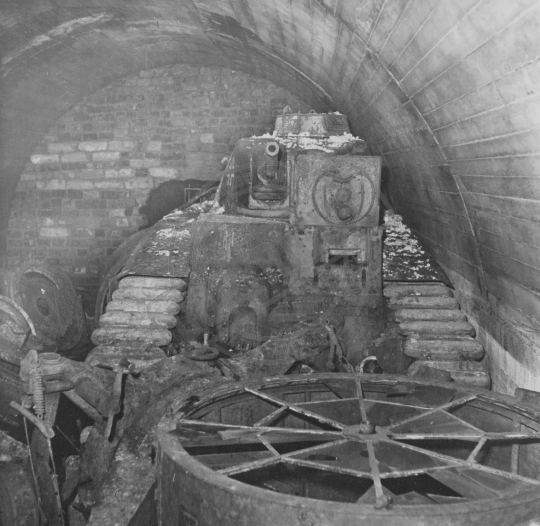
TPL_00370
A French Char B1-bis tank in one of the German chambers of the tunnel now converted into the Aquarium. These were captured tanks brought to the islands by the Germans as part of Panzer unit 216. The tank was photographed prior to its removal in 1952.
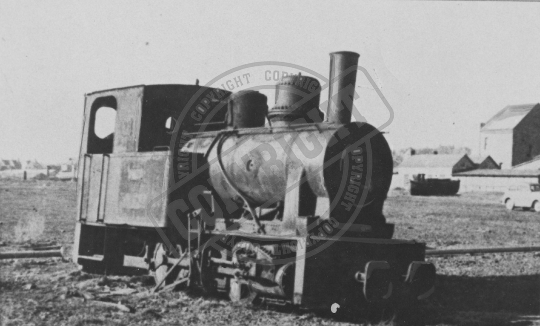
TPL_00367
The Germans installed a railway network to move food and materials around the island, these were used extensively during the construction of the fortifications. This derelict locomotive lies in St Sampson along Bulwer Avenue prior to being scrapped.
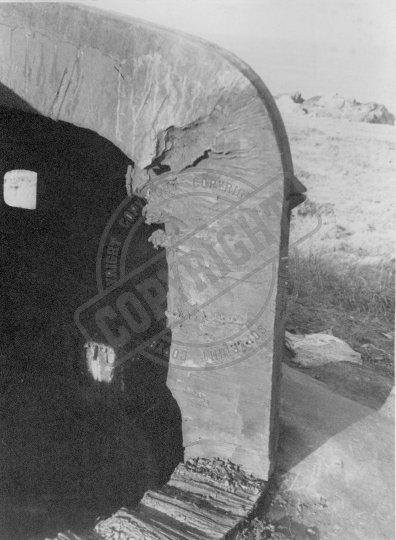
TPL_00365
An armoured steel turret at Fort Doyle during the post war scrap metal drive, workers used gas axes and thermal lances to cut through the enormous steel sections.
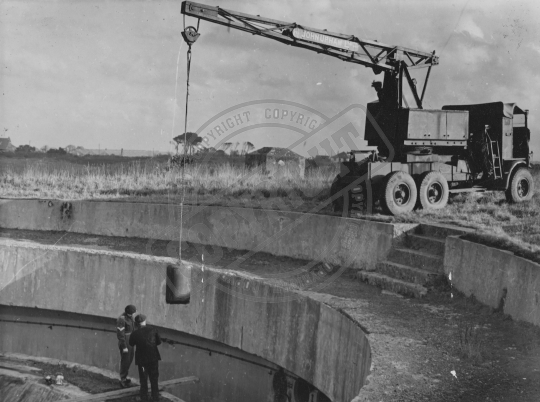
TPL_00364
An ex-RAF Coles mobile crane lifts a depth charge found at Batterie Mirus by workers of John Upham during the scrap metal drive of the early 1950’s. The charge was originally thought to be a large grease drum used in the operation of the gun, camouflaging its true lethal purpose.
TPL_00360
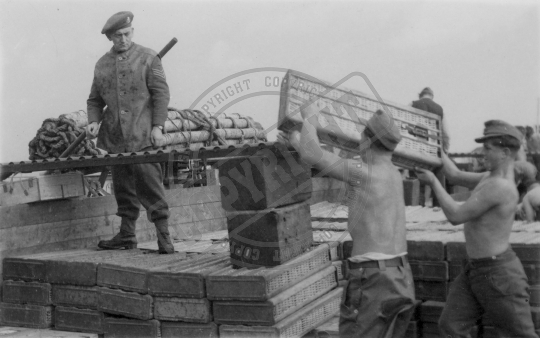
As part of the post war clearance operations ammunition was loaded onto LCTs and dumped in the Hurd Deep. Here we see wicker baskets containing 8.8cm shells about to be thrown overboard by POWs.
TPL_00359
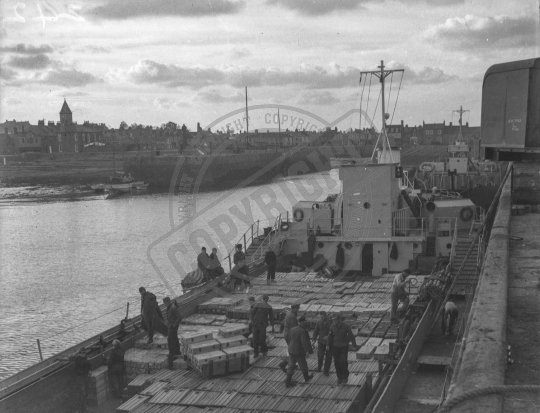
Shortly after Liberation the massive task of clearing ammunition began. The majority of the ammunition was loaded aboard LCTs by German PoW s and taken to the eastern end of Hurd Deep where the water is some 550 feet deep. This image shows the loading of ammunition at Northside, Vale.
TPL_00311
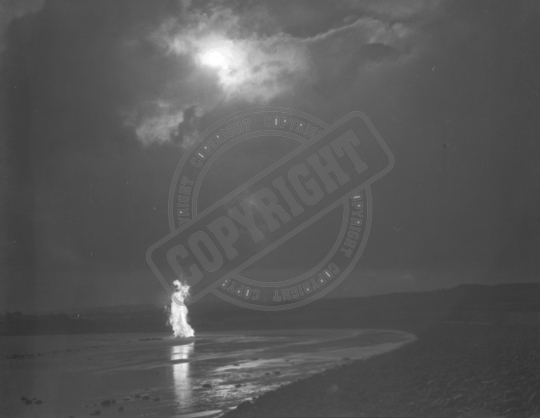
Cordite being burnt on the beach in Guernsey 1945, the photographer could feel the heat from over 400 feet away.
TPL_00310
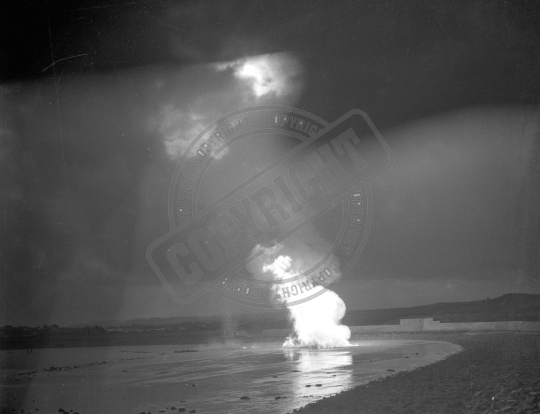
Cordite being burnt on the beach in Guernsey 1945, the photographer could feel the heat from over 400 feet away.
TPL_00348
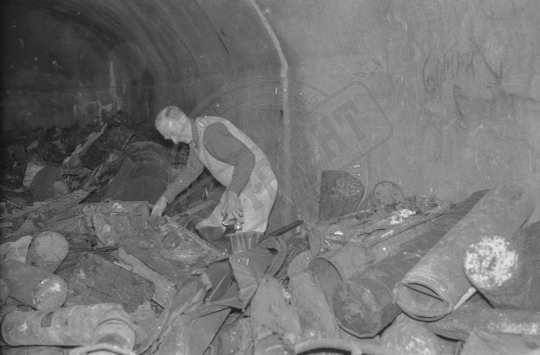
St Saviour`s tunnel which is featured in many publications as 'The tunnel under the church’ is one of the largest German tunnel complexes in Guernsey. This tunnel was originally constructed as a ration store and in 1944 it was converted into a munitions store. On 9th May 1969 Richard Heaume and John Hayes explored the remains of the tunnel and its contents which had captured the interest of many collectors ever since the scrap men had left in the 1950’s.
TPL_00347
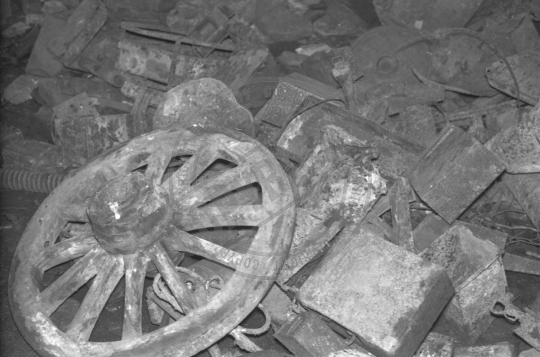
St Saviour`s tunnel which is featured in many publications as 'The tunnel under the church’ is one of the largest German tunnel complexes in Guernsey. This tunnel was originally constructed as a ration store and in 1944 it was converted into a munitions store. On 9th May 1969 Richard Heaume and John Hayes explored the remains of the tunnel and its contents which had captured the interest of many collectors ever since the scrap men had left in the 1950’s.