Results (598)


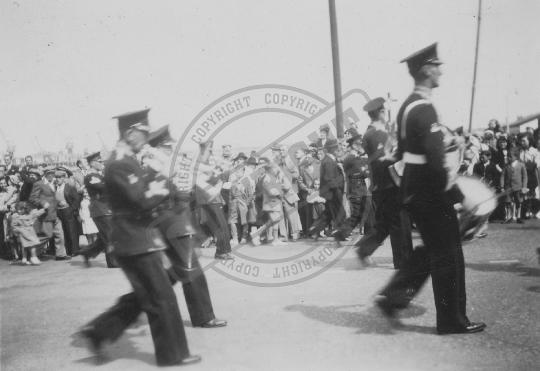
MT_0009
Big crowds gather on Liberation Day on May 9th 1946 to watch the procession in St Peter Port.
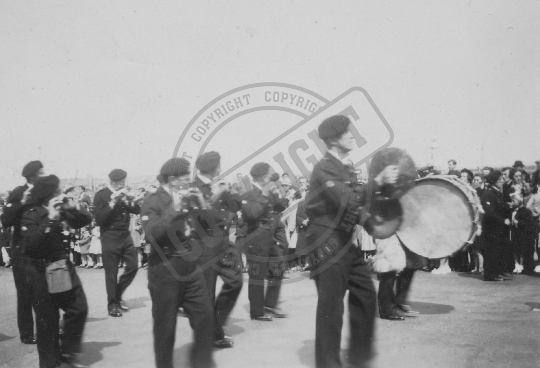
MT_0008
Big crowds gather on Liberation Day on May 9th 1946 to watch the procession in St Peter Port.
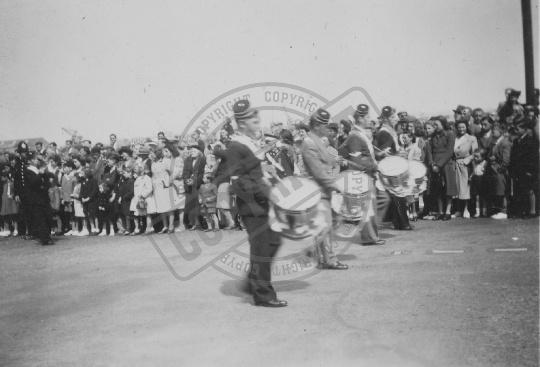
MT_0007
Big crowds gather on Liberation Day on May 9th 1946 to watch the procession in St Peter Port.
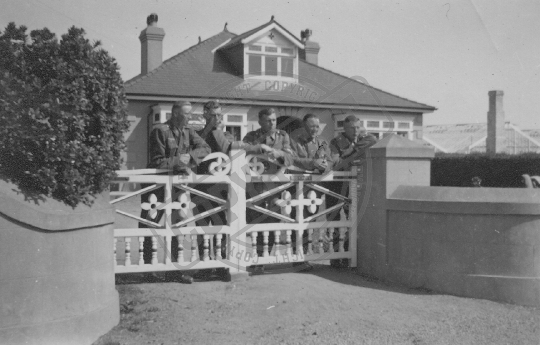
MT_0001
German army personnel relaxing outside a requisitioned property called The Croft in Les Canus, St Sampson formerly owned by Mrs Ruaux who was evacuated in 1940. This is a typical example of troops being billeted in local properties.
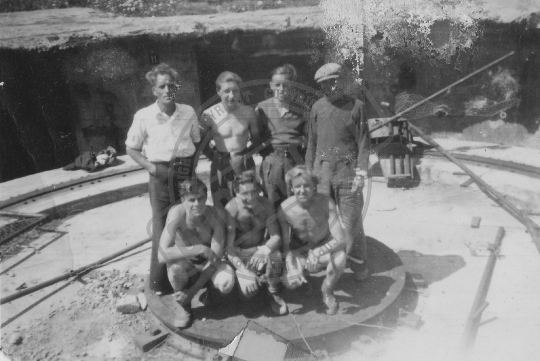
MT_0004
Victor Gontier a former internee at Laufen, seen here circa 1948 with a team from Gilroy’s which were engaged in backfilling trenches and salvaging scrap at Batterie Dollmann, Pleinmont.
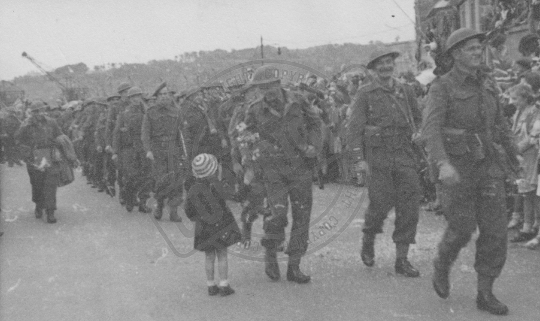
MT_0002
Marching past the former White Heart Hotel sited opposite the Weighbridge, a young girl presents a pose of flowers to one of Guernsey’s Liberators on the occasion of the islands freedom on 9 May 1945.
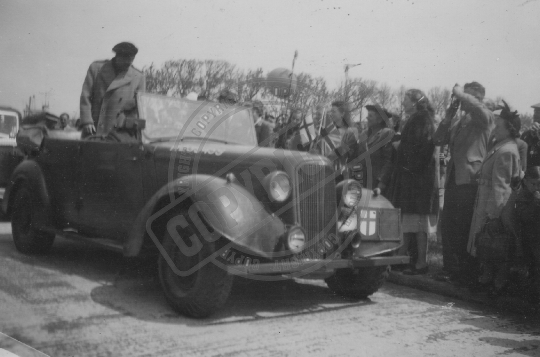
MT_0006
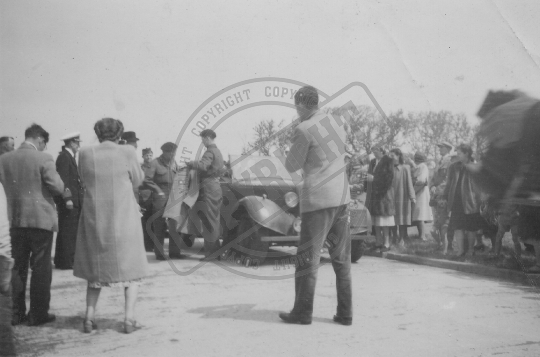
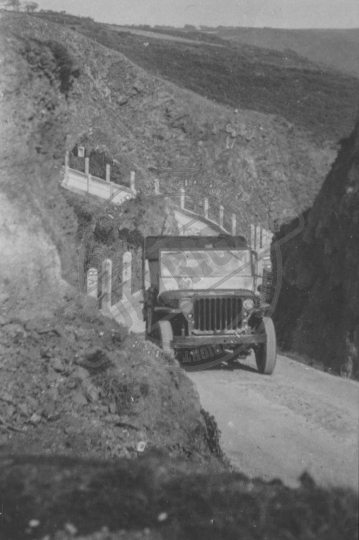
Two years after Liberation on 23rd May 1947 Guernsey had a special visit from Field Marshall Bernard Montgomery (Monty). During his visit he met with many dignitaries including those from Elizabeth College, St John Ambulance, Sea Scouts and many others. His tour was welcomed by all with the streets of Guernsey lined with locals wanting to catch a glimpse of Monty. His famous vehicle known as Old Faithful carried him around the island and included a stop at the grounds of Beau Sejour.
MT_0005
Two years after Liberation on 23rd May 1947 Guernsey had a special visit from Field Marshall Bernard Montgomery (Monty). During his visit he met with many dignitaries including those from Elizabeth College, St John Ambulance, Sea Scouts and many others. His tour was welcomed by all with the streets of Guernsey lined with locals wanting to catch a glimpse of Monty. His famous vehicle known as Old Faithful carried him around the island and included a stop at the grounds of Beau Sejour.
OA_103
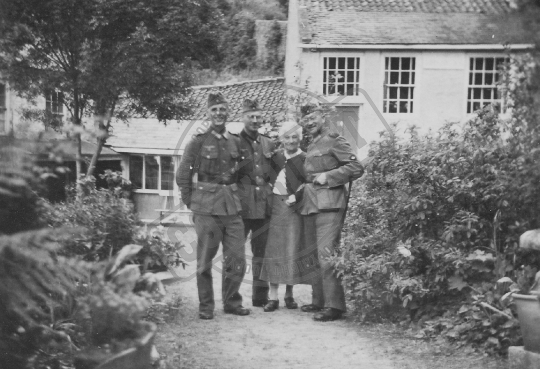
German soldiers with a local resident at entrance to the former Moulin Huet Watermill, one of the properties alongside the road leading down to Moulin Huet Bay.
OA_102
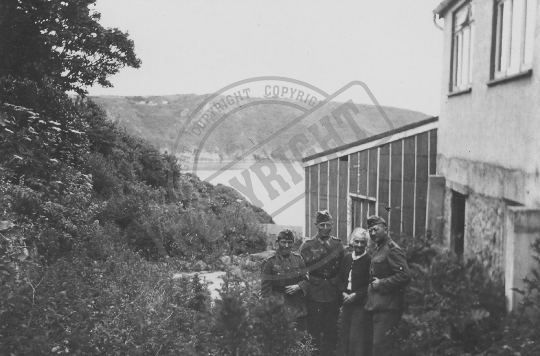
German soldiers with a local resident at one of the properties alongside the road leading down to Moulin Huet Bay with Jerbourg headland and the beach of Petit Port in the distance.
OA_096
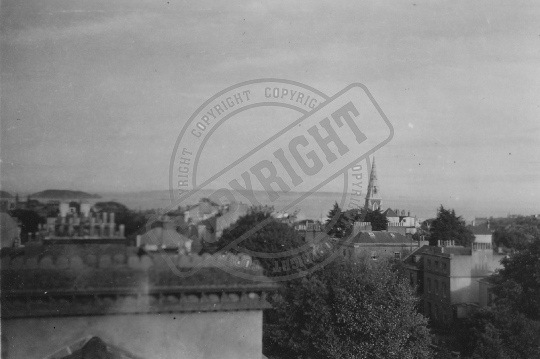
Taken from the roof of a house near the junction of Les Gravees and Queens Road looking towards the spire of Notre Dame Roman Catholic Chapel and convent.
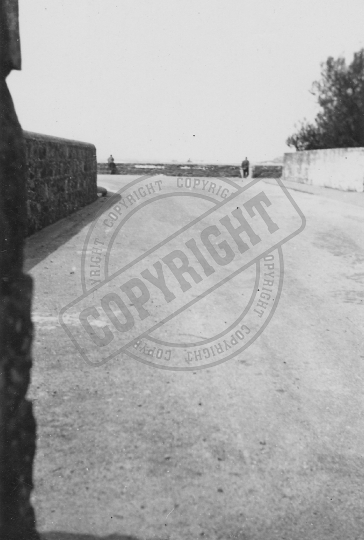
OA_091
Taken at Route de Cobo near Bouverie Lane looking towards Cobo Coast Road note, the white lines painted on the sea wall to aid drivers during the night in blackout conditions.
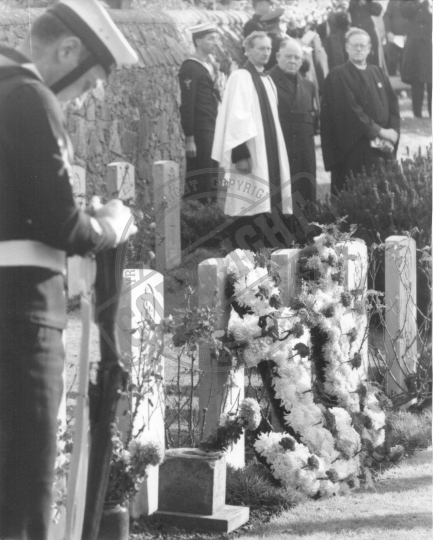
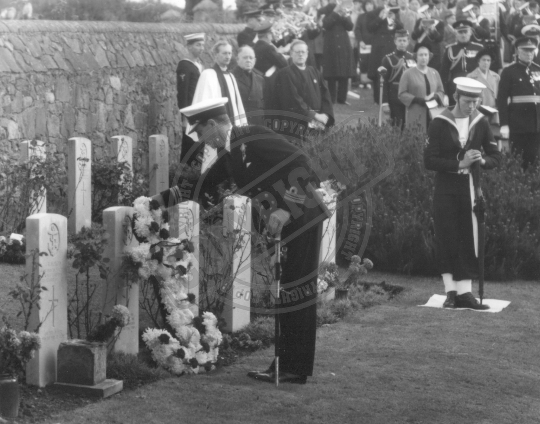
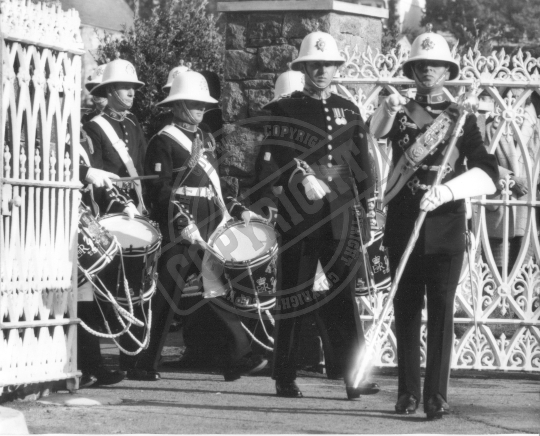
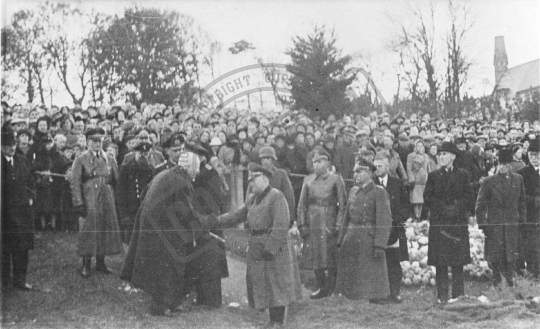
TPL_00173
Funeral service for Royal Navy victims of HMS Charybdis and HMS Limbourne who were buried with full military honours at Le Foulon Cemetery.
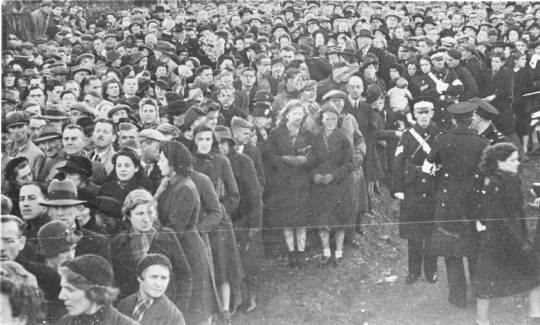
TPL_00172
Funeral service for Royal Navy victims of HMS Charybdis and HMS Limbourne who were buried with full military honours at Le Foulon Cemetery.
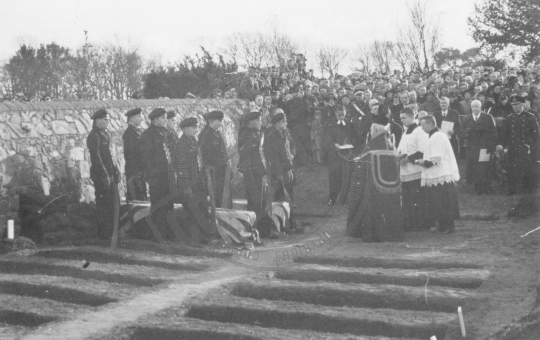
TPL_00171
Funeral service for Royal Navy victims of HMS Charybdis and HMS Limbourne who were buried with full military honours at Le Foulon Cemetery.
TPL_00170
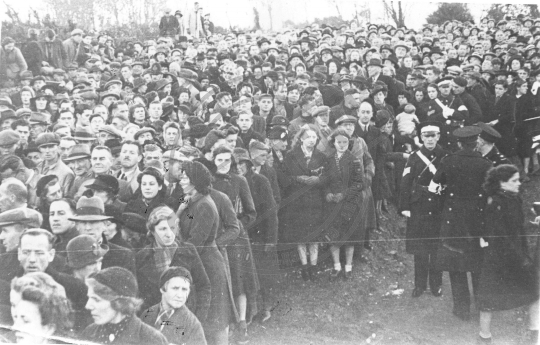
Funeral service for Royal Navy victims of HMS Charybdis and HMS Limbourne who were buried with full military honours at Le Foulon Cemetery.
TPL_00382
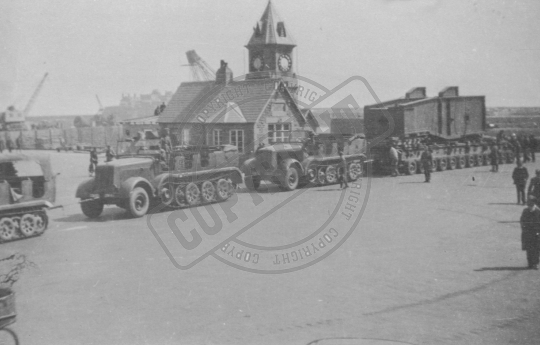
German half-tracks were linked together and used to transport heavy loads such as the guns of Batterie Mirus. Seen here is one of the huge carriages that will eventually mount the 30.5cm gun barrel sitting on a 24 wheeled trailer being towed past the White Rock weighbridge.
TPL_00381
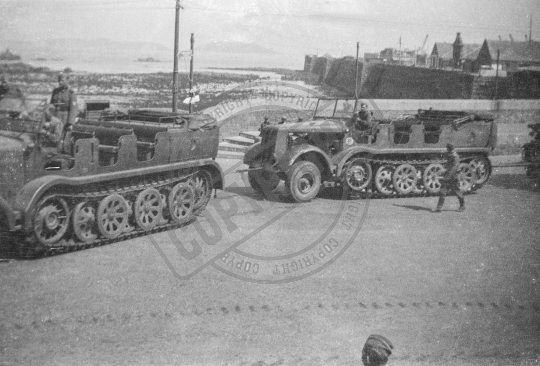
German half-tracks were linked together and used to transport heavy loads such as the guns of Batterie Mirus. Seen here are at least three vehicles having exited the White Rock turning to ascend St Julians Avenue. Note the damage to the road surface in the forground.
TPL_00378
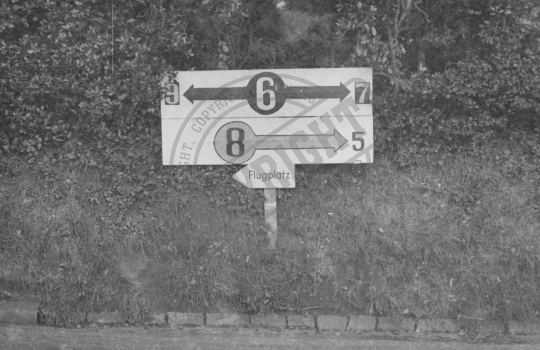
German road sign at Forest Road which makes the junction near La Villette in St Martins. The Germans listed the local roads by colour and number, here we see red route 6 leading on to routes 7 and 9. This junction also leads from yellow 8 to yellow 5. The small sign reading Flugplatz is indicating the direction to the airfield.
TPL_00322
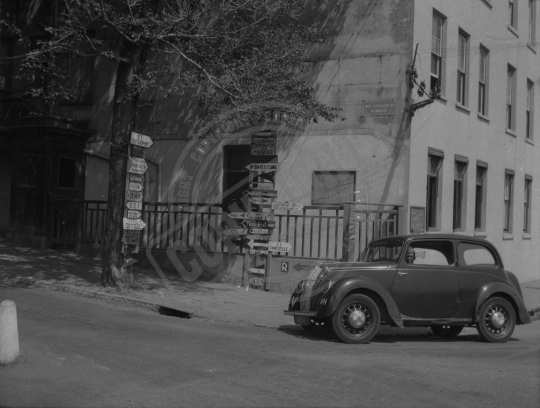
As the military buildup increased, so did the number of road signs directing German forces to them. Many roads were thoroughly signposted like this example at the bottom of St Julian's Avenue, Guernsey. Note the Guernsey Press Censor in his car.
TPL_00325
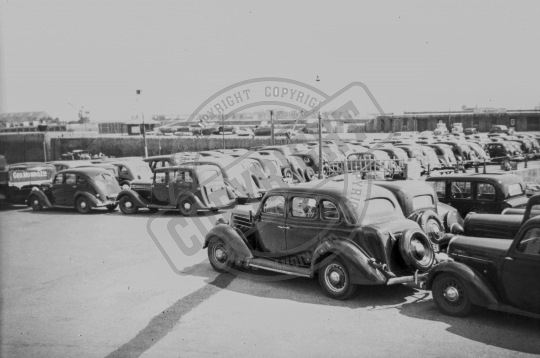
The Germans commandeered all but a very few private cars on the island. These were taken to the Albert Pier to await shipment to France.
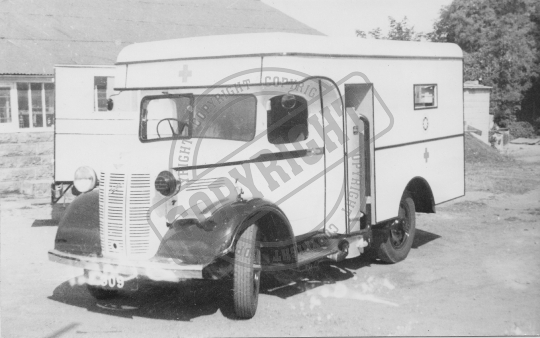
TPL_00323
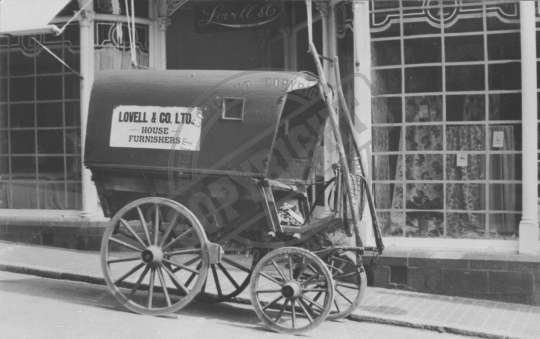
This cut down furniture van was transformed into a very efficient ambulance which ran on charcoal gas and was ready for service by September 1942.
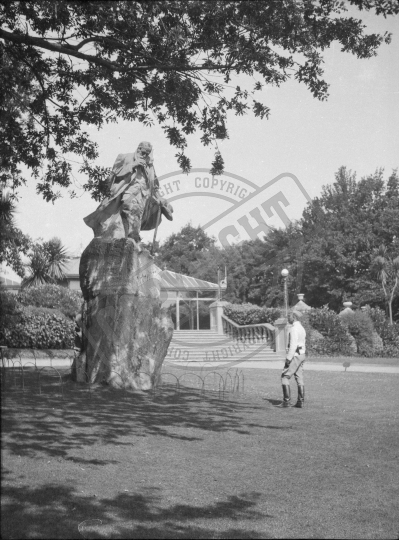
TPL_00373
A German stands in front of the Victor Hugo statue in Candie Gardens, Guernsey. The 9,800kg limestone statue was made in 1913 by French sculptor Jean Boucher. It was transported from Paris to Cherbourg and then to Guernsey by steamboat before it was officially unveiled on 7 July 1914.
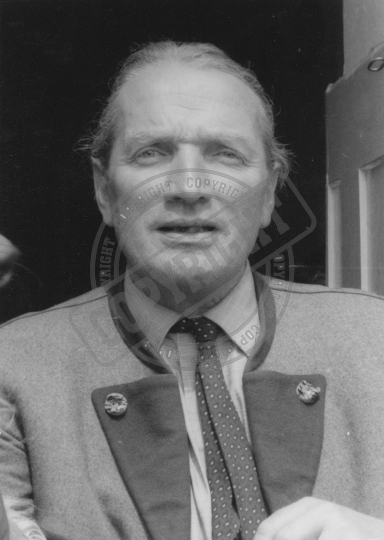
TPL_00356
Baron Max Von Aufsess, Civil administrator for three and a half years in Jersey. Photo taken post war at Schloss Aufsess, Bavaria.
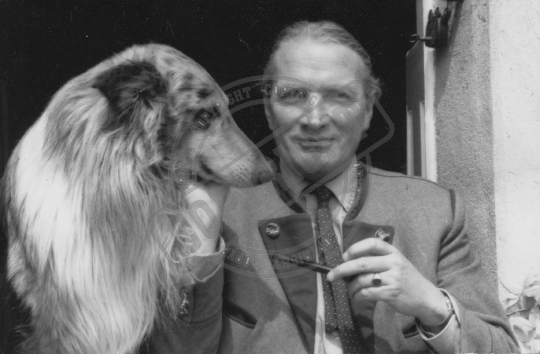
TPL_00355
Baron Max Von Aufsess, Civil administrator for three and a half years in Jersey. Photo taken post war at Schloss Aufsess, Bavaria.
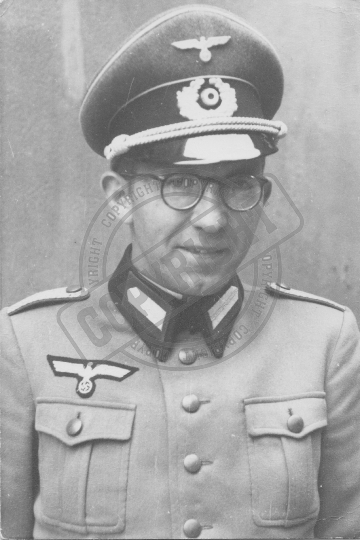
TPL_00354
The press censor Sonderfuehrer Kurt Goettmann appointed on the 27th January 1942 at the age of 32. His previous experience included working in press offices in both Paris and London. The censor role was to ensure that anything published followed the stringent rules set out by the Germans.
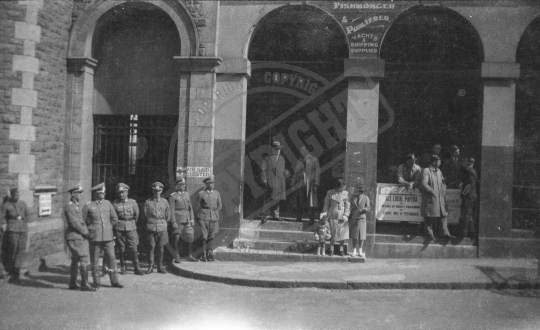
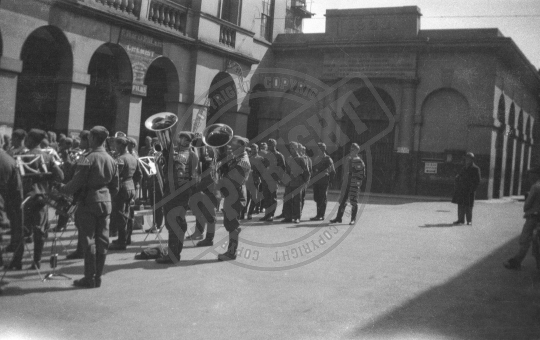
TPL_00302
German officers listen to a band playing in Market Square, St Peter Port. Note the air raid shelter sign on the wall.
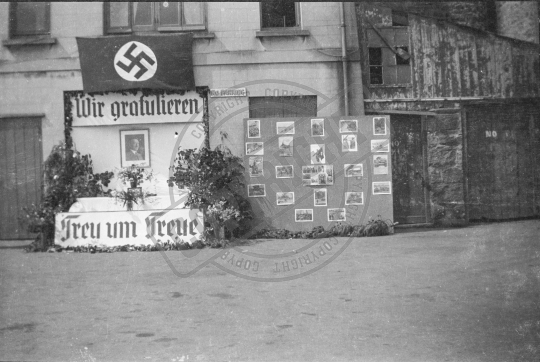
TPL_00297
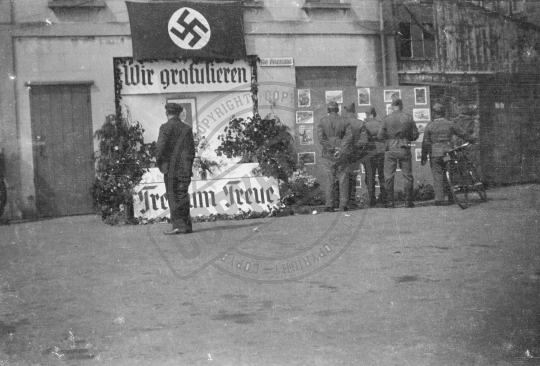
German soldiers take a moment to look at the display in St Peter Port on Hitler`s birthday in 1942.
TPL_00134
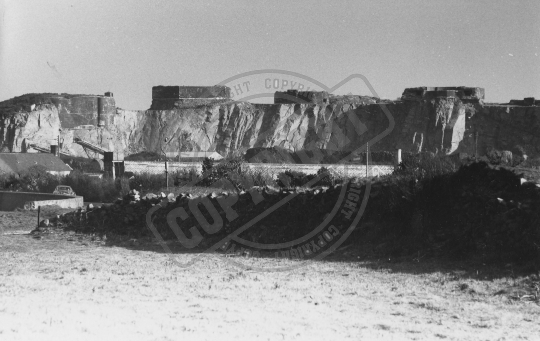
Post war photograph showing several structures of Batterie Steinbruch prior to their removal during the quarry expansion at Les Vardes, St Sampson.
TPL_00377
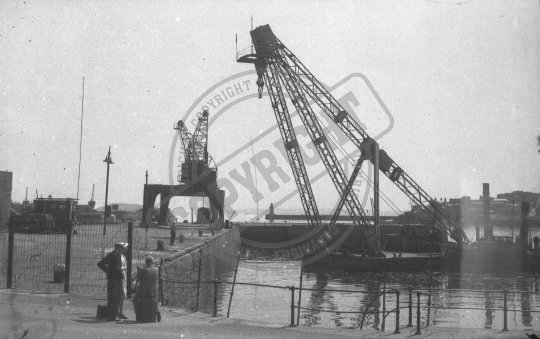
The floating crane 'Antee’ being manoeuvred in the Old Harbour now better known now as the Albert Marina. This crane was used to offload many of the supplies brought to the island by the Germans including construction supplies and artillery pieces. The pier was fenced off to the public, in the background you can see a number of radio vehicles sited on the Crown Pier.
TPL_00256
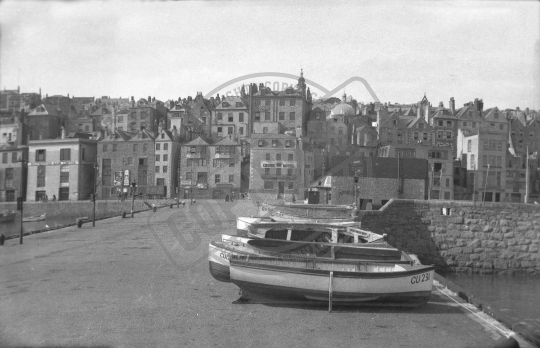
Fishing boats laid up at the Old Harbour, St Peter Port, following the order for all boats to be moved to main harbours.
TPL_00248
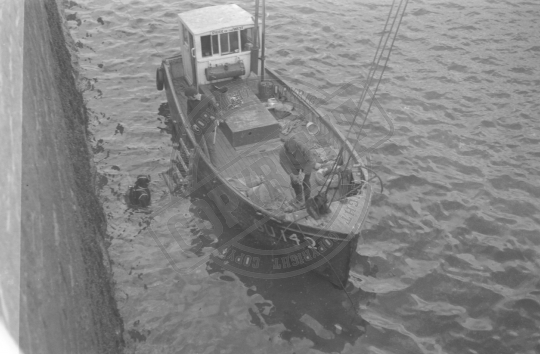
20mm anti-aircraft gun salvaged in April 1969 by Mr Len Mecham and his crew of divers from the wreck of the VP209 'Dr. Rudolph Wahrenorff'. On cleaning the barnacles from the remains of the magazine five 20mm rounds were revealed.
TPL_00247
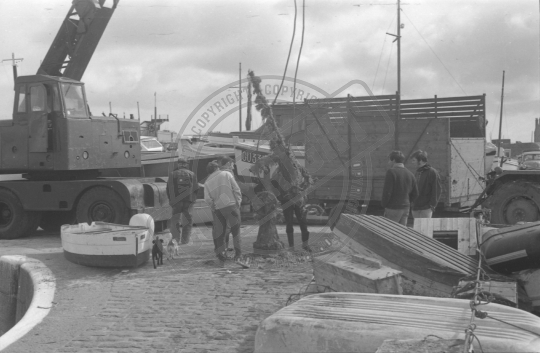
20mm anti-aircraft gun salvaged in April 1969 by Mr Len Mecham and his crew of divers from the wreck of the VP209 'Dr. Rudolph Wahrenorff'. On cleaning the barnacles from the remains of the magazine five 20mm rounds were revealed.
TPL_00245
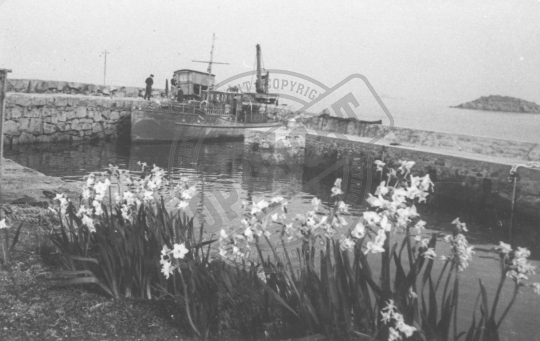
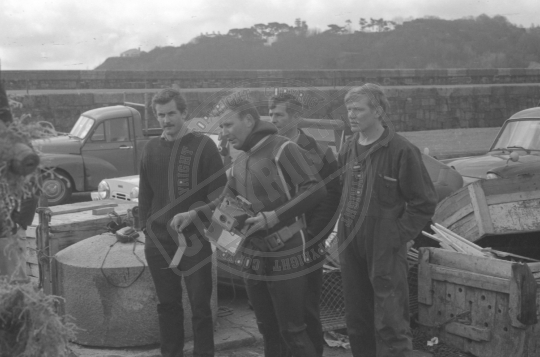
20mm anti-aircraft gun salvaged in April 1969 by Mr Len Mecham and his crew of divers from the wreck of the VP209 'Dr. Rudolph Wahrenorff'. On cleaning the barnacles from the remains of the magazine five 20mm rounds were revealed.
TPL_00354
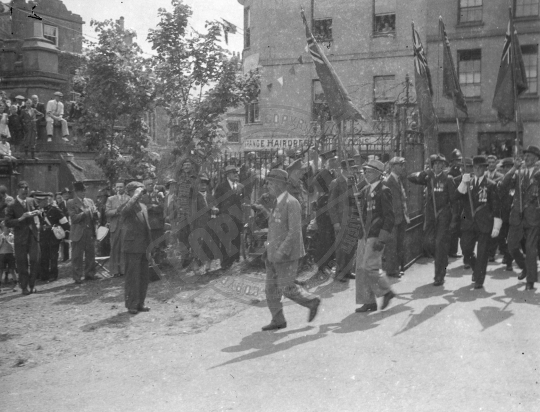
Members of the British Legion, banners flying and led by Mr. T. Macathie, entering Elizabeth College grounds, St Peter Port, Guernsey, for the Reading of the Proclamation and the King’s Message by Channel Island Commander, Brigadier Snow, on Saturday afternoon, 12th May, 1945.
TPL_00240
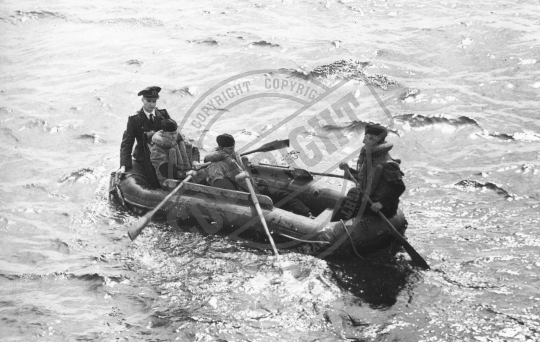
Vizeadmiral Hüffmeier’s representative Kapitänleutnant Zimmermann returning to his vessel the German minesweeper M4613 after discussing Armistice terms on board HMS Bulldog. He was told to return to his commander and tell him to prepare for Unconditional Surrender. On leaving he arrogantly warned Brigadier Snow to move away from the coast otherwise this would be construed as an invitation to open fire. Astounded by Zimmermann’s effrontery Brigadier Snow is reported to have replied “Tell Hüffmeier that if he opens fire on us we will hang him tomorrow!”
TPL_00239
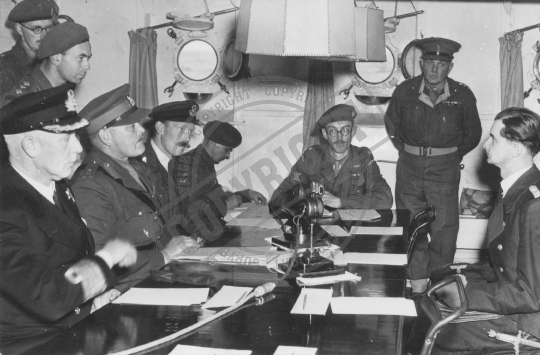
The Ward Room of HMS Bulldog during the first conference with Kapitänleutnant Armin Zimmerman Commander of the 46th Minesweeper Flotilla and Officer on the German Naval Commander’s Staff on Tuesday 8th May 1945. L to R: Rear-Admiral C. G. Stuart, Royal Navy representative; Brigadier A. E. Snow, Chief British Emissary; Captain H. Herzmark (standing) Intelligence Corps Interpreter; Lt-Col E. G. Stoneman (behind Herzmark), Commander 618 Regiment Royal Artillery; Wing Commander 'Archie’ Stewart, RAF Representative; Army Education Corps Senior NCO Clerk (writing); Major John E. Margesson, General Staff Officer II; and Colonel H. R. Power, CCAO.
TPL_00237
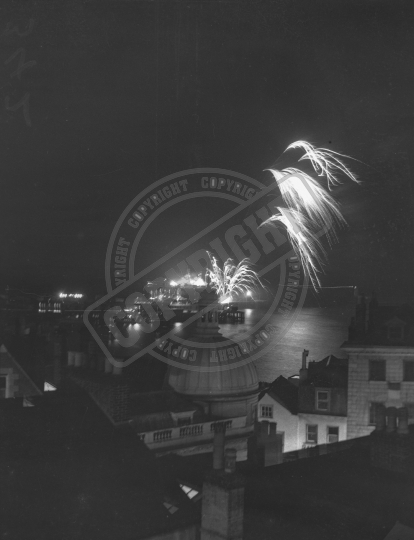
May 9th 1946. The great day finished with a display on a big scale of Brock’s fireworks. The gigantic firework display began at 10.15 p.m. and were fired from the White Rock Pier, St Peter Port.
TPL_00236
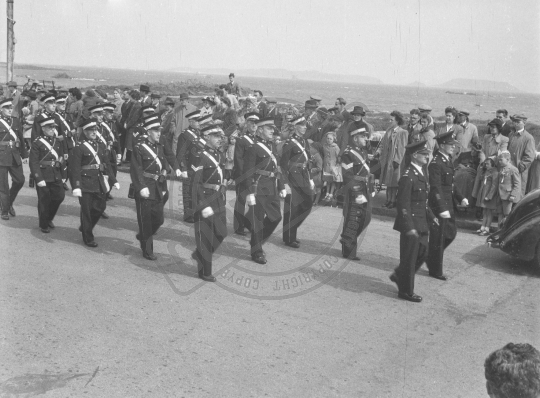
May 9th 1946. At the end of the procession were the members of St John Ambulance Brigade under Ambulance Officer J. Shore.