Results (598)


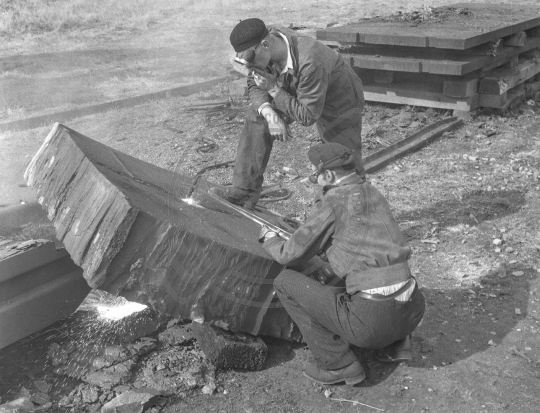
TPL_00361
Armour from German fortifications being cut up with a thermal lance at Les Monmains ready for transportation to the United Kingdom as scrap metal.
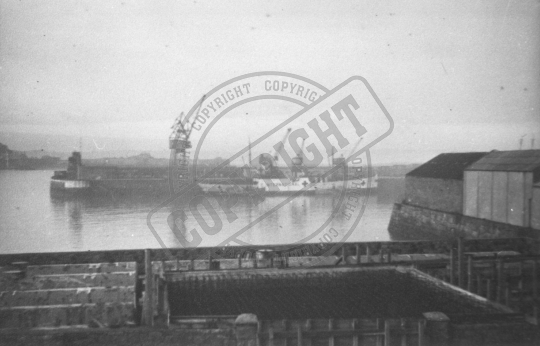
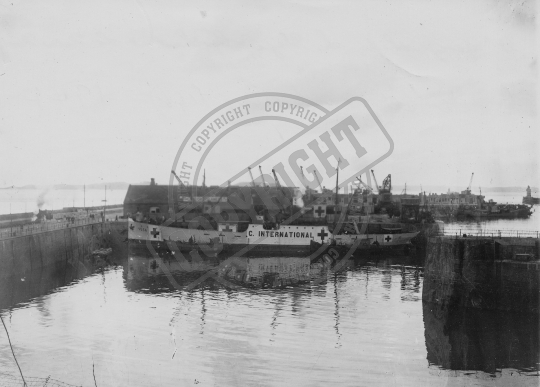
OA_014
The Swedish ship SS Vega, chartered by the International Red Cross to take Red Cross Supplies to the Channel Islands, at the London Berth, St Peter Port Harbour, Guernsey. Note German FK vessels moored alongside and trains on the quay.
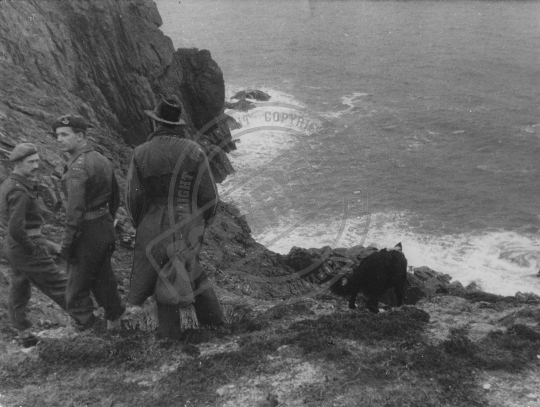
OA_067
Major F. Sargent, Lt-Col Rogers and an Evening Post reporter at Les Landes, 1946. The cliffs at Les Landes, St Ouen, Jersey are sheer and over 200 feet high. These were chosen as the most suitable site for dumping all the German medium and heavy coastal artillery pieces.
TPL_00346
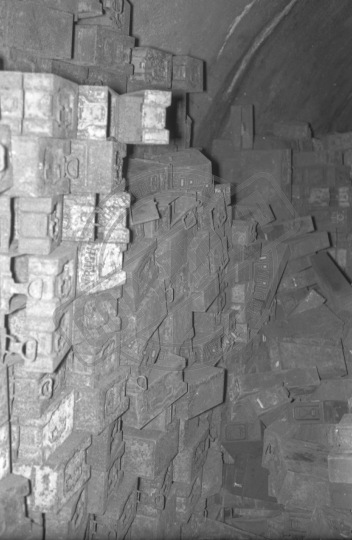
St Saviour`s tunnel which is featured in many publications as 'The tunnel under the church’ is one of the largest German tunnel complexes in Guernsey. This tunnel was originally constructed as a ration store and in 1944 it was converted into a munitions store. On 9th May 1969 Richard Heaume and John Hayes explored the remains of the tunnel and its contents which had captured the interest of many collectors ever since the scrap men had left in the 1950’s.
TPL_00345
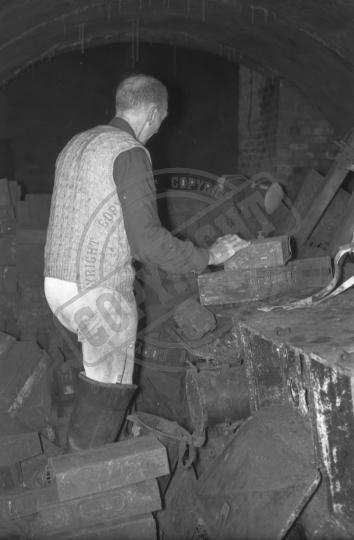
St Saviour`s tunnel which is featured in many publications as 'The tunnel under the church’ is one of the largest German tunnel complexes in Guernsey. This tunnel was originally constructed as a ration store and in 1944 it was converted into a munitions store. On 9th May 1969 Richard Heaume and John Hayes explored the remains of the tunnel and its contents which had captured the interest of many collectors ever since the scrap men had left in the 1950’s.
TPL_00343
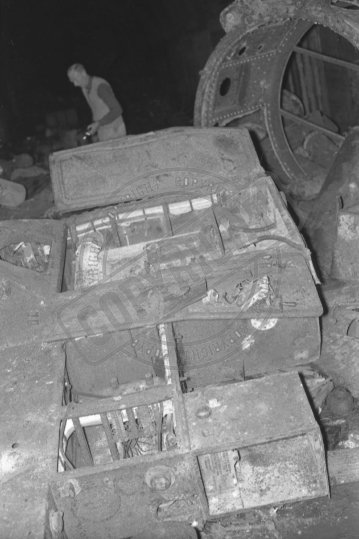
St Saviour`s tunnel which is featured in many publications as 'The tunnel under the church’ is one of the largest German tunnel complexes in Guernsey. This tunnel was originally constructed as a ration store and in 1944 it was converted into a munitions store. On 9th May 1969 Richard Heaume and John Hayes explored the remains of the tunnel and its contents which had captured the interest of many collectors ever since the scrap men had left in the 1950’s.
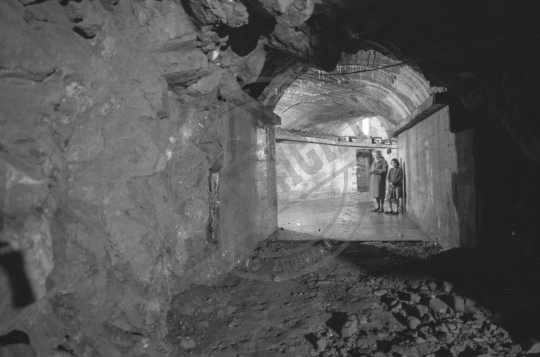
TPL_00156
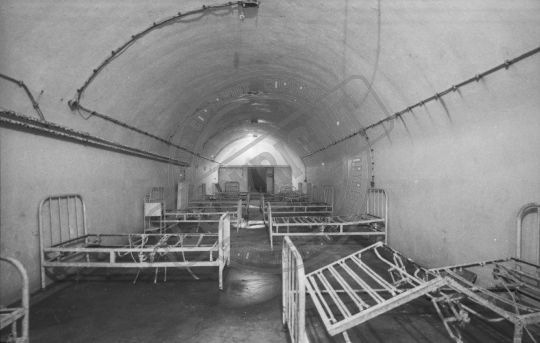
Post war photograph inside the large tunnel complex known as the German Underground Hospital in St Andrews showing the layout of the wards.
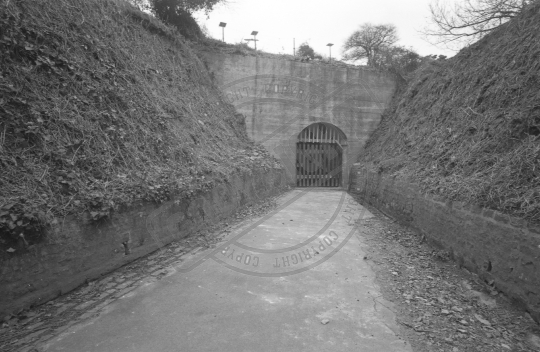
TPL_00155
Post war photograph inside the large tunnel complex known as the German Underground Hospital in St Andrews. This section shows the lined to unlined junction of the tunnel.
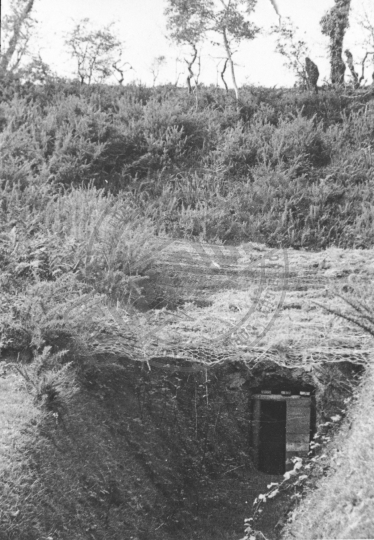
TPL_00149
Post war photograph of the tunnel entrance to HO.7/40 better known as the German Underground Hospital in St Andrews.
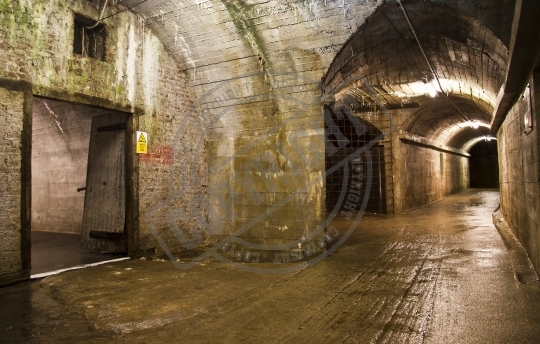
SP_0014
During the Occupation the German forces excavated numerous tunnels in Guernsey, these were used for various purposes and many still survive today. At the centre of the Underground Hospital complex the link gallery on the right leads off to Ho.40. The unlined central gallery lies behind steel mesh in the centre of the photo with the first ammunition storage chamber of Ho.7 appears on the left.
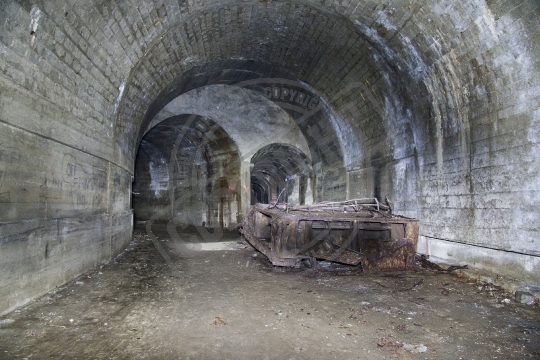
SP_0009
During the Occupation the German forces excavated numerous tunnels in Guernsey, these were used for various purposes and many still survive today. Shown here is the southern end of the main gallery with a half track body section in the foreground. The tunnel on the left leads to the central entrance of the complex and the right to the storage area where may limbers and field kitchens survive.
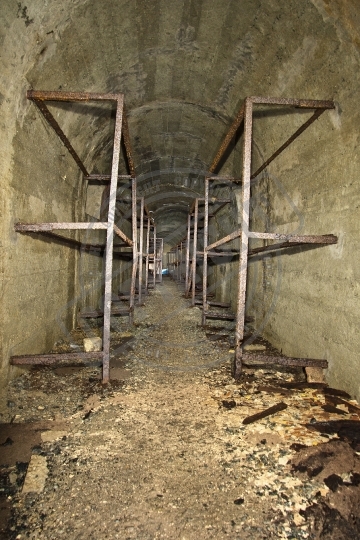
SP_0005
During the Occupation the German forces excavated numerous tunnels in Guernsey, these were used for various purposes and many still survive today. This pedestrian tunnel shows the bunk bed frames constructed from angle iron. This is the longest chamber in the complex which contains 54 bunks.
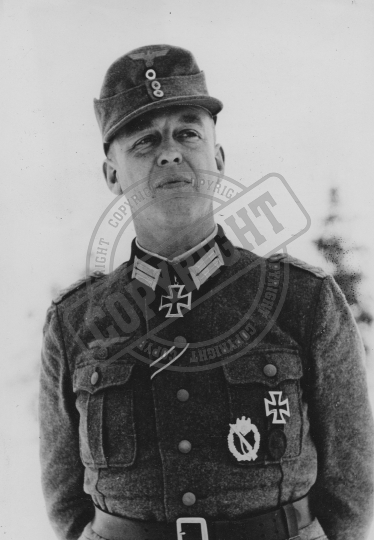
OA_063
Generalmajor Rudolf Wulf who was the Festungskommandant Jersey at liberation seen here after the award of his Knight’s cross of the Iron Cross, on 12th January 1943. At the time he was an Oberstleutnant (Lieutenant-Colonel) in charge of an infantry regiment.
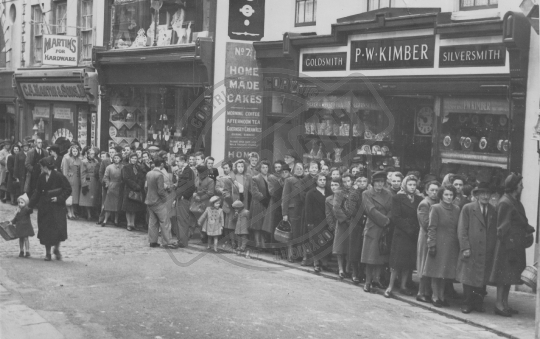
OA_035
Ration queue extending down The Pollet in St Peter Port, past P. W. Kimber Gold and Silver Smiths, past a sparse looking shop window display, and C. A. Martin & Sons Ltd Hardware Shop.
TPL_00368
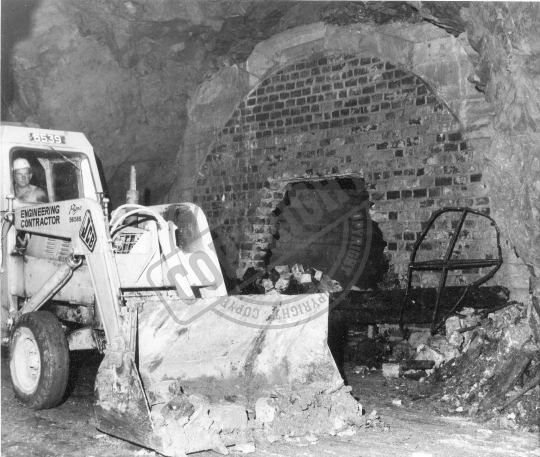
The German tunnel complex Ho.8 at La Valette was eventually cleaned out entirely in the early 1960’s prior to its conversion into an aquarium.
TPL_00352
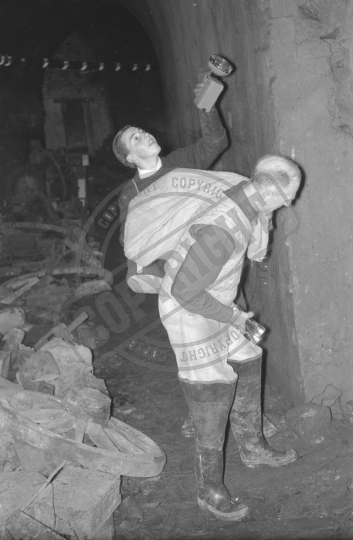
St Saviour`s tunnel which is featured in many publications as 'The tunnel under the church’ is one of the largest German tunnel complexes in Guernsey. This tunnel was originally constructed as a ration store and in 1944 it was converted into a munitions store. On 9th May 1969 Richard Heaume and John Hayes explored the remains of the tunnel and its contents which had captured the interest of many collectors ever since the scrap men had left in the 1950’s.
TPL_00142
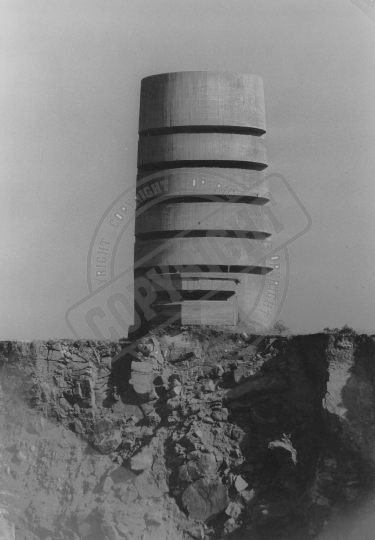
Post war photograph of naval direction finding tower MP1 at Chouet which fell into the quarry in 1991.
TPL_00138
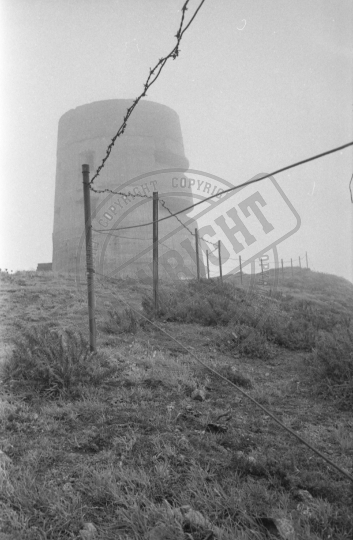
Post war photograph of Army direction finding tower M5 at Le Prevote. The structure was cladded externally with granite sets during the war which has since been removed leaving the bare concrete of the structure exposed.
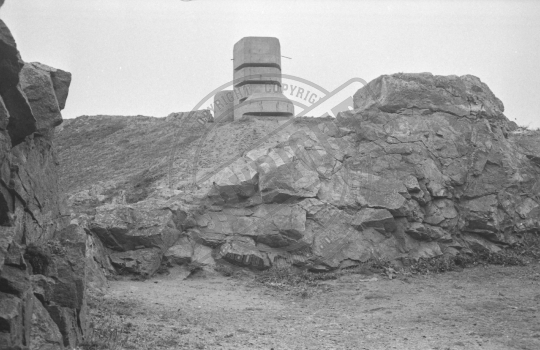
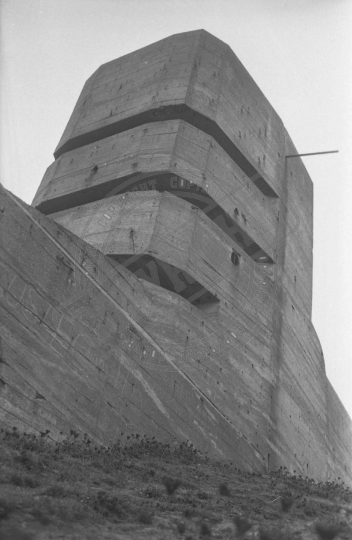
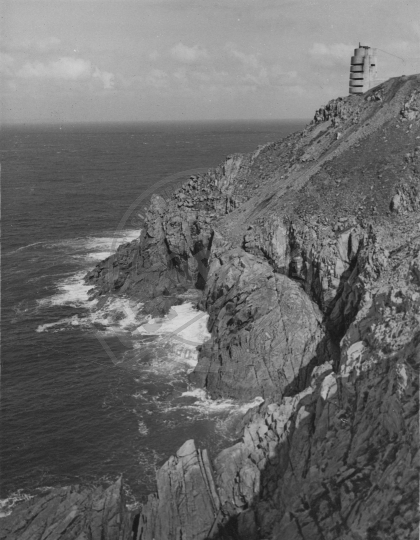
OA_066
Marinepeilständen und Messtellen (Naval Coastal Artillery Direction and Range-finding Positions). Post–war view of MP 3 at Les Landes, St Ouen, Jersey, covered the sea passage between Jersey and Guernsey. This tower had Gema Seetakt radar apparatus installed that was officially named Funkmessortungsgerät West (Radio Signalling Apparatus or FuMo West).
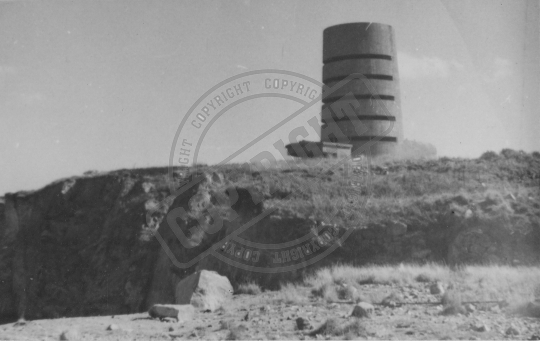
OA_013
The German naval Tower at Chouet, Vale, designated MP 1 (Marine Peilständ und Messtellung 1). The tower fell into Mont Chouet Quarry on 22nd March, 1991. The German Army Artillery range-finding position M2 (Mebstelle 2), at the front of the tower, had fallen some years earlier in 1982.
SP_0015
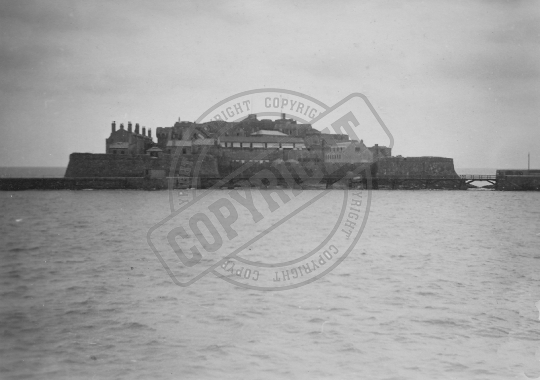
Castle Cornet viewed from the White Rock on 9th April 1941. No German defence works are built yet, though of interest are the antennas surmounting Castle Cornet, the chimneys seen left removed post war and other structures also removed. This Photograph is from a small collection of six taken by an unknown German soldier posted to Guernsey in 1941 with 319 Infantry Division.
TPL_00275
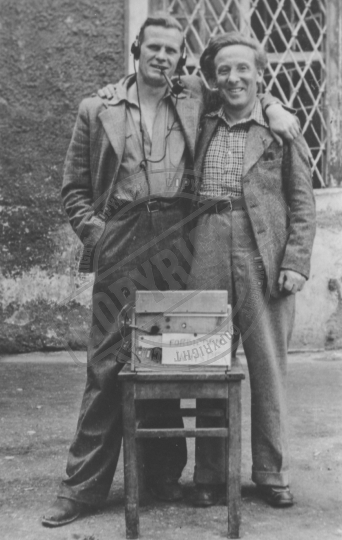
Frank Stroobant with Fred Williams and the 'Silent Whisper' at Laufen, after their Liberation, in April 1945.
TPL_00272
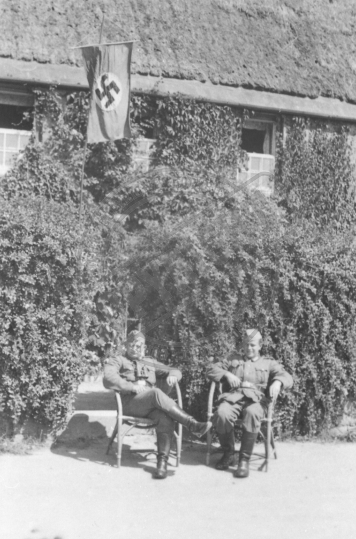
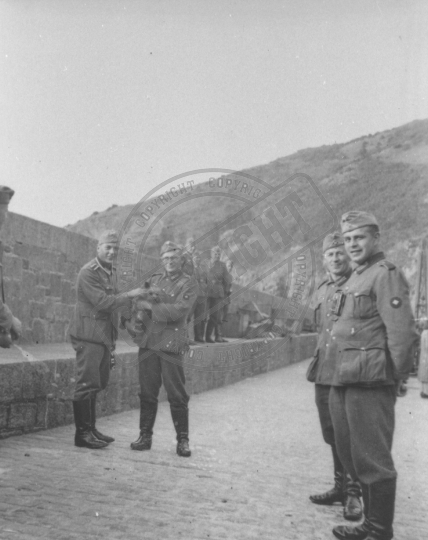
Soldiers relaxing outside the Bel Air Hotel, the German headquarters in Sark until it was accidentally destroyed by fire caused by careless use of a paraffin stove.
TPL_00269
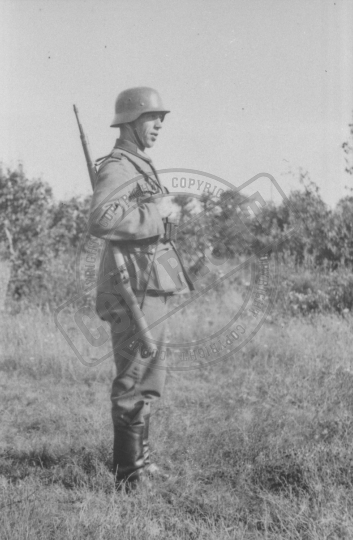
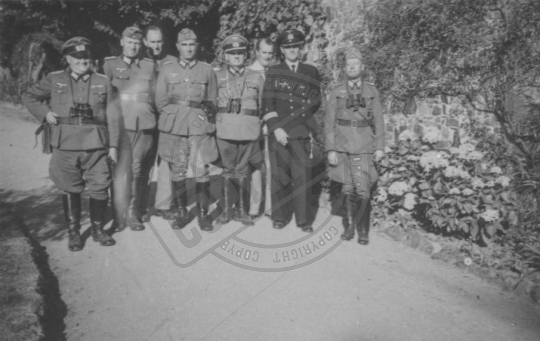
Major Lanz seen here fourth from left with a group of army and navy officers at Harbour Hill in Sark.
TPL_00268
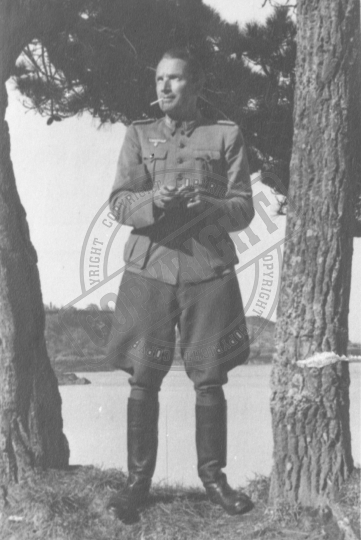
Platzkommandant Hans Max Baron von Aufsess held the key position of Head of Civil Affairs of Feldkommondantur 515, in Jersey.
TPL_00293
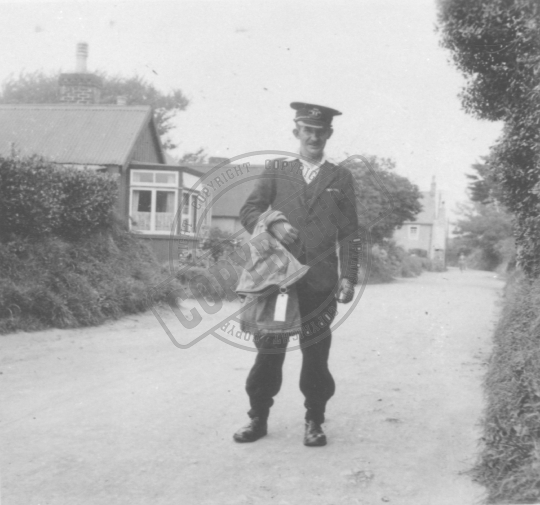
Percy Brown, Sark`s postman delivering mail on August Bank Holiday, one month after the German Occupation of Sark.
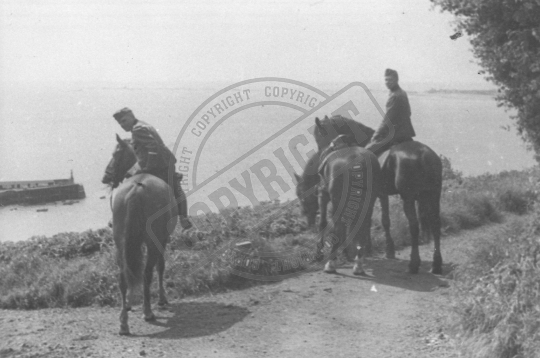
TPL_00290
German officers of Feldkommondantur 515 riding some of the fine German horses imported into the islands during the Occupation, overlooking Gorey Harbour, Jersey.
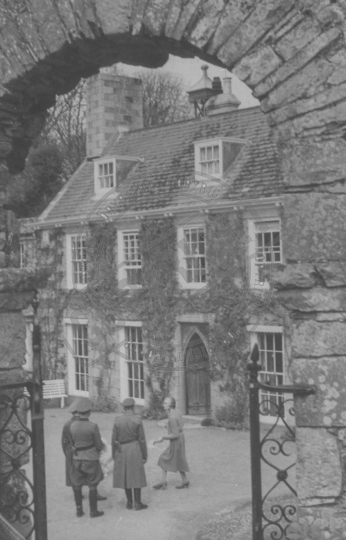
TPL_00289
Mrs Sibyl Hathaway talking to three German officers who have called on her at La Seigneurie in Sark where she remained throughout the occupation.
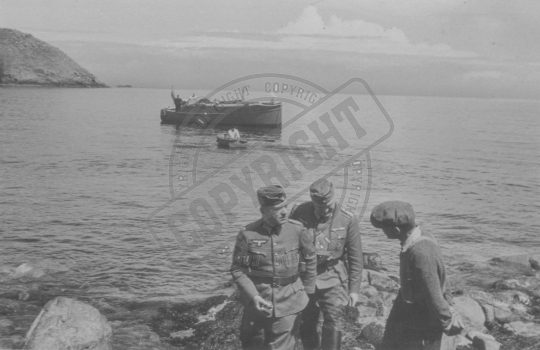
TPL_00287
Oberst (Colonel) Knackfuss, Guernsey Feldkommandantur, with Mr. G.MacDonald, caretaker of Jethou.
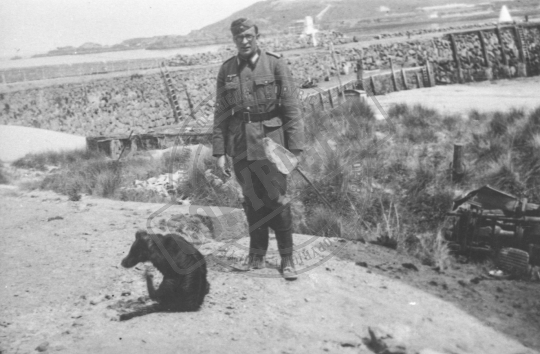
TPL_00284
Sonderfuehrer Hans Herzog and his dog Lux seen here at the old harbour in Alderney whilst out catching shrimps.
SP_0021
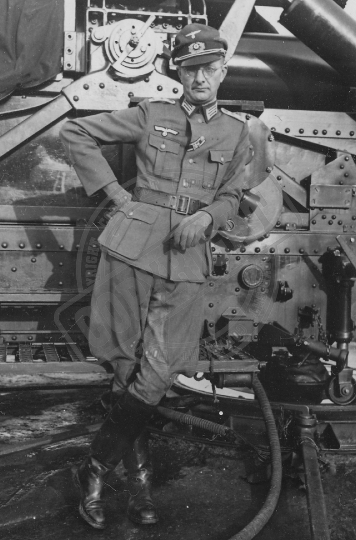
Batterie Elefant situated at Bailiffs Cross Road, St Andrew, Guernsey consisted of three 21cm Morser 18 guns with a range of 16.7km. This was a medium howitzer that had the ability to fire at high angles of elevation. The three guns were mounted on open platforms. Here, the battery commander poses for a photograph alongside one of his guns. Note he is wearing the ribbon of the 1914 Iron Cross, 2nd Class in his second buttonhole, which he won in World War 1.
TPL_00178
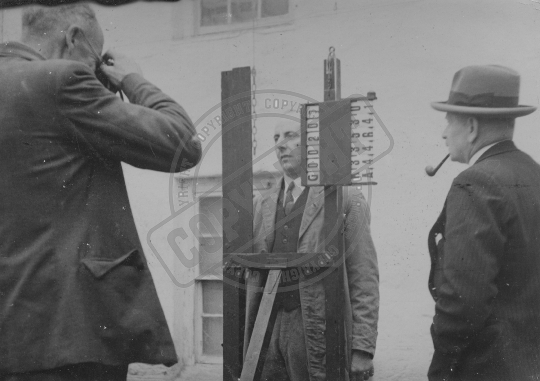
The "photo-census" in progress in the summer of 1941. Charles Toms is shown photographing a subject, with reference number displayed on an easel.
TPL_00120
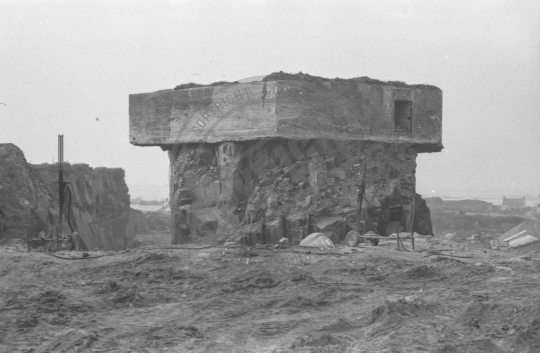
Post war photograph showing one of the structures of Batterie Steinbruch prior to its removal during the quarry expansion at Les Vardes, St Sampson.
SP_0023
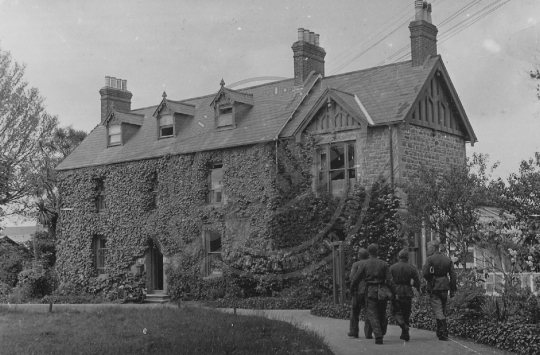
Four Germans from Batterie Elefant approach the house known as La Jaoniere at Bailiffs Cross, St Andrew, Guernsey. The house was one of many used by members of the artillery battery during the occupation in the vicinity.
TPL_00093
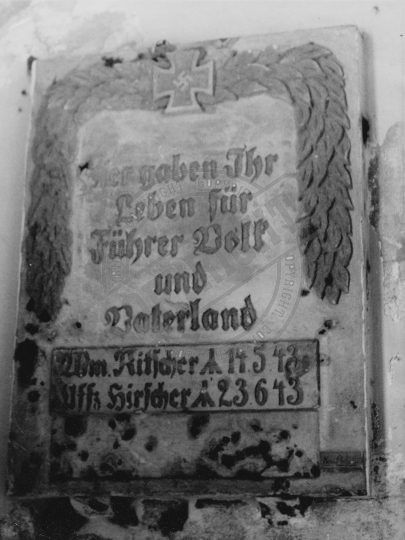
Ornate cast concrete plaque commemorating the death of Uffz. Hirscher who drowned and another soldier Ritscher, cause of death unknown but possibly from aircraft attack. The plaque was removed from Brehon Tower and is now on display at the German Occupation Museum.
SP_0024
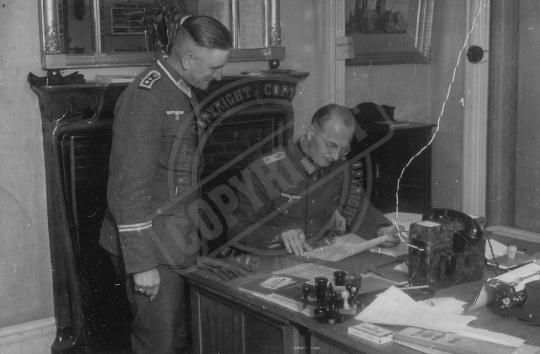
The battery commander and the battery sergeant-major of Batterie Elefant inside La Jaoniere, Bailiffs Cross Road, St Andrew, Guernsey. Note the field telephone and the assortment of hand stamps on the table.
TPL_00107
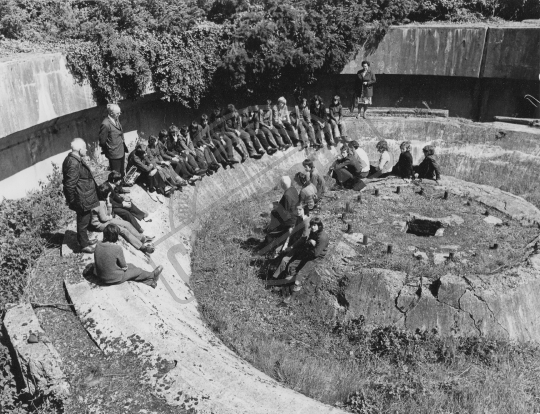
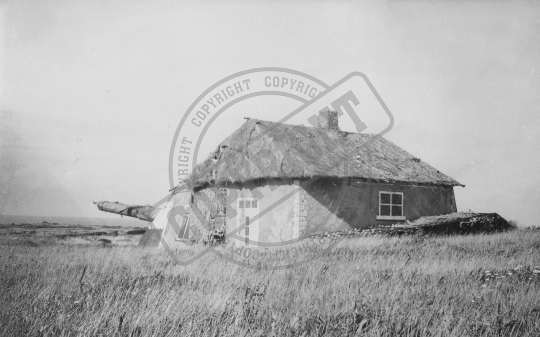
Batterie Mirus, the largest German installation in the Channel Islands housed four 30.5cm naval guns, this example shows that the Germans camouflaged the structure to look like a cottage.
TPL_00103
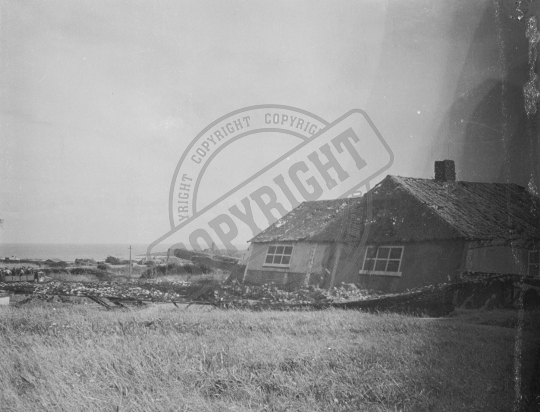
Batterie Mirus, the largest installation in the Channel Islands housed four 30.5cm naval guns, this example shows that the Germans camouflaged the structure to look like a cottage.
TPL_00098
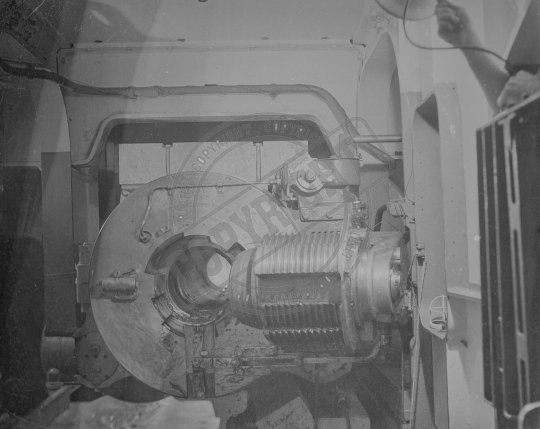
The open breach of the 30.5cm K14(r) gun at Batterie Mirus which was the largest German naval installation in the Channel Islands.
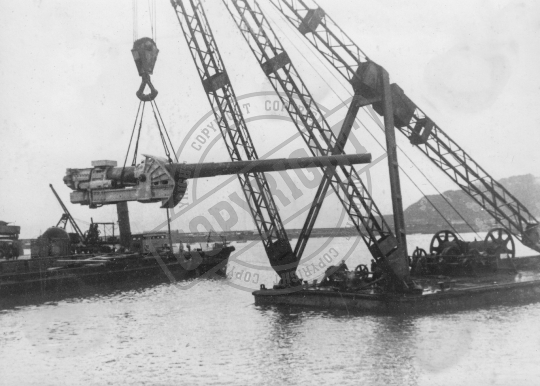
CIMM_0021
The floating crane Antee lifts the huge barrel of Batterie Mirus at the Cambridge berth in St Peter Port. Batterie Mirus was the largest German installation in the Channel Islands and housed four 30.5cm naval guns.
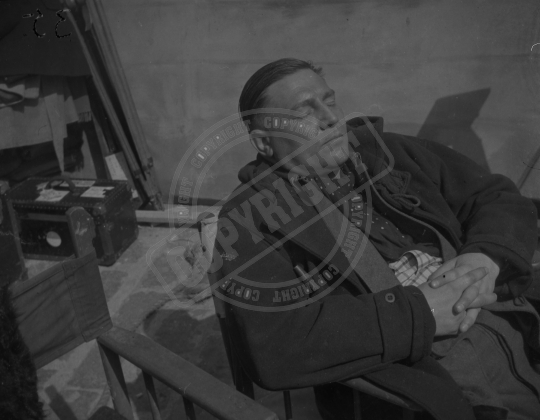
TPL_00076
Filming of 'Appointment with Venus’ on the Channel Island of Sark. The plot is set during the outbreak of WWII when the Ministry of Agriculture and the War Office join forces to launch a daring mission to rescue a highly lucrative pedigree cow, Venus, from the German-occupied Channel Island of Armorel. English Army Major Valentine Moreland (David Niven), his A.T.S. assistant Nicola Fallaize (Glynis Johns), radio operator Forbes (Patric Doonan) and ship’s pilot Trawler Langley (Noel Purcell) are dispatched to the small island to rescue Venus. Problems arise when the German commander on Armorel, Weiss (George Coulouris), also discovers the cow’s value and intends to evacuate Venus back to Germany. The film went on general release in 1951.