Results (598)


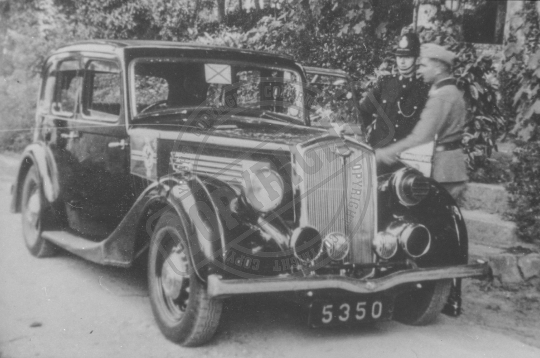
TPL_00328
A Guernsey police officer and German chauffeur stand by the Commandants car while he pays a visit to the Little Chapel at Les Vauxbelets, Guernsey.
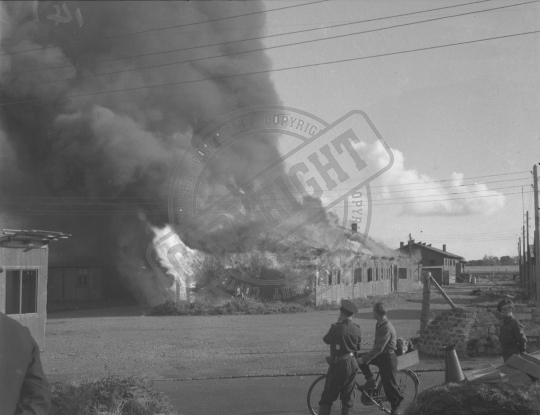
TPL_00372
Lager Ursula, a former Organisation Todt labour camp, at La Rue Sauvage, St. Sampson's, Guernsey. It was decided that as many buildings were infested, it was more expedient to burn the structures down than disinfect and disassemble.
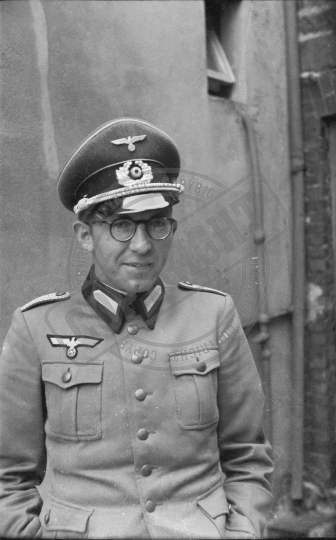
TPL_00353
The press censor Sonderfuehrer Kurt Goettmann appointed on the 27th January 1942 at the age of 32. His previous experience included working in press offices in both Paris and London. The censor role was to ensure that anything published followed the stringent rules set out by the Germans.
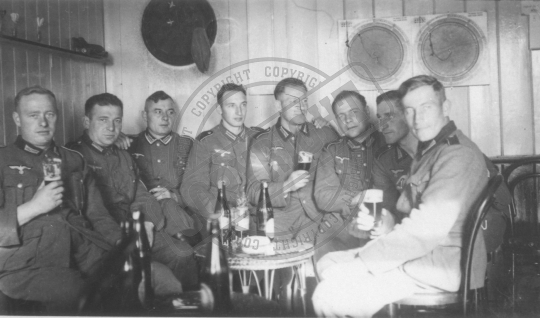
TPL_00299
During the early days of the occupation German troops found Sark public houses well stocked with beer and spirits. Soldiers always removed their belts and sidearms when on licenced premises.
TPL_00296
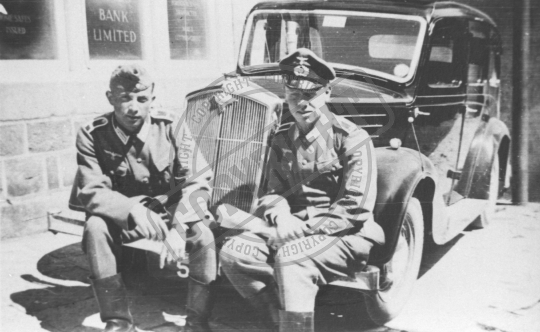
Corporal Forst and Sergeant Major Ertel photographed outside Lloyds Bank in Alderney 1941.
TPL_00353
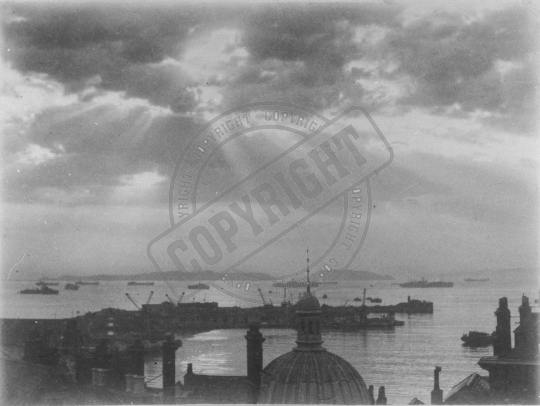
Group I, First Lift, of the Channel Islands Liberation fleet, codenamed 'agent’, commanded by Rear-Admiral C. G. Stuart, DSO, DSC, (Retd) serving in the rank of Captain, RN, Naval force Commander, Force 135, bound for Guernsey sailed from Plymouth at 15.45 hours on 11th may, 1945, 'W’ Day plus 7, and arrived off St Peter Port at 07.15 hours on Saturday, 12th May.
CIMM_0041
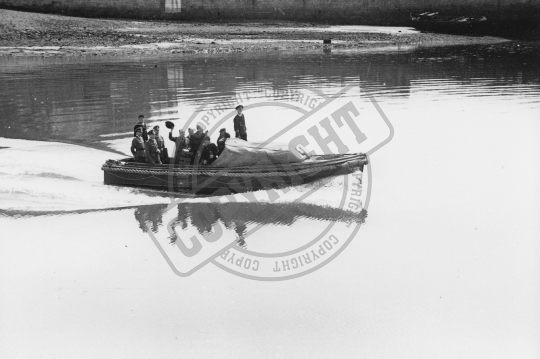
Jersey Bailiff’s pinnace on its way to HMS Beagle anchored in St. Aubin’s Bay, off St. Helier. The Bailiff and the Solicitor General waved their hats repeatedly in acknowledgement as the pinnace headed out of the Harbour, whilst Generalmajor Wulf and his two staff officers stood silently in the stern of the vessel.
OA_075
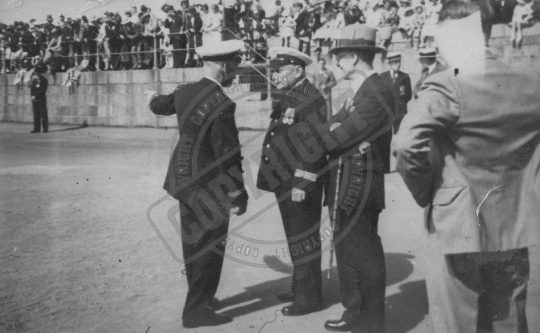
Royal Visit, Jersey, Thursday morning, 7th June, 1945. The St Helier Harbourmaster, Captain Harry Richmond, chats with another local harbour official on the Albert Pier as they wait for their Majesties’ arrival.
CIMM_0031
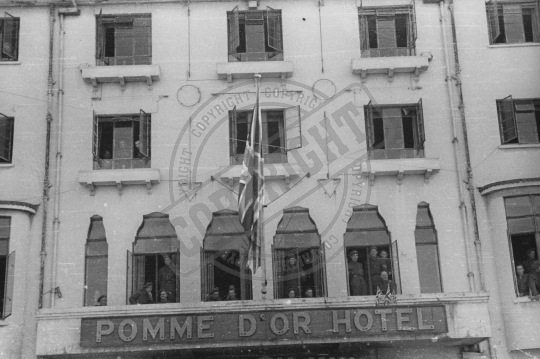
On the afternoon of 9th May, 1945, the first detachment of troops of Task Force 135, led by Colonel Robinson, landed at the Albert Pier. After marching to the Weighbridge, they set up their headquarters at the Pomme d'Or Hotel. Upon their arrival, the Harbourmaster, Captain Richmond, hoisted the Union Flag over the balcony.
TPL_00358
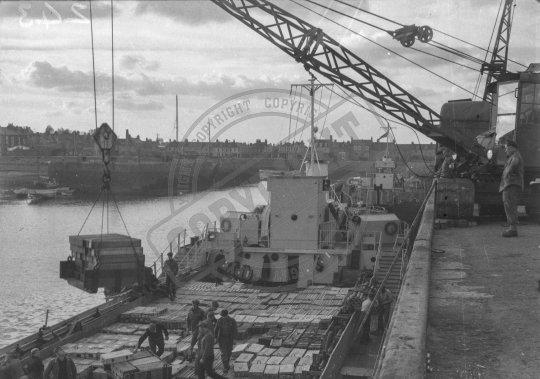
Shortly after Liberation the massive task of clearing ammunition began. The majority of the ammunition was loaded aboard LCTs by German POWs and taken to the eastern end of Hurd Deep where the water is some 550 feet deep. This image shows the loading of ammunition at Northside, Vale.
TPL_00315
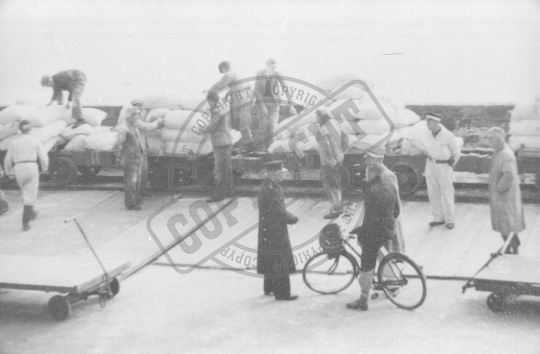
Food from the SS Vega being unloaded by Germans from railway wagons whilst supervised by the St John's Ambulance in St Peter Port.
TPL_00312
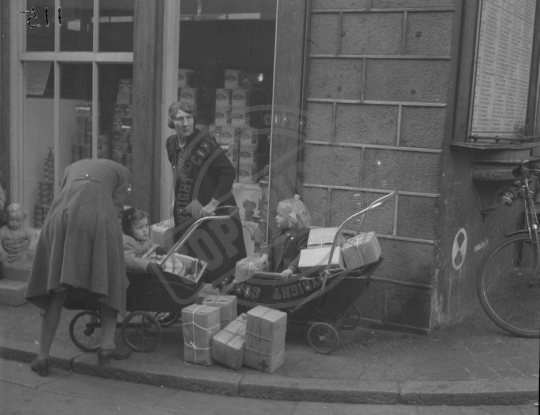
The arrival of the Swedish ship SS Vega chartered by the International Red Cross to bring food and supplies to the starving islanders did much to alleviate the suffering of the civilians. Here Red Cross parcels were distributed to the islanders at Les Riches, St Peter Port.
CIMM_0020
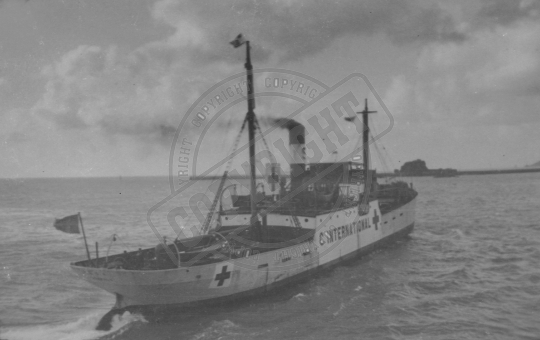
The Red Cross ship SS Vega leaving Jersey at noon on 4th January 1945 on her way to Guernsey.
SP_0012
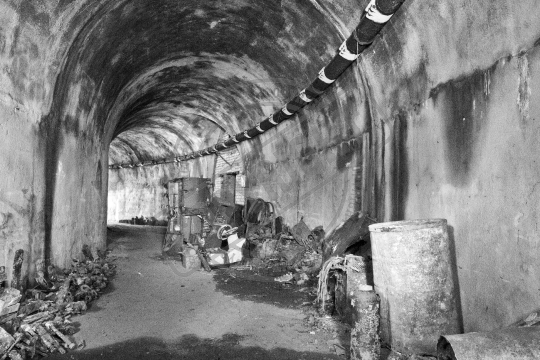
During the Occupation the German forces excavated numerous tunnels in Guernsey, these were used for various purposes and many still survive today. This tunnel known as 'the tunnel under the church’ has some original equipment remaining. Note the base of the Würzburg radar on the left of the brick entrance.
TPL_00369
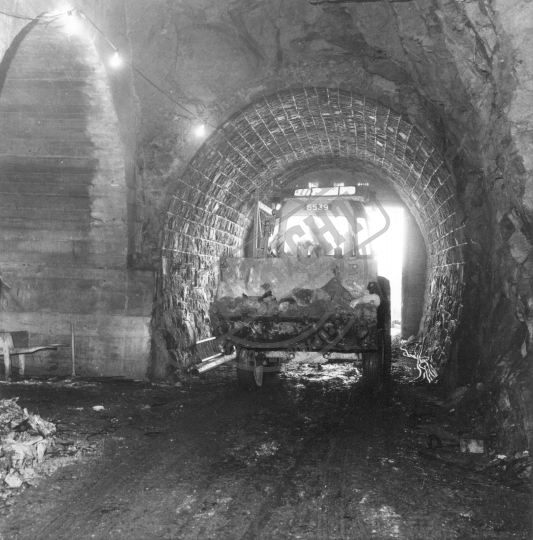
The German tunnel complex Ho.8 at La Valette was eventually cleaned out entirely in the early 1960’s prior to its conversion into an aquarium.
SP_0004
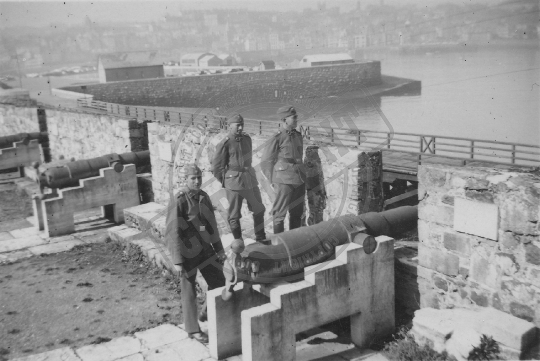
Germans stand alongside one of the cannons of Castle Cornet in St Peter Port. The Castle was the 'Hafenschlosss' (harbour Castle) during the occupation of Guernsey by German forces from 1940 until 1945. The occupying forces built air raid shelters and platforms for anti aircraft-guns to update the Castle for 20th century warfare.
TPL_00277
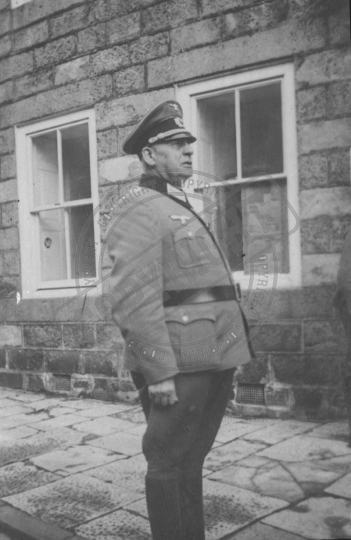
Oberst (Colonel) Schumacher of Feldkommondantur 515 based in Jersey seen here outside Lloyds Bank Alderney May 1941.
TPL_00273
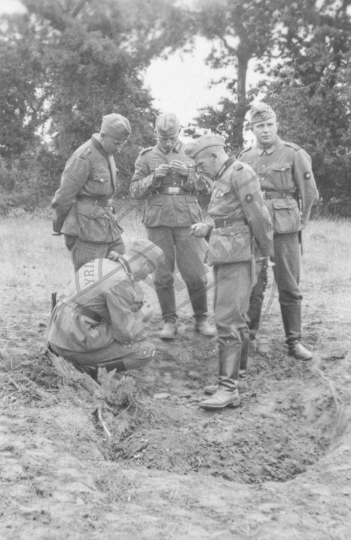
Several bombs were dropped on Sark by British aircraft, these German soldiers are excavating the remains of a bomb that fell in the garden next to the Vicarage.
TPL_00114
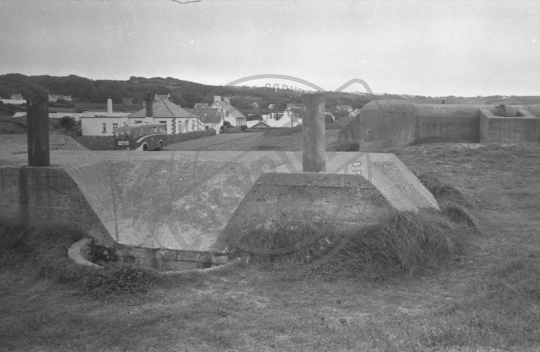
Post war photograph of a reinforced field order (RFO) personnel bunker which forms part of the defences at Rocquaine, St Peters.
TPL_00123
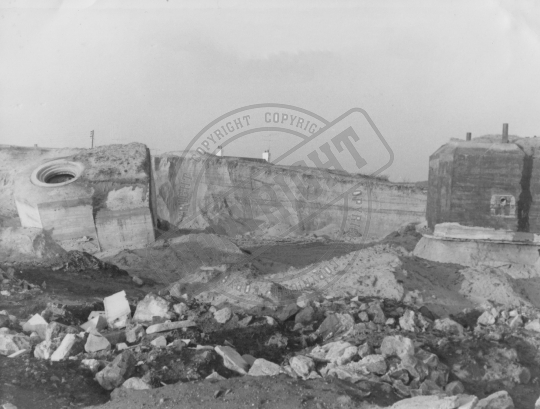
Post war photograph of a mortar position and a personnel bunker which were eventually buried in the sand dunes at L`Eree located between the two car parks. Messrs J&D Norman Ltd had a concession from the States of Guernsey for the removal of sand in the area.
TPL_00121
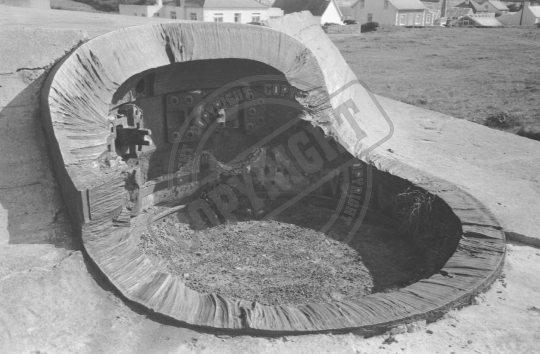
This steel turret was cut up as part of the post war scrap drive, one of the only examples still visible in Guernsey. The structure housed a number of machine guns in the turret as part of the fortification at Rocquaine, St Peters.
SP_0026
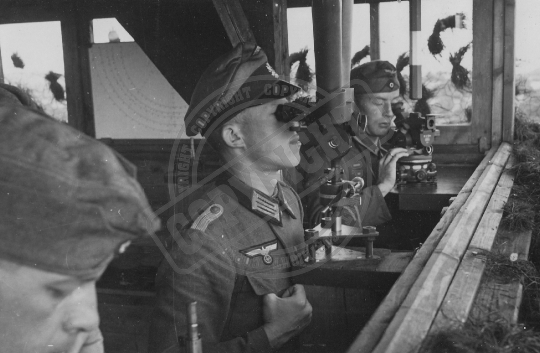
Inside the fire control and observation tower of Batterie Elefant, St Andrew, Guernsey. Here we see the gun control and range-taking staff at work. The tower was adjacent to the 'Paper House’. Note the range board in the background and the camouflage draped over the wooden structure.
TPL_00163
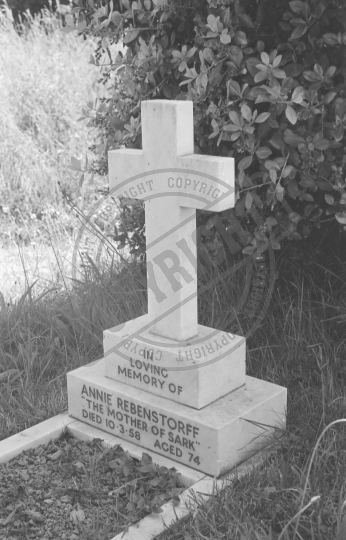
Mrs Annie Rebenstorff an English born lady who married a German national and had lived in that country prior to WW1. During the Occupation she was renowned for the work she did to aid islanders in Sark, so much so she was know as 'The Mother of Sark'.
TPL_00022
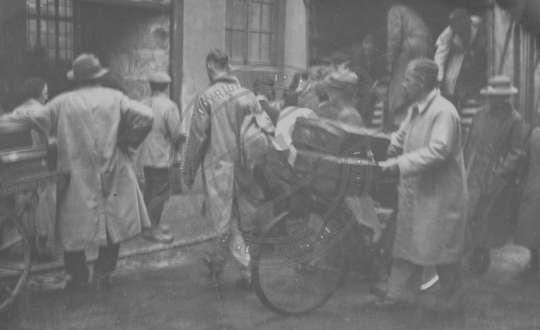
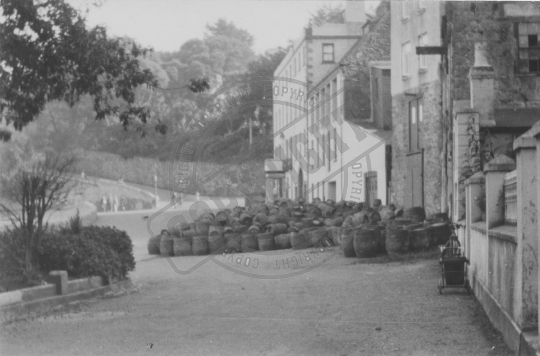
Beer barrels emptied by the Germans at the Guernsey Brewery South Esplanade St. Peter Port.
TPL_00021
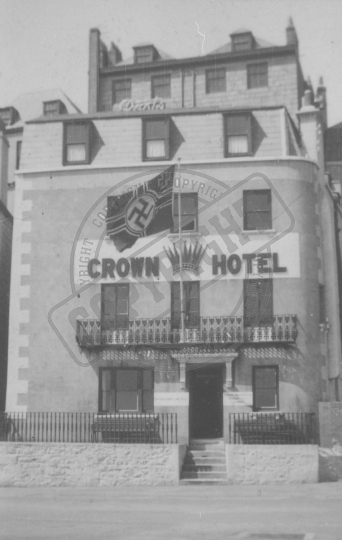
The Crown Hotel in St Peter Port, Guernsey was the German naval headquarters. Now called the Ship and Crown.
OA_011
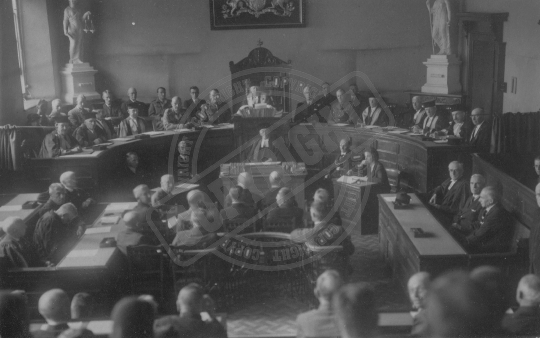
The Guernsey States sat especially for the purpose of receiving The Right Honourable Herbert Morrison, Home Secretary. To the left of the Bailiff are seated Brigadier Snow and Colonel Power. On his right is Rear-Admiral Stuart, RN.
TPL_00015
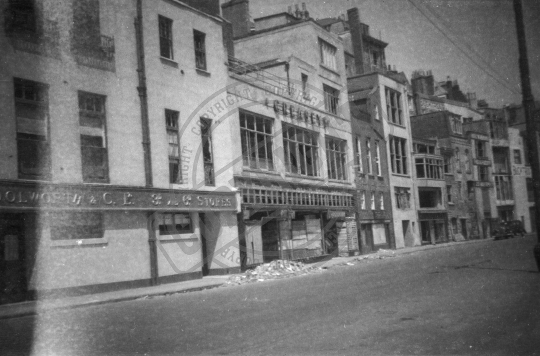
The devastation caused by the events of 19th June 1944, when Lightnings of the U.S.A.A.F. dropped bombs in the harbour. Every window pane has been broken, note the shattered remains piled up outside Creasey's, and the lettering on Woolworth's stores that has been dislodged.
CIMM_0072
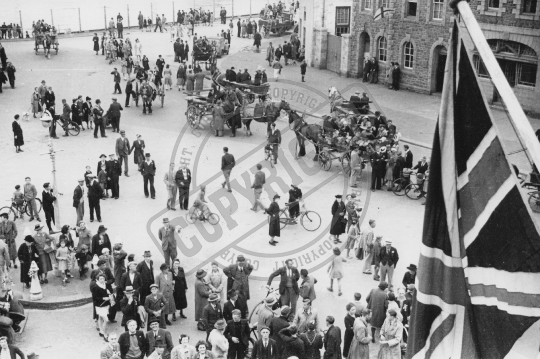
Jersey Thursday 10th May 1945. Crowds of islanders lingered around the Weighbridge still excited from recent historic events and exchange pleasantries with the British troops sitting on the Pomme d’Or Hotel’s balcony.
CIMM_0070
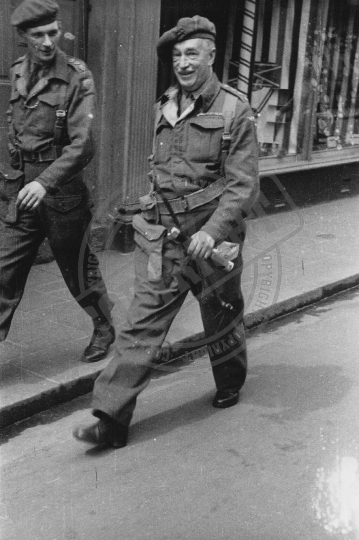
Jersey Friday 11th May 1945. The Royal Court’s first sitting since the Liberation of Jersey assembled at 11 a.m. on Friday morning, 12 May 1945. In attendance were Force 135 officers including L to R; Captain L. Ogden, and Lt-Col W. Arnold, making their way through the streets of St Helier to the Court.
CIMM_0065
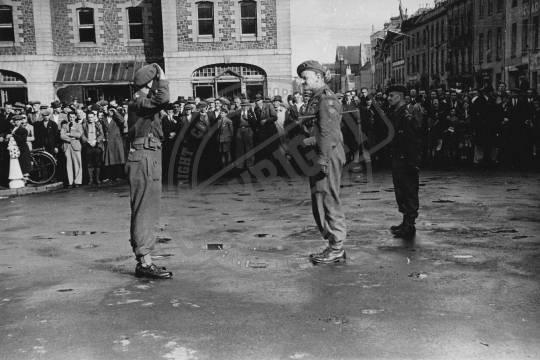
Jersey Thursday 10th May 1945. The Guard of Honour is handed over to Lt-Colonel W. P. A. Robinson, MC, RA, the Island Commander, Jersey and Commanding Officer 620 Regiment, Royal Artillery. Captain Hugh Le Brocq is on the right.
CIMM_0053
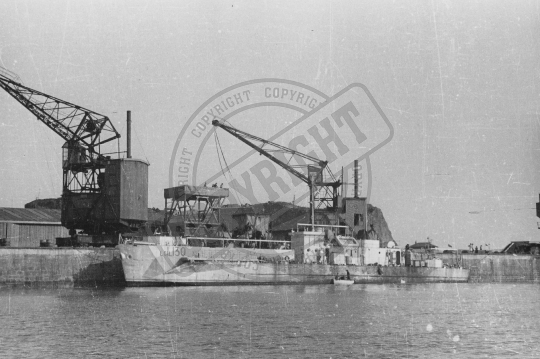
The LCI(L) 130 moored alongside the New North Quay, St. Helier Harbour, Jersey. Almost immediately the main 'Omelette’ advance party of some 200 men began to land at 5pm on Wednesday 9th May.
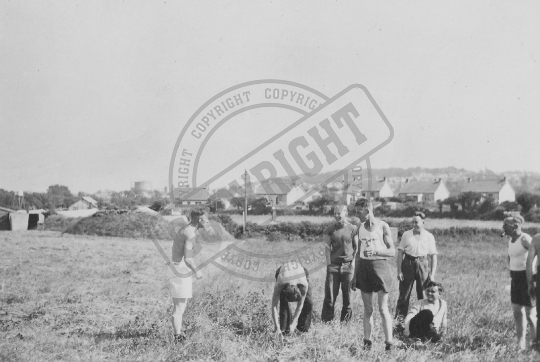
SP_0047.jpg
The gun crew of Flak Batterie Kapellendorf located off Les Grandes Capelles in St Sampson. This battery of four 8.8cm Flak 18 guns which were used in an anti-aircraft role. This sequence of photographs were taken in December 1941. Note the gas holders located at Le Bouet in the background.
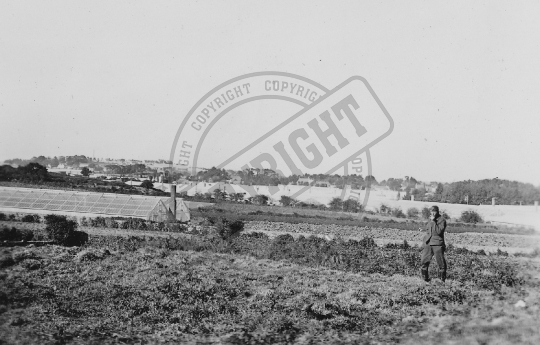
SP_0046.jpg
Flak Batterie Kapellendorf located off Les Grandes Capelles in St Sampson. This battery of four 8.8cm Flak 18 guns which were used in an anti-aircraft role. This sequence of photographs were taken in December 1941.
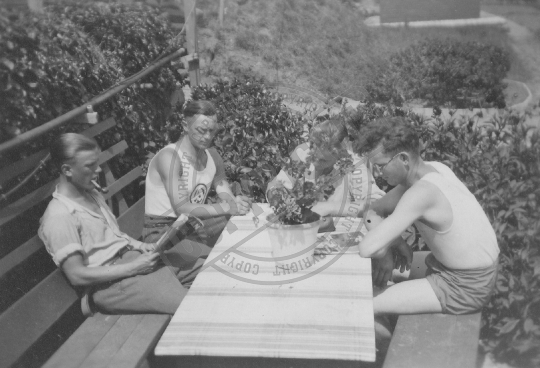
SP_0044.jpg
The gun crew of Flak Batterie Kapellendorf located off Les Grandes Capelles in St Sampson. This battery of four 8.8cm Flak 18 guns which were used in an anti-aircraft role. This sequence of photographs were taken in December 1941. Note the Luftwaffe insignia on the PT shirts.
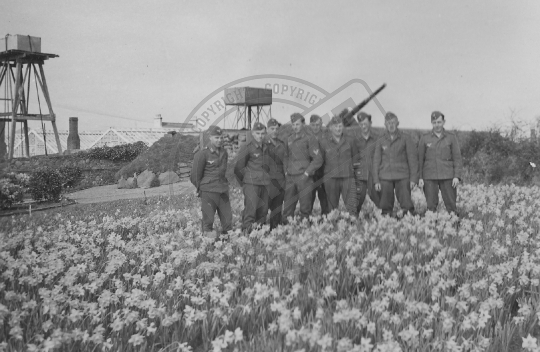
SP_0039.jpg
The gun crew of Flak Batterie Kapellendorf located off Les Grandes Capelles in St Sampson. This battery of four 8.8cm Flak 18 guns which were used in an anti-aircraft role. This sequence of photographs were taken in December 1941.
SP_0037.jpg
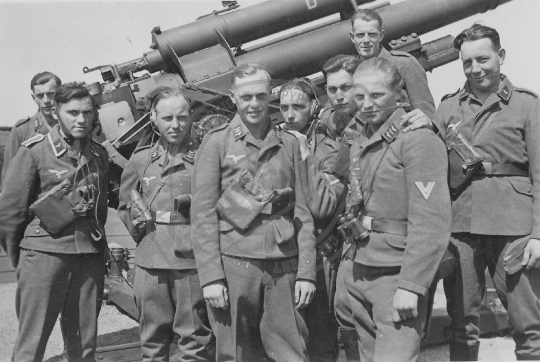
The gun crew of Flak Batterie Kapellendorf located off Les Grandes Capelles in St Sampson. This battery of four 8.8cm Flak 18 guns which were used in an anti-aircraft role. This sequence of photographs were taken in December 1941.
SP_0035.jpg
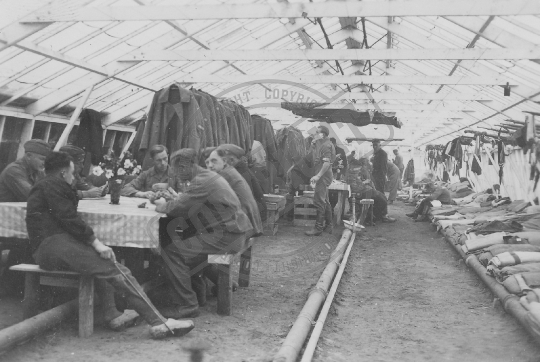
The gun crews of Flak Batterie Kapellendorf seen here inside a greenhouse which appears to also be the crews accommodation and rest area. Note the beds on the right and the uniforms hanging up to the left.
OA_101
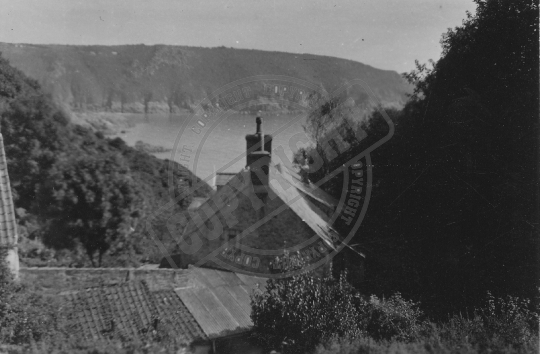
Looking across the roof of the former Moulin Huet Watermill, sited alongside the road leading down to Moulin Huet Bay with Jerbourg headland and the beach of Petit Port at low water in the distance.
OA_100
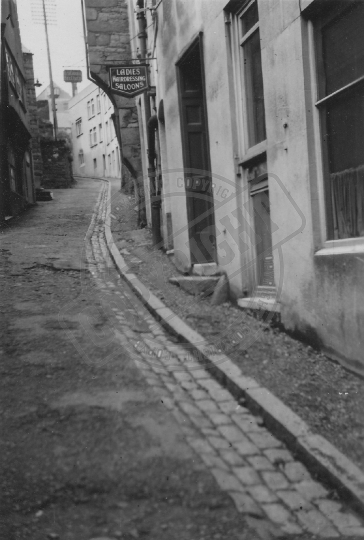
A view from the foot of Bertholet Street looking up the steeply graded hill that emerges onto New Street.
OA_099
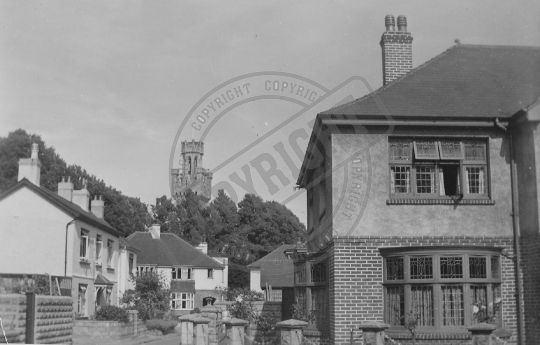
With Victoria Tower in the background a view of properties in Town taken by the entrance to The Close by Doyle Road.
OA_097
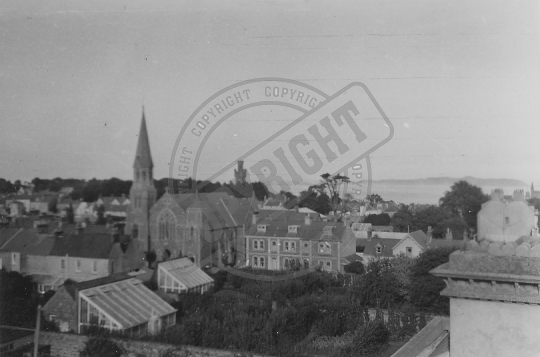
Taken from the roof of a house near the junction of Les Gravees and Queens Road looking towards the spire of St Jospephs Methodist Church and Victoria Tower in the far distance.
OA_095
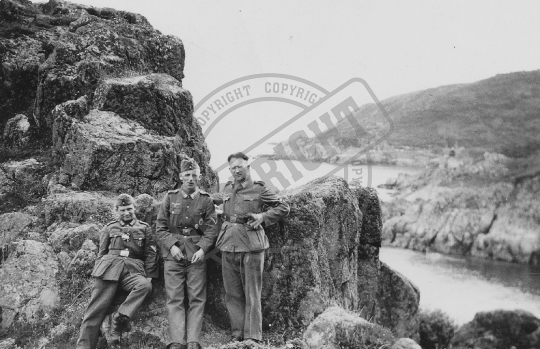
Enjoying a stroll around Guernsey’s southern cliffs a group of Germans stop for a rest near Moulin Huet by Dog and Lion Rocks with the small harbour at Saints Bay seen in the background.
OA_094
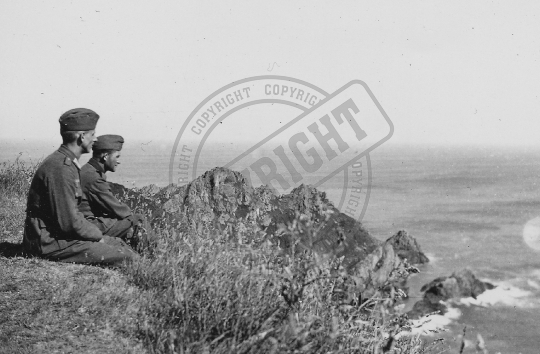
Two German soldiers stop to enjoy the views on the cliifs just west of Pointe De La Moye which can be seen in the background.
OA_093
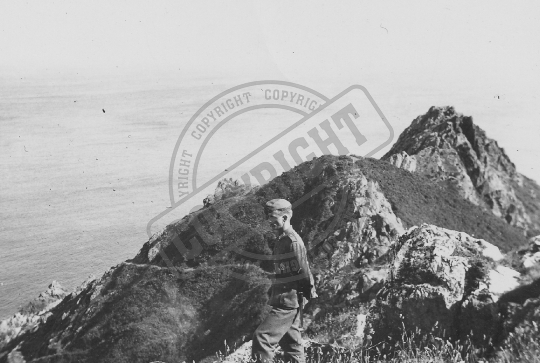
A German soldier stands on the coastal footpath leading to Pointe De La Moye looking east towards Les Sommeilleuses.
OA_092
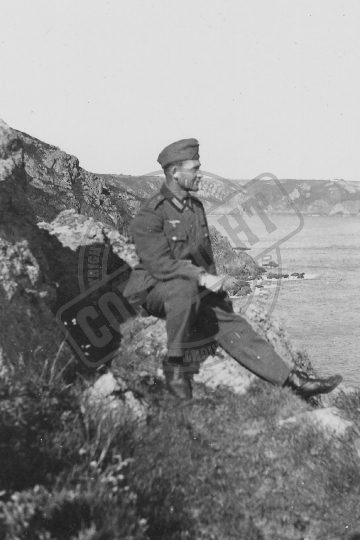
A German soldier relaxes on a rock outcrop sited on the coastal footpath leading to Pointe De La Moye with Icart headland in the background.